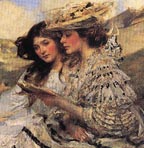
literary classic "romance"
1. Discuss the three main ideas, or themes, explored in this romance: adultery, hypocrisy, and revenge.
2. How is Hawthorne's concept of romance like that of other writers? Of course he includes
adventurous action, heroic characters, picturesque settings. He even includes mysterious events, as well as scenes and ideas which are generally considered remote from everyday, common life. Discuss these
elements, as well as how some of his concepts about a romance novel might differ?
3. We know that one of Nathaniel Hawthorne's ancestor's, John Hathorne (the original spelling of his name; Nathaniel
changed the spelling during his youth), was one of the three judges at the Salem witch trials of 1692. Consider Hawthorne's view toward Puritanism. Did he approve or disapprove of it? Do you feel that he is
criticizing the Puritans' bigotry? Explain. Since Hester is the heroine, what is it that Hawthorne approves of in her character?
4. James 5:16 says to "Confess your faults to one another, and pray for one
another, that ye may be healed," and the Puritans took this quite seriously. Dimmesdale is too weak to do what he knows is required of him, and so during his seven years of silence he adds the sin of hypocrisy.
Today we would say that he rationalized (p. 121-122). How did his silence hurt and help him, and how did Hester's confession hurt and help her? Do you believe that Dimmesdale's confession came too late? Explain.
5.
What are your feelings about public confessions in general? Discuss some of the extremes that we as a culture have taken the idea of public "confession." (examples: Bill Clinton's public confession about
having sex, "confessional" t.v. talk shows)
6. Do you feel that Hawthorne has "romanticized" Hester's adultery? Hester could have chosen to return to England to live, but she chooses to stay in
Boston. Why? Do you agree or disagree with her decision?
7. Discuss Hester's purification through repentance in this novel. Discuss how she changes as a woman, both outwardly and inwardly. Discuss the function of the
symbolism of wearing the letter "A".
8. It may be said that Roger Chillingsworth commits the greatest sin. What is that, and do you agree? (see esp. p. 117-118) Explain.
9. The community is responsible for
the action in Chapters I-VIII, Chillingsworth then becomes responsible for the action in IX-XII, Hester in XIII-XX, and Dimmesdale in XXI-XXIV. Discuss how this becomes so, and why.
10. Discuss how the chief points of Puritan theology are played out in this novel:
(1) Absolute sovereignty of God. (2) Predestination. An omniscient Deity knows from the beginning who will be saved. (3)
Providence. God directly intervenes in the world. (4) Natural depravity. Since Adam's fall all men are born in sin and deserve damnation. (5) Election. Through God's mercy a few are saved, but by grace alone, not by
their efforts. (6) Evil is inner. Man needs reform of himself. (7) God is revealed in the Bible