 |
|
|
|
|
|
|
|
|
|
|
|
|
|
|
|
|
|
|
|
|
|
|
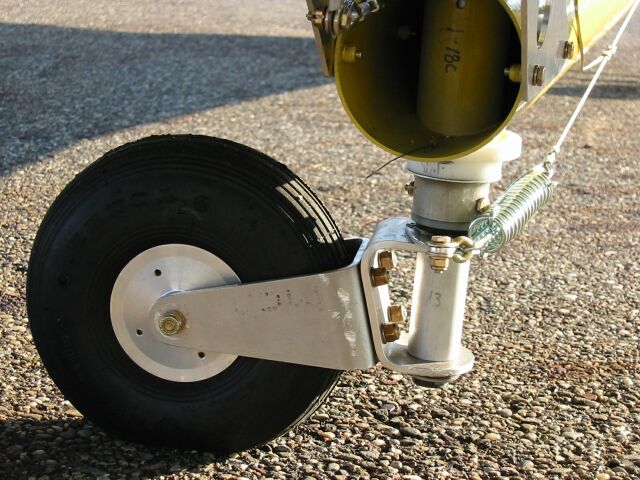
Modifications to the tailwheel of the Chinook |
|
|
|
 |
|
|
|
One problem I had was that it was possible for the tailwheel to swing past center. This distorted the spring, and put a terrible load on the rudder cables. It also made it impossible to steer, and took a large blast of throttle to get it out of this condition
The plane could be flown, but was very sensitive to steer. Longer control arms slowed the steering response and allowed me to land in a cross-wind. It was still a bit unstable when trying to follow a very straight line. With such a large amount of trail, and negative castor, I could push the rudder with my little finger and steer the tailwheel. |
|
|
|
|
|
 |
|
|
|
|
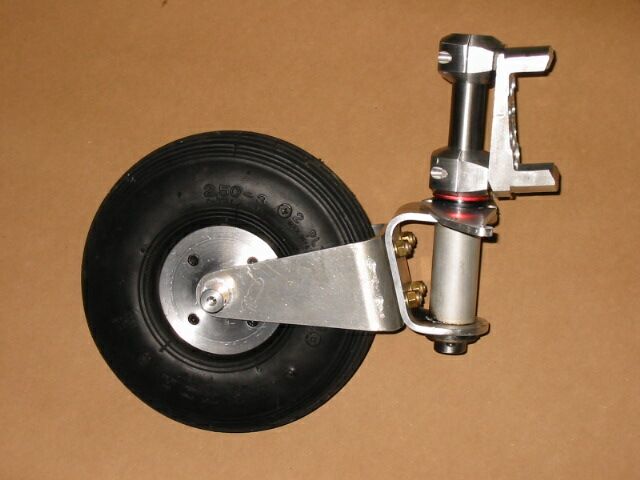
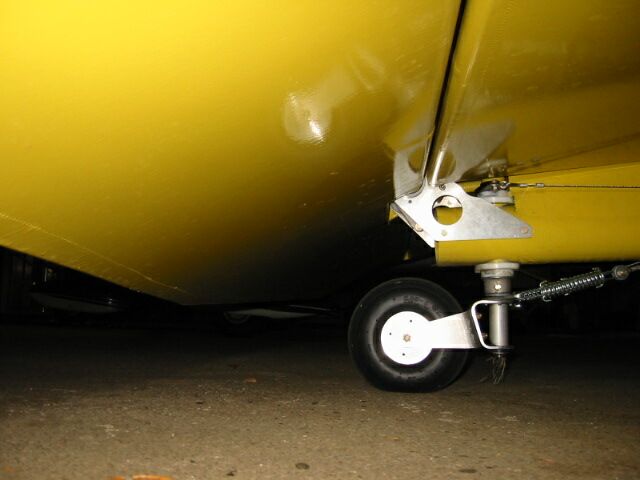
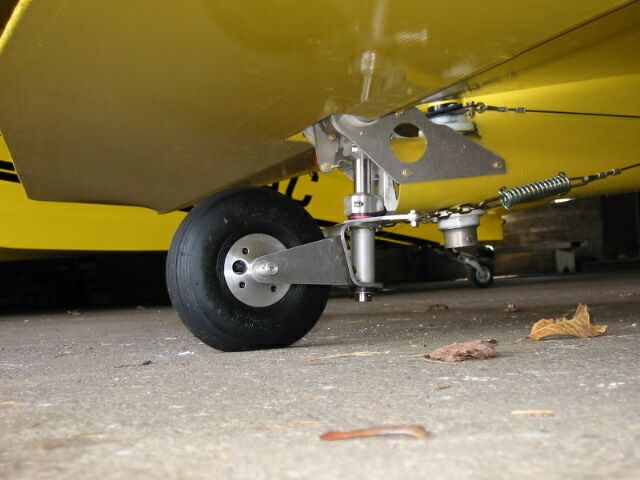
I machined an aluminum bracket to fit into the end of the body tube. The bracket had some postive castor angle on it and two saddle clamps held the original steel pivot tube. ( Later, by turning over the wheel fork, I was able to gain another inch of ground clearance.) I also added some aluminum axle nuts that are smooth and tightened with a cross-bar. ASAP supplies a very slick tow-bar for moving the plane around. ( I modified the tow-bar by adding a bend and extension, so the elevator is not scratched.)
Control arms are slightly longer than original. |
|
|
|
|
|
|
 |
|
|
|
 |
|
|
|
Castor angle with plenty of trail makes it track accurate and true.
If your Chinook seems a bit squirelly, this might help. |
|
|
The original tailwheel as supplied by ASAP
This also puts weight on the rudder bearing |
|
|
|
|
|
Page #4 |
|
Page #6 |
|
|
|
INDEX |
|
|
|
|
|
|
|
|
|
|