
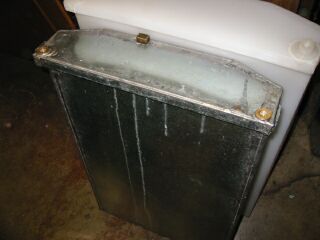
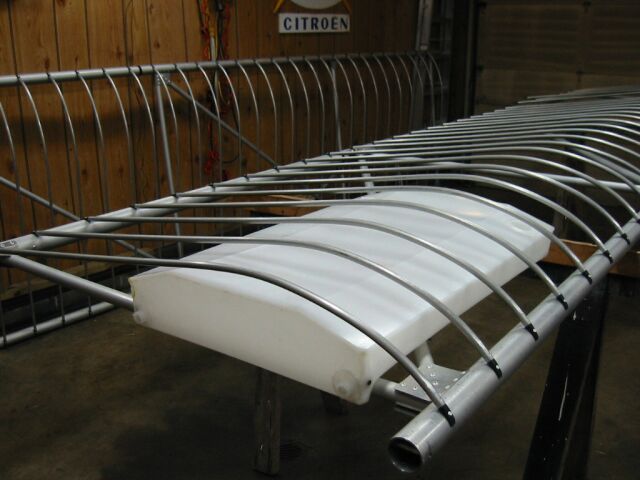
Removal of the wings were required to repair this, and ASAP gave me a refund. I hope they talk with their supplier about these tanks. I never did fill them full of fuel. The problem was how to fix it now that the wings were built and holes cut in the fabric?
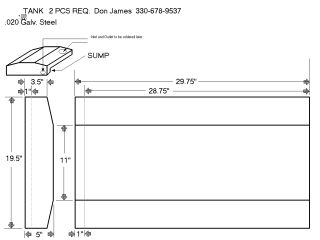
I made the drawing shown and took it to my local heating and sheetmetal shop. I told them it was for a go-kart. They charged less than the plastic tanks cost me. 450 hours on these tanks with no problems.
The tanks were slosh-coated with fuel tank sealant, just to be sure.
Sight gages are nothing more than a loop of clear plastic tubing.
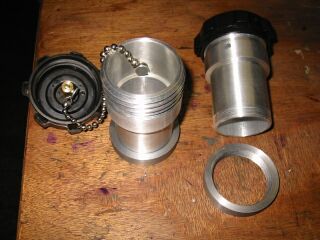
Dye was used to spot where the filler necks should go , as they had to match the holes in my fabric. A threaded steel ring was then soldered to the tank for the filler-neck. Fuel cap is standard Quicksilver, MTD lawn tractor part. Caps are vented and chained.
Gallon marks were made next to the sight gage and I found that these steel tanks look a bit smaller, but hold 8 gallons each. Must be the wall thickness.
These wing tanks are used for my main fuel supply.
ASAP treated me very fairly in this matter.