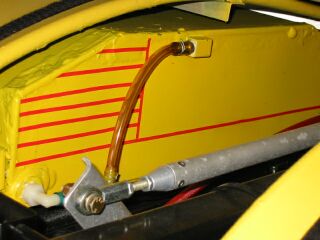
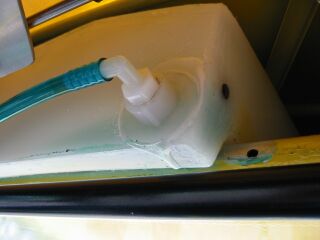
A: Fuel quantity remaining is detemined by a sight gage made of a piece of clear fuel line as shown here. Red lines on the tank equal 1 gallon. For fuel to drop one line, 2 gallons have been used, as there are two of the tanks. Each steel tank weighs about 5 pounds more than the plastic tank. The original plastic tank provided (RIGHT) seems to have too much stress at the attachment bolt points. A better mounting would be with nylon straps around the plastic tank, but this would need to be considered when building the wing. (Tanks 8 gallon each )
Fuel lines run from front to rear outlets on the tank sump. This line has a "T" fitting about 2/3 the way from the front. This is used to interconnect the two tanks, so they act as one large tank. The interconnection line also has a "T" and is routed below the root tube, making this the effective "bottom" of the tank. From this the line runs to a fuel shut-off valve, then filter, then engine pulse pump. The in-wing tanks serve as the main fuel supply, and all fuel is drawn from there. I have never had any sort of fuel supply problem with this set-up and I do many steep dives and wingovers. Range with all tanks is about 500 miles. (26 gallons total fuel with all tanks.)
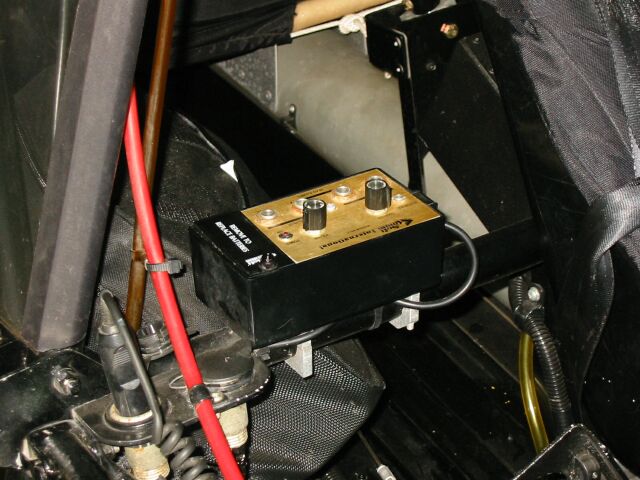
A: It mounts to a "U" bracket next to the seat. The radio just pushes into the bracket. The antenna is the original "rubber ducky" mounted the root tube above the pilots seat with an extension wire from Radio Shack. The electric transfer fuel pump is mounted under the radio. This pump is used to pump fuel from the strut tanks into the main tank when "inflight" refueling is needed. This is the safest way to use strut tanks.
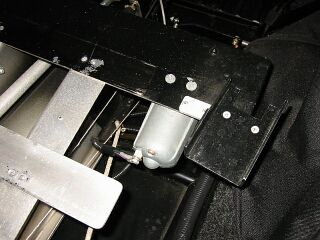
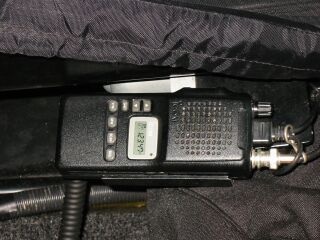
A. Yes. It is mounted on blocks clamped to the cross tube to the side of the pilot's seat. It runs on two 9 volt batteries. When batteries get low, squelch is difficult to control, but they last a long time and it works well.