|



| |
| This page contains back ground information for most popular Chinese
Festivals. For dates of the Festival falls on western calendars click on Schedules. |
 |
 |
Chinese
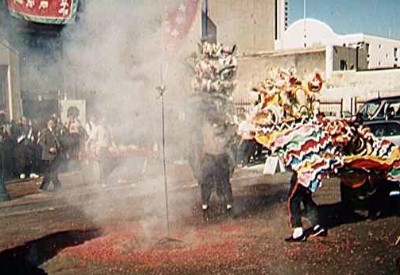
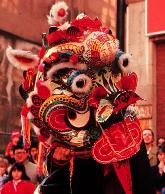
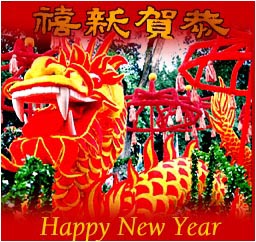
New Year, also known as the Spring Festival, starts at the beginning of
spring. It occurs on the 1st day of the first lunar month or somewhere between January
20 and February 20. Each Chinese
year is represented by a repeated cycle of 12 animals, the rat, ox, tiger,
hare or rabbit, dragon, snake, horse, ram, monkey, rooster, dog, and pig.
Chinese New Year is China's biggest holiday.
|
 |
The Moon
or Mid-Autumn Festival, on the 15th day of the eighth lunar month, observes
the biggest and brightest full moon of the year, the harvest moon.
|
|
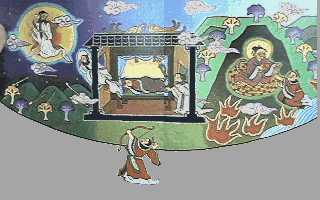
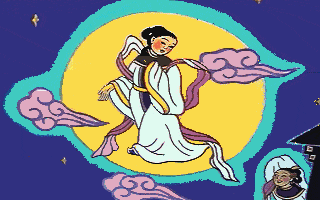
One legend about the Moon Festival concerns
expert architect Hou Yih, who built a palace of jade for the Goddess of the
western heaven. In reward, she gave Hou Yih a pill with the elixir of
immortality, warning him not to take it until he had fulfilled certain
conditions. Hou Yih's ever-curious wife, Chang O, found the pill and promptly
swallowed it. As punishment, she was banished to the moon where, according to
tradition, her beauty is at its most radiant on the day of the Moon Festival.
|
|
The Festival is a public holiday
in the far east marked by
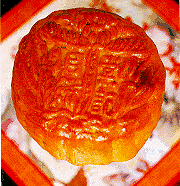
family reunions, moon gazing, and the eating of moon cakes-round pastries
stuffed with red bean paste and an egg yolk, or fruit and preserves.
|
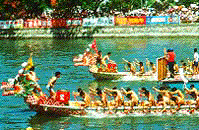 |
The Dragon
Boat Festival is a lunar holiday, occurring on the fifth day of the fifth lunar
month
|
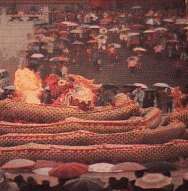
| The Chinese Dragon Boat Festival is a significant
holiday celebrated in China, and the one with the longest history. The Dragon
Boat Festival is celebrated by boat races in the shape of dragons. Competing
teams row their boats forward to a drumbeat racing to reach the finish end
first. |
|
The boat races during the Dragon Boat Festival
are traditional customs to attempts to rescue the patriotic poet Chu Yuan. Chu
Yuan drowned on the fifth day of the fifth lunar month in 277 B.C. Chinese
citizens now throw bamboo leaves filled with cooked rice into the water.
Therefore the fish could eat the rice rather than the hero poet. This later on
turned into the custom of eating tzungtzu and rice dumplings.
|
|
The celebration's is a time for protection from
evil and disease for the rest of the year. It is done so by diffrent practices
such as hanging healthy herbs on the front door, drinking nutritious
concocktions, and displaying portraits of evil's nemesis, Chung Kuei. If one
manages to stand an egg on it's end at exactly 12:00 noon, the following year
will be a lucky one.
|
|
Ching Ming or Qing ming, meaning clear and
bright |
| 15th day from
Spring Equinox-it falls in
early April every year and corresponds with the onset of warmer weather, the
start of spring |
Ancestor
worship is a Chinese tradition that goes back thousands of years. Ching Ming, or
"Remembrance of Ancestors Day", is therefore a key holiday in the
Chinese calendar. On this day families visit cemeteries to sweep their
ancestors' graves and repaint the inscriptions on the headstones to show their
respect.
To "sweep
the graves" means to clear the graves of all the leaves and
weeds and repaint the inscriptions on it. The Chinese believe that too
many leaves surrounding the graves disturb the spirit of the ancestors.
Then food such as fruit, rice, wine, chicken, pork, cakes etc., the
favorite food of the ancestors, will be put around the grave for
the spirit of the ancestors. The Chinese believe that the dead ancestors
are not eating well in their afterlife. Giving them their favorite food
not only shows respect for them but also brings the descendants good
life and health. The Chinese believe that the spirit has power to fulfill
wishes. The food is not wasted as after prayers they will be brought
back and shared among the descendants. The Chinese believe that eating
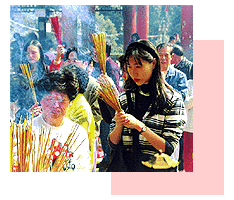
them brings good health. Also, paper money
is burned, candles are lit and the whole family kneels to pay
respect. The Chinese also believes that paper money can be consumed in
heaven or hell.
|
| According to the lunar calendar. The festival's origins
date
back to 200BC when a man of the Han Dynasty avoided a catastrophe in his
village by taking his family to a high place for the day. In Chinese folklore,
the man took with him food and a jug of chrysanthemum wine. This story has
developed into a tradition for Chinese to go picnicking in the mountains
on festival days.
|
|
Chung Yeung is also a
family remembrance day. Families
visit graves to pay their respects to founding ancestors. They share the food
they bring along, especially Chinese cakes, ko, which is a homonym of the
word for "top". Chinese people believe that those who eat cake will be
promoted to the top.
|
|
Girls and young
lovers have this celebration all to themselves. It dates back to Chinese
folklore more than 1, 500 years old. According to one legend, there was
once a weaving maid, with six older sisters, who led a lonely life
working at her loom throughout the year. Her father, the Heavenly
Emperor, felt sorry for her and allowed her to marry a cowherder from
across the Milky Way.
|
| But after the wedding, she so neglected her weaving
duties that the Emperor ordered her to return home and visit her husband
only once a year on the seventh day of the seventh moon.
|
|
On the first day of the
seventh lunar month, known as Ghost Month, the gates of Hell open wide and the
spirits are allowed a month of feasting and revelry in the world of the
living. To ensure that the ghosts enjoy a pleasant vacation, lavish sacrifices
are set out, paper money is burned.
|
|
The climax of Ghost Month comes on the Chung Yuan Festival on
the 15th of the month, when great sacrificial feasts are set out in temples
and elaborate chanting ceremonies for the dead are conducted by Taoist and
Buddhist priests.
|
Fourteenth Day of the Seventh Moon
- Taoists and Buddhists believed that the souls of the dead imprisoned in
hell were freed during the seventh month. From the last night of the sixth
moon, when the gates of hell were opened, through the last night of the
seventh moon, when they were closed again, the released souls were permitted
to enjoy the feasts prepared for them.
- spirits of the dead, most active at night, capable of assuming different
forms, appearing as snakes, moths, birds, foxes, wolves, tigers and so on;
- Can appear as beautiful men or women to seduce the living. When they
possessed an individual by entering the body, they caused illness and mental
disorders.
- Ancestral spirits that were well fed and well cared for were benevolent
and brought good fortune.
- Hungry ghosts with no descendants or those who were neglected were
malevolent, causing droughts, floods and various misfortunes, including
illness and death.
- On the fourteenth day of the seventh moon, families worshipped their
ancestors and provided their spirits with food and new clothes at the altar
with incense, candles, paper offerings and food.
- Following the ceremony, the family gathered for a feast.
- The next day the same offerings were performed again for the hungry ghosts
wandering in the streets and alleys.
- The ceremony was performed outside the front gate in the belief that doing
so could prevent the ghosts from entering the house.
|
|