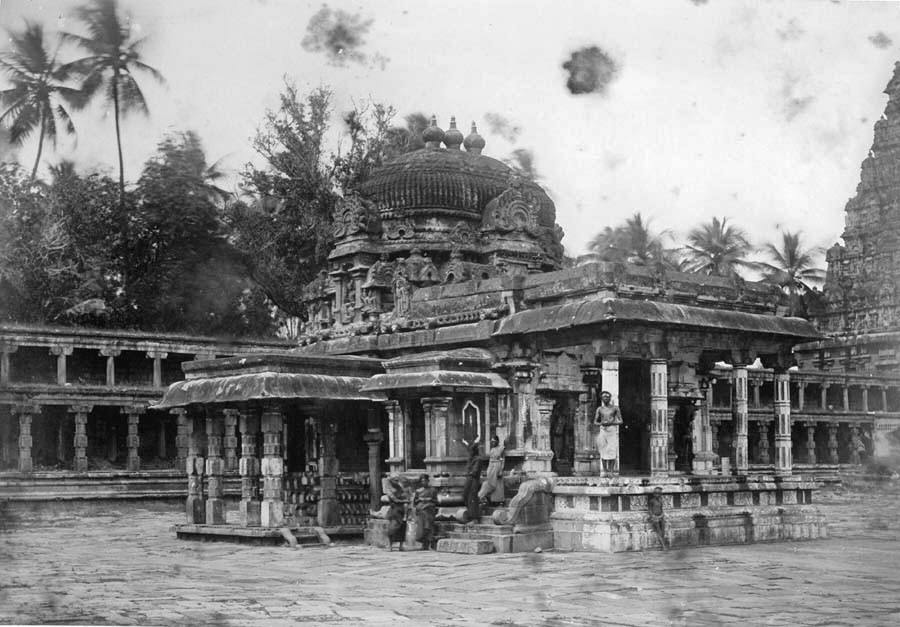
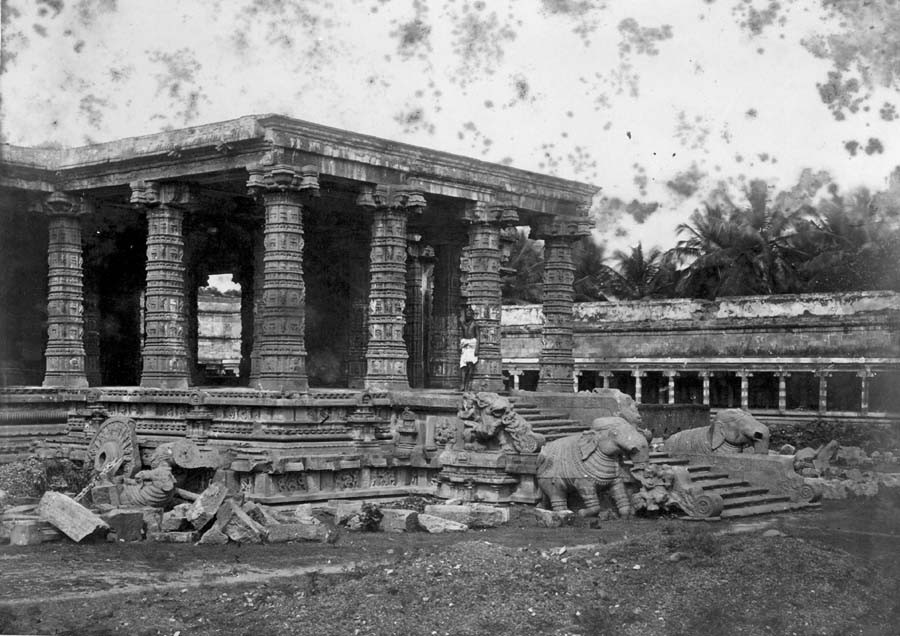
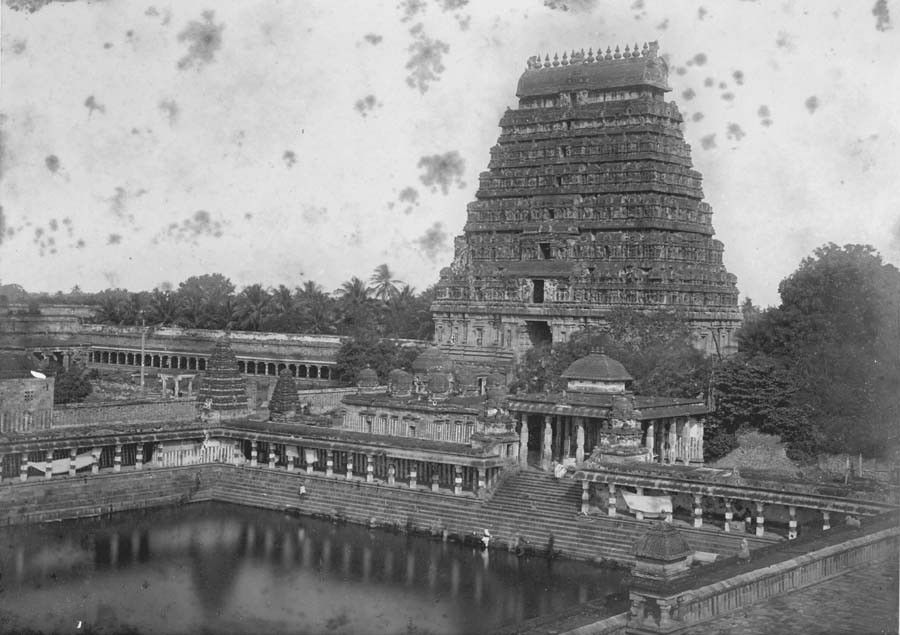
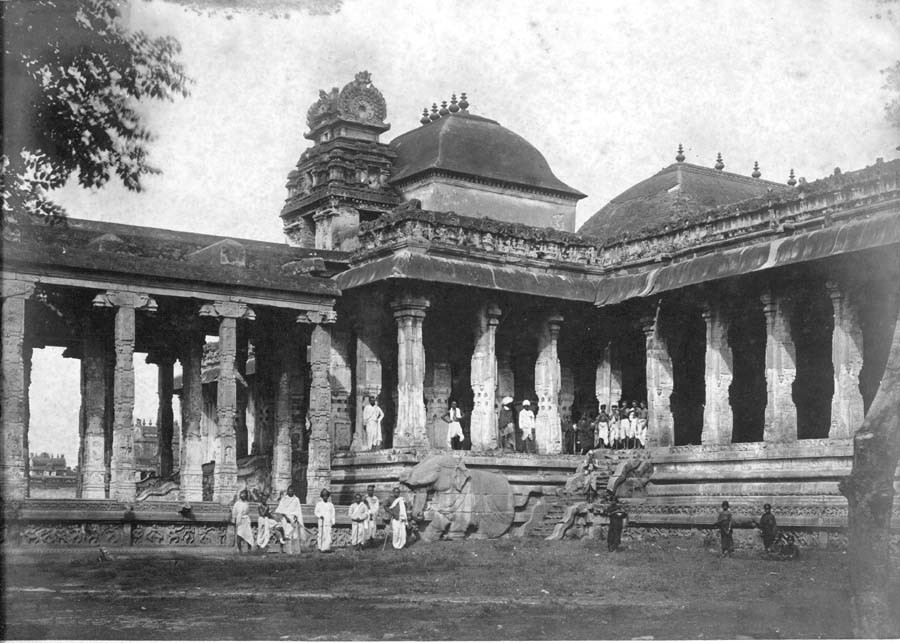
Mukkuruni Vinayaka Shrine; click for a larger image

Pandya Nayaka or Murukan Shrine; click for a larger image North Gopuram with Shivaganga Tirtha; click for a larger image Raja Sabha or 1000 Pillars Hall; click for a larger image Shivaganga Tirtha with the 100 Pillars Hall and the West Gopuram in the background; click for larger image Mandapam in inner courtyard of the Nataraja temple; click for larger image


TREASURES VINAYAKA PANDYANAYAKA GOPURAM RAJASABHA SHIVAGANGA MANDAPAM
MAP BIBLIOGRAPHY GLOSSARY
LINKS
ABOUT
CONTACT


PILLARED MANDAPAM

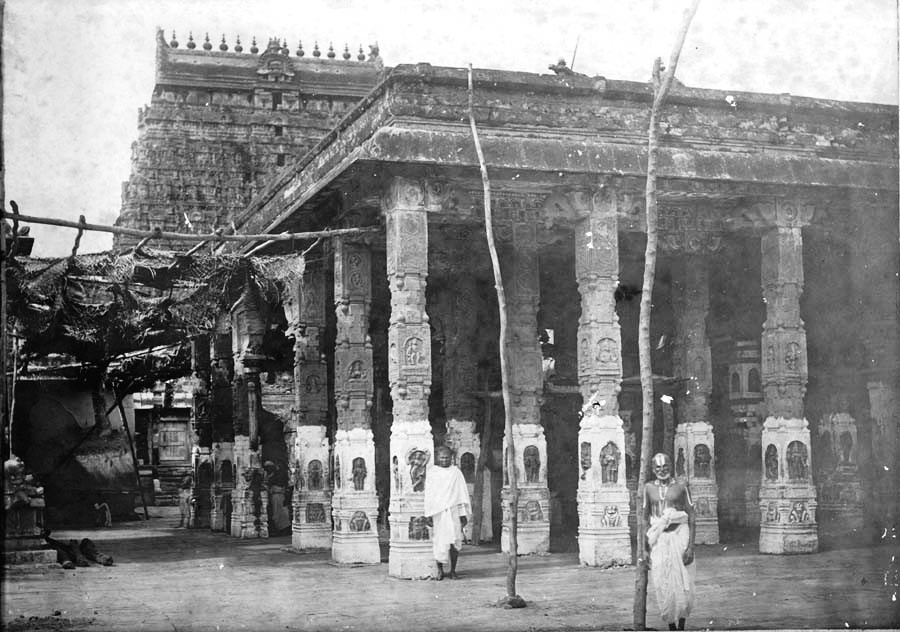
Mandapam in inner courtyard of the Nataraja temple; click for larger image One indication of where this mandapam was once situated is the gopuram in the background. The title of the photo states "Inner temple. Govindaraja Temple". We have deduced the gateway must be the West Gopuram, and the mandapam would have been situated approximately in front of the southern entrance, leading from the 3rd to the 2nd prakara, of the central courtyard and the Cit Sabha. In the left side of the photo we can faintly see the corner of the Nritta Sabha and the head and fore-leg of one of the prancing horses of this chariot shaped shrine. This is therefore a picture of the south-west corner of the 3rd prakara courtyard.

The banana-flower of the podigai of this mandapam is not well developed. And instead of rearing Nagas (cobras) on the corners of the lower portions or base of the pillars we find a kind of bulbous ornament. This element is reminiscent of the decoration of the pillars in the Raja Sabha. The building of the Raja Sabha is attributed to the time of Vikrama Chola (1118-35) or possibly Kulottunga II (1135-50).  We may therefore suggest this mandapam in the 3rd prakara could also have been build in the first half of the 12th century.


From the iconography it can be deduced this mandapam belonged to the Vaisnava tradition of Chidambaram. While Shri Shiva Nataraja is the presiding deity of this temple, the presence and worship of Lord Vishnu in the form of Govindaraja has also always have been part of its traditions.


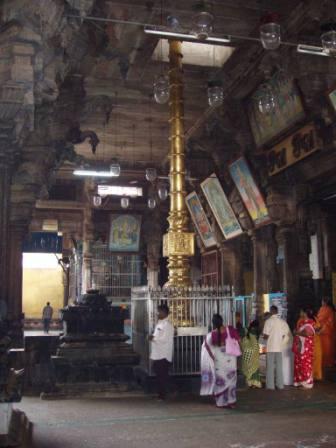
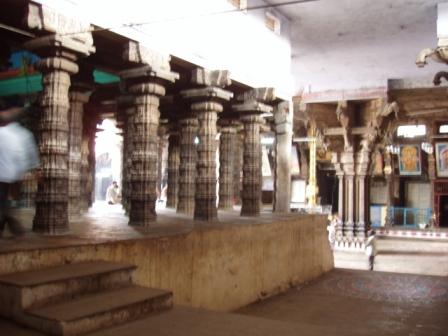
This mandapa would, in all probability have the dvajasthambha or flagmast at its centre, with the balipitha or altar. On the left we see a photo of how this part of the temple looks today. On the next photo we have a view from the side of the Nritta Sabha.


NEW: Watch the video on YouTube
Watch the video on YouTube

Copyright � 2007 Raja Deekshitar. All rights reserved. Revised: 03/11/07.
The authors would like to thank the Digital South Asian Library for its kind permission to reproduce the six photos of the Shri Shiva Nataraja temple in Chidambaram.
All other photos by the authors.

Hosted by www.Geocities.ws

1