Russia
Inspired partly by Marxs ideas the Russian Revolution to place during world warI by the bolshiveks to overthrough the Dictatorship their. It was led by Leon Trotsky when they took control Vladamer Lenin took power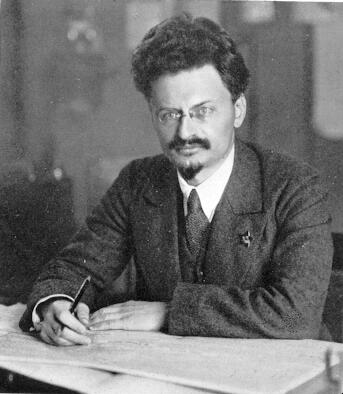
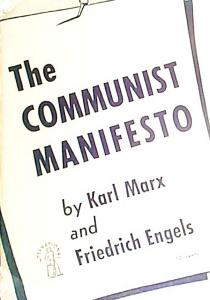 Marx was not really mistaken, but simply underestimated the duplicity of the bourgeoisie. But Lenin went one step further, and argued that even if they were not being "bribed," workers by themselves would never initiate the socialist revolution. As Richard Pipes explains, "The longer he observed the behavior of workers in and out of Russia, the more compelling was the conclusion, entirely contrary to the fundamental premise of Marxism, that labor (the "proletariat") was not a revolutionary class at all: left to itself, it would rather settle for a larger share of the capitalists' profits than overthrow capitalism... In a seminal article published at the end of 1900, Lenin uttered the unthinkable: 'the labor movement, separated from Social-Democracy... inevitably turns bourgeois.'" (The Russian Revolution) As Lenin put it in his What is To Be Done?, "The history of all countries shows that the working class exclusively by its own efforts is able to develop only trade union consciousness."
If the working class by itself develops mere "trade union consciousness," then how can mankind reach the final stop on the March of History - namely, Communism? Lenin's answer was that this could only be accomplished with the firm guidance of professional revolutionaries who would be a combination of sages and generals of the proletariat. As Paul Johnson explains:
[Lenin's] entire life was spent among the members of his own sub-class, the bourgeois intelligentsia, which he saw as a uniquely privileged priesthood, endowed with a special gnosis and chosen by History for a decisive role. Socialism, he wrote quoting Karl Kautsky, was the product of "profound scientific knowledge... The vehicle of [this] science is not the proletariat but the bourgeois intelligentsia: contemporary socialism was born in the heads of individual members of this class. (Modern Times)
But if the intellectuals guide the workers, who guides the intellectuals? That, Lenin answered, is to be done by a rigidly hierarchical, strictly disciplined Party - headed by himself. As Lenin continued to develop his tactical views, it became clear that not only would the party lead the proletariat to victory, but would also hold the reins of power for the proletariat after victory was achieved. Leon Trotsky, though initially a critic of Lenin, eventually became his enthusiastic supporter; he explained their doctrine thusly:
In the composition of [the proletariat] there enter various elements, heterogeneous moods, different levels of development. Yet the dictatorship pre-supposes unity of will, unity of direction, unity of action. By what other path can it be attained? The revolutionary of the proletariat presupposes within the proletariat itself the political of a party, with a clear program of action and a faultless internal discipline. (The Defense of ism)
Lenin conspicuously failed to elaborate upon the great void in Marxist theory: to wit, precisely what would "socialism" be? Marx had repeatedly declared it "unscientific" to specify - a clever trick for uniting quarreling socialists, but hardly intellectually satisfying. Lenin scarcely advanced further than this when he seized power: "All citizens are here transformed into hired employees of the state, which is made up of the armed workers... All that is required is that they should work equally, should regularly do their share of the work, and should receive equal pay. The accounting and control necessary for this have been simplified by capitalism to the utmost, till they have become the extraordinarily simple operations of watching, recording and issuing receipts, within the reach of anybody who can read and write and knows the first four rules of arithmetic." (State and Revolution) But Lenin combined simple-minded programs with a calculating cynicism. For whatever policies he might advocate, there was but one target in his sights, as he plainly states: "The point of the uprising is the seizure of power; afterwards we will see what we can do with it."
Marx was not really mistaken, but simply underestimated the duplicity of the bourgeoisie. But Lenin went one step further, and argued that even if they were not being "bribed," workers by themselves would never initiate the socialist revolution. As Richard Pipes explains, "The longer he observed the behavior of workers in and out of Russia, the more compelling was the conclusion, entirely contrary to the fundamental premise of Marxism, that labor (the "proletariat") was not a revolutionary class at all: left to itself, it would rather settle for a larger share of the capitalists' profits than overthrow capitalism... In a seminal article published at the end of 1900, Lenin uttered the unthinkable: 'the labor movement, separated from Social-Democracy... inevitably turns bourgeois.'" (The Russian Revolution) As Lenin put it in his What is To Be Done?, "The history of all countries shows that the working class exclusively by its own efforts is able to develop only trade union consciousness."
If the working class by itself develops mere "trade union consciousness," then how can mankind reach the final stop on the March of History - namely, Communism? Lenin's answer was that this could only be accomplished with the firm guidance of professional revolutionaries who would be a combination of sages and generals of the proletariat. As Paul Johnson explains:
[Lenin's] entire life was spent among the members of his own sub-class, the bourgeois intelligentsia, which he saw as a uniquely privileged priesthood, endowed with a special gnosis and chosen by History for a decisive role. Socialism, he wrote quoting Karl Kautsky, was the product of "profound scientific knowledge... The vehicle of [this] science is not the proletariat but the bourgeois intelligentsia: contemporary socialism was born in the heads of individual members of this class. (Modern Times)
But if the intellectuals guide the workers, who guides the intellectuals? That, Lenin answered, is to be done by a rigidly hierarchical, strictly disciplined Party - headed by himself. As Lenin continued to develop his tactical views, it became clear that not only would the party lead the proletariat to victory, but would also hold the reins of power for the proletariat after victory was achieved. Leon Trotsky, though initially a critic of Lenin, eventually became his enthusiastic supporter; he explained their doctrine thusly:
In the composition of [the proletariat] there enter various elements, heterogeneous moods, different levels of development. Yet the dictatorship pre-supposes unity of will, unity of direction, unity of action. By what other path can it be attained? The revolutionary of the proletariat presupposes within the proletariat itself the political of a party, with a clear program of action and a faultless internal discipline. (The Defense of ism)
Lenin conspicuously failed to elaborate upon the great void in Marxist theory: to wit, precisely what would "socialism" be? Marx had repeatedly declared it "unscientific" to specify - a clever trick for uniting quarreling socialists, but hardly intellectually satisfying. Lenin scarcely advanced further than this when he seized power: "All citizens are here transformed into hired employees of the state, which is made up of the armed workers... All that is required is that they should work equally, should regularly do their share of the work, and should receive equal pay. The accounting and control necessary for this have been simplified by capitalism to the utmost, till they have become the extraordinarily simple operations of watching, recording and issuing receipts, within the reach of anybody who can read and write and knows the first four rules of arithmetic." (State and Revolution) But Lenin combined simple-minded programs with a calculating cynicism. For whatever policies he might advocate, there was but one target in his sights, as he plainly states: "The point of the uprising is the seizure of power; afterwards we will see what we can do with it."
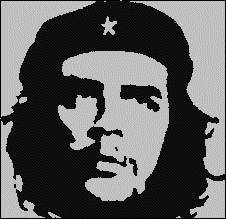 Then Communism spread to south america with Castro and Che Guevera who led a group of gureillas against batista the cuban dicatator of the time. Castro did not expose his leftest leanings rather spoke of a capitlilstic society gaining favor with the U.S. who asked Batista to leave he did not so The United States cut arms trade and Castro took power but his communism became a dictorship when he refused free election. Che left and went to bolivia to stir revolution there. During that time he was shot by bolivian officials, but it is rumored that the CIA disturbed by the spread of change near there borders played a part in the of a great revolutionary.