 | | | | | | | | | | | | | | | | | | | | | | | | | | | | | | | | |
 |
|
|
 |
|
|
|
Private John Wood |
|
|
|
|
|
51st (Edmonton Overseas) Battalion,
Canadian Expeditionary Force
|
|
|
|
|
|
John Jacob Wood was born on 29 July 1892, at Charles Street, Strood, (in Kent). He was the ninth of Frederick Louis Wood's
thirteen children, and was thirteen years old when he emigrated with his parents to Canada in 1905.
|
|
|
 |
|
|
|
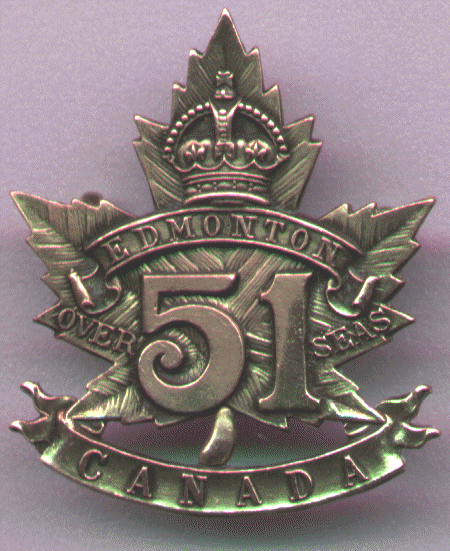
When war broke out in 1914, John had just celebrated his twenty-first birthday, and was working as a labourer in Edmonton,
Alberta. On 5 January 1915, he volunteered for service with the 51st (Edmonton Overseas) Battalion of the CEF. John had poor eyesight, and at his medical examination was unable to make out the letters on the sight-test card, but he was accepted for
service nonetheless, and became No.436163, Private Wood. When he enlisted, John was 5' 10 �" tall, 158lbs, with blue eyes and brown hair. He underwent basic military training with the 51st Bn at Camp Sarcee, on the outskirts of Calgary,
Alberta.
|
|
|
|
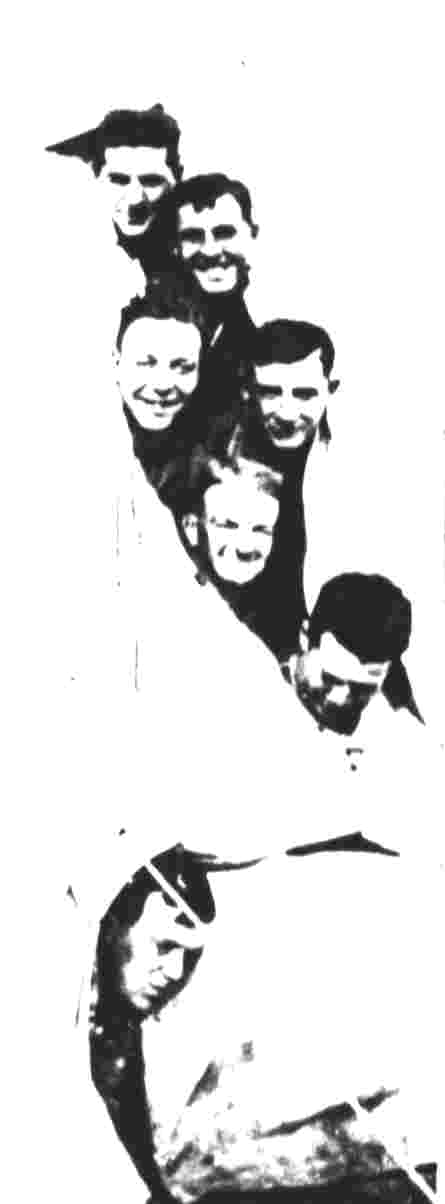
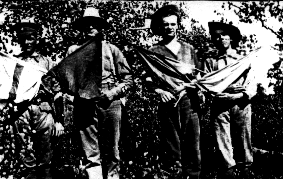
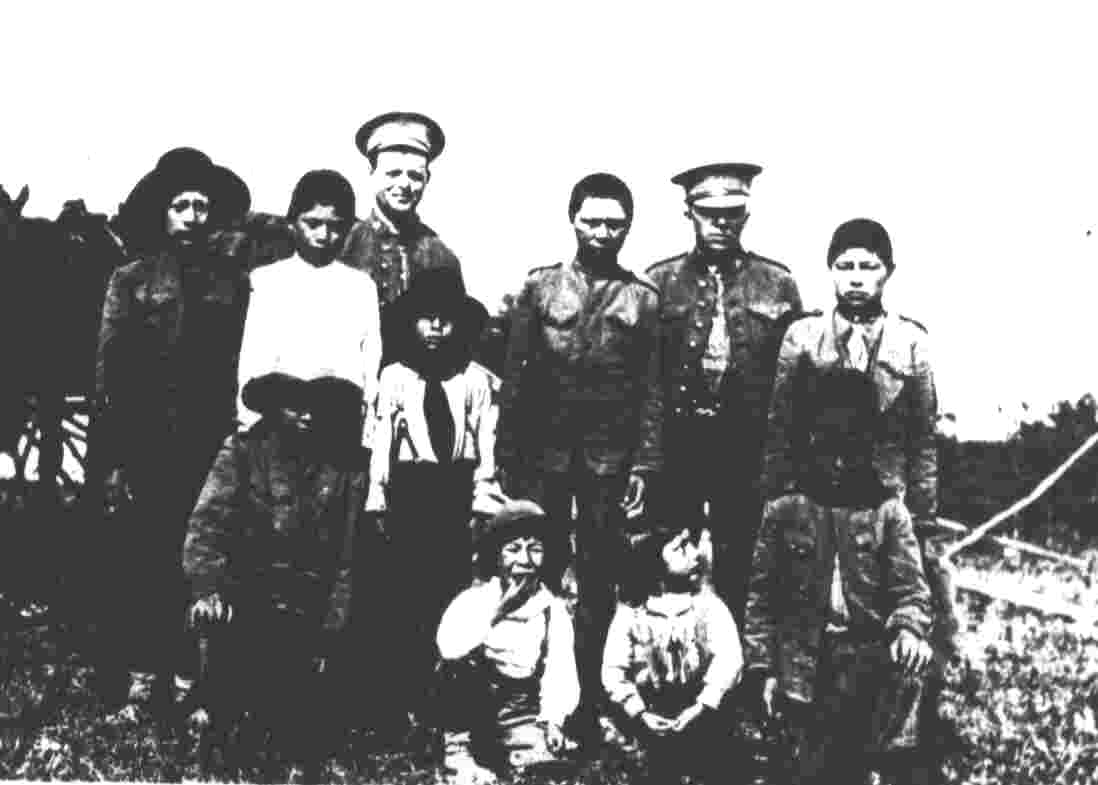
The 51st Battalion, CEF, in training.
Camp Sarcee, Alberta, 1915. |
|
|
|
 |
|
 |
|
 |
|
|
|
|
|
These photographs of the 51st Bn in training were taken by my late uncle, No. 436371 Private Bill Brown. Like John Wood, Bill
was a resident of Edmonton, and the two enlisted in the 51st Bn one week apart in January 1915. They trained together, but were separated when the 51st was broken up in England, to replenish depleted CEF battalions already in the field.
John
fought on the Western Front with the 4th (Central Ontario) Bn, whereas Bill served alongside John's younger brother, Percy, in the 46th (South Saskatchewan) Bn. You can read more about Uncle Bill's war service in my "Boys from the Old Swan" Web site.
|
|
|
|
In June 1915, John was shipped to England, and assigned to the 9th Reserve Bn, based at Shorncliffe (near Folkestone), in his
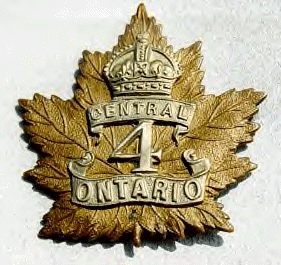
native Kent. On 3 August 1915, he was transferred to the 4th (Central Ontario) Bn, already serving in France and Flanders as part of the 1st Brigade of the 1st Canadian Division.
When John joined his new unit in the field the late summer of
1915, the 4th Bn was regrouping after its involvement in the Second Battle of Ypres (22 April - 4 May 1915), where the Canadians had fought desperately to prevent the Germans from squeezing closed the Ypres Salient. In that engagement, the 4th Bn had
fought at the far left of the Canadian line, suffering |
 |
|
|
heavy losses defending the Pilckem Road in the face of infantry, artillery and gas attack. The battalion had subsequently
fought in the frontline at the Battle of Festubert, from 17 to 31 May 1915, in support of an unsuccessful British attempt to occupy the Aubers Ridge. On 31 May, the Canadian Division had been withdrawn from the Ypres Salient, and had returned to the
routine of "normal" trench warfare in the trenches south of Ypres. |
|
|
|
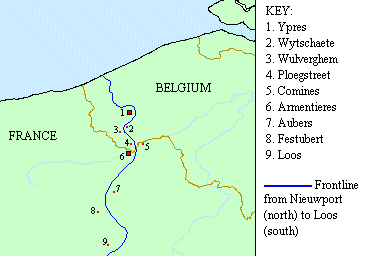
The 1st Canadian Division on the Western Front
April 1915 - March 1916 |
|
|
|
 |
|
The Canadian 1st Brigade, of which the 4th Bn was a part, was manning the sector of the trenches from Ploegsteert to Wulverghem
when John Wood arrived to join them in the late summer of 1915. This sector had been the scene of fierce fighting for the towns of Comines and Wytschaete in the autumn of 1914, but had been comparitively quiet with no major engagements since
then.
John's battalion remained in the Ploegsteert area until late March, 1916. Even without a major offensive, life in even the "quiet" sectors was one of constant danger. In late September 1915, the 4th Bn took part in a series of decoy
attacks, designed to occupy local German forces and prevent any of them being transferred out of the area to counter |
|
|
|
the real British offensive further south at Loos. The battalion then spent much of October on building work, strengthening the
line by improving the quality of the trenches. By November, winter had set in, and the trenches around Ploegsteert were flooded with heavy rain and cloying mud. By night, the trenches were often shrouded in thick fog, which the Canadians took advantage
of to mount regular patrols in no-man's-land. The wintry conditions soon affected John's health, and he was hospitalised from 21 November to 5 December, suffering from "trench fever". |
|
|
|
The Ypres Salient:
John Wood in action with the 4th Bn CEF, March - July 1916 |
|
|
|
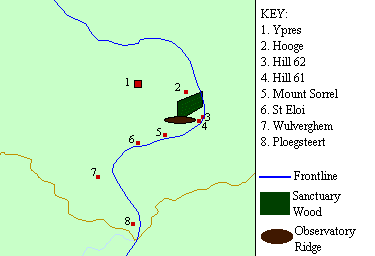
In late March 1916, the three Divisions of the Canadian Corps were transferred back to the Ypres Salient, where they took over
responsibility for manning the southern sector of the Salient, from Hooge to St Eloi. This sector was regarded as one of the most difficult areas of the line, and the trenches around Hooge in particular had been fought over fiercely and changed hands
several times during the summer of 1915. The Canadians faced determined attacks through the spring and summer of 1916, aimed at finally pushing the Allies out of Ypres. On 2 June, the northern part of the Canadian line came under heavy attack, and the
3rd Canadian Division was forced back from Mount Sorrel, Sanctuary Wood, Observatory Ridge, and Hills 61 & 62. On 6 June, they were also forced out of Hooge, leaving all the heights on the southern outskirts of Ypres in German hands.
|
|
 |
|
|
|
|
John Wood was hospitalised with influenza at No.3 Canadian Field Ambulance for most of May 1916. He returned to his unit on 11
June, as it was preparing for a major offensive on the night of 12/13 June. The purpose of the attack was to regain the areas around Sanctuary Wood, which had been lost in the German offensive ten days earlier. John's Brigade - the Canadian 1st Bde -
was to spearhead the attack, and his battalion took up its starting position facing Observatory Ridge. A heavy artillery bombardment preceded the infantry attack, which began in heavy rain during the early hours of 13 June. The bombardment proved to
have been most effective in reducing German defences: despite the fact that the infantry was advancing in some places through knee-deep water, within one hour the 1st Canadian Brigade succeeded in recapturing much of the land lost on 2 June, and once
again controlled the heights defending the southern approaches to Ypres.
John Wood emerged unscathed from this successful offensive, but the conditions in which the Canadians were fighting again took a toll on his health. On 24 June 1916, he was
again hospitalised, this time suffering from "trench foot". After two weeks in hospital he returned to his unit, which was about to embark on a three-day offensive against enemy positions around Mount Sorrel. During fighting on the first day of the
attack, 9 July 1916, John was severely wounded by an exploding shell. He was struck by shrapnel in the right temple and the top of the head, and was bleeding from both ears when he was admitted to No.35 General Hospital in Calais on 10 July. He was
shipped back to England, and treated at No.1 Northern General Hospital in Newcastle-upon-Tyne, and Bearwood Convalescent Hospital in Wokingham. By 14 August, his head wounds had healed well enough for John to be transferred to the Canadian Convalescent
Assembly Centre in Shorncliffe, where a Medical Board would decide his fitness to continue serving in the CEF.
At a detailed medical examination on 24 August 1916, it was discovered that John was suffering 50% hearing loss, due to his shrapnel
wound and shell concussion, which had ruptured both eardrums. (The left eardrum was also severely infected). The Board acknowledged that "[John Wood's] ear condition is serious and is almost entirely due to service. He does not hear voices today at
15ft, and barely hears loud voices at 2ft." It concluded that there was very little chance of improvement under service conditions, and recommended that John be discharged with a pension for one year of $96.
|
|
|
|
 |
|
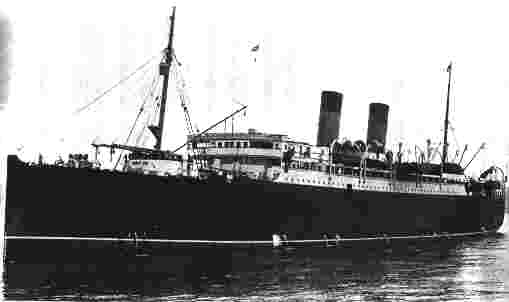
On 15 September 1916, John Wood sailed for Canada on the S.S.Missanaubie (left). He returned to Alberta, and spent the
following 6 months as a patient at Mount View Convalescent Home in Calgary, where he was treated for his continuing ear infection and for tuberculosis, which he was deemed to have contracted due to "trench exposure". A final Medical Board on 17 April
1917 confirmed the previous finding that John's head injury had left him with a permanent 50% hearing loss, and ruled that he was therefore unfit for further military service.
|
|
|
|
|
|
John was discharged from the CEF on 30 June 1917. He returned home to Edmonton, where he lived at 10616-71st Avenue. On 10
November 1919, he was awarded the 1914-15 Star, the British War Medal and the Allied Victory Medal, in recognition of his military service in France and Flanders.
John Jacob Wood died at Veterans' Pavilion, Edmonton, on 24 May 1969, and was buried
in Mount Pleasant Cemetery. He was survived by a son, three daughters, and just three of his twelve siblings (Herbert, Charles and Ellen).
|
|
|
|
|
|
 |
|
 |
|
 |
|
|
|
|
or return to Biographies home page |
|