| The First Battle of Ypres 18 October - 12 November 1914 |
|||||||||||||||||||||||||||||||||||||||||||||||||||||||||||||||||||||||||||||||||||||||||||||||||||||||||||||||||||||||||||||||||||||||||||||||||||||||||||||||
| As the "Race to the Sea" forces the German and Franco-British Armies northwards to within sight of the English Channel, the
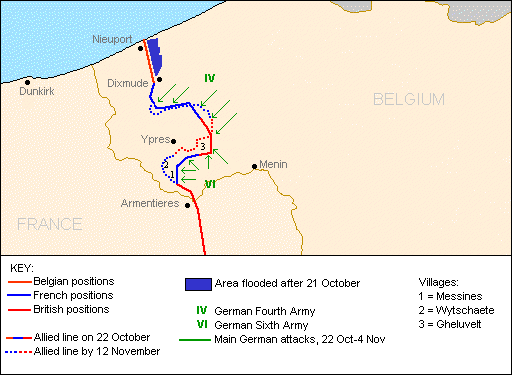
German Fourth Army under General Albrecht makes a final attempt to break through to the Channel ports and turn the Allied frontline. On 17 October, the Fourth Army attacks simultaneously the Belgian-held northernmost sector of the line, from Nieuport to
Dixmude, and the BEF and French Territorial forces defending Armentieres, 30 miles to the south. As the French and Belgian forces to the north and south are driven back, Lieutenant-General Douglas Haig's I Corps of the BEF, deployed around Ypres, is
left exposed in a vulnerable salient protruding into German-occupied territory. By 21 October, the hard-pressed Belgian defenders are exhausted and running out of ammunition. To stem the German advance, they open the locks on the River Yser, allowing the sea to flood the low-lying fenland from Nieuport to Dixmude. This forces Albrecht to redirect his forces southwards from Dixmude, and from 22 October the full weight of the Fourth Army's attack falls upon the British forces (including the first Imperial contingents, from India and Canada) defending the salient around Ypres. The First Battle of Ypres has begun. |
|||||||||||||||||||||||||||||||||||||||||||||||||||||||||||||||||||||||||||||||||||||||||||||||||||||||||||||||||||||||||||||||||||||||||||||||||||||||||||||||
| First Ypres, October-November 1914 | |||||||||||||||||||||||||||||||||||||||||||||||||||||||||||||||||||||||||||||||||||||||||||||||||||||||||||||||||||||||||||||||||||||||||||||||||||||||||||||||
![]() |
|||||||||||||||||||||||||||||||||||||||||||||||||||||||||||||||||||||||||||||||||||||||||||||||||||||||||||||||||||||||||||||||||||||||||||||||||||||||||||||||
| The French IX Corps arrives on 22 October to reinforce the northern half of the salient, as heavy German attacks by both Fourth
and Sixth Army develop against the north and south of the Allied position. Fighting all along the salient is continuous from 24 October, and an additional six German divisions are thrown into the assault on the southern side of the salient on the 27th.
Between 30 October and 4 November, in the heaviest fighting of the war so far, British and French forces are driven from Wytschaete and the strategically-important Messines Ridge, and barely hold on to Gheluvelt. On 10 and 11 November, the Germans launch one final great push against French forces around Dixmude and British positions at Gheluvelt, which is finally repulsed only when the last available allied reserves are thrown into the battle for Gheluvelt. Although minor attacks continue around Ypres until 22 November, the failed offensive of 11 November marks the end of large-scale German operations in the first battle for Ypres. Although stretched to their limit, the Franco-British forces hold on to Ypres and frustrate Germany's last hope of winning a war of movement in the west. The stalemate at First Ypres ends both sides' hopes of turning the other's line, and they begin to dig trenches to reinforce the defensive positions that they hold. Casualties during the four weeks of the First Battle of Ypres totalled about 130,000 men on the German side, including thousands of enthusiastic new recruits in action for the first time. From this derives the German name for the battle, Kindermord (The Massacre of the Innocents). Losses on the Allied side include 58,000 British casualties and 50,000 French. British losses are particularly significant, as they represent the end of Britain's small, pre-war professional army. First Ypres is regarded as the final battle of the British Expeditionary Force, as all that remains afterwards is a small, professional core that will train the thousands of new volunteers who will need to be recruited for a long, drawn-out war. |

|||||||||||||||||||||||||||||||||||||||||||||||||||||||||||||||||||||||||||||||||||||||||||||||||||||||||||||||||||||||||||||||||||||||||||||||||||||||||||||||
| or return to The Great War home page> | |||||||||||||||||||||||||||||||||||||||||||||||||||||||||||||||||||||||||||||||||||||||||||||||||||||||||||||||||||||||||||||||||||||||||||||||||||||||||||||||