
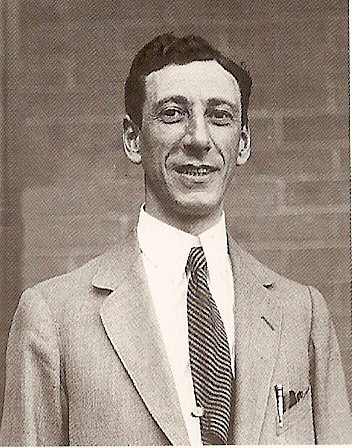
This is an article from Classic Bike magazine (March 1988) by American motorcycle historian Jerry Hatfield about the contributions of Charles Franklin to motorcycling in the USA. It is the most comprehensive and scholarly piece of writing I have yet seen that focuses upon Franklin himself and sets his achievements within their historical context. There are some factual differences between this account and the writings of Harry Sucher, which are beyond my power to resolve. Both authors are still in the land of the living, so could yet correspond to compare sources if they chose to do so.
For many years the United States enjoyed a love affair with the side-valve engine, in the automotive world through the 'flathead' Ford V8, and in the motorcycle field through Indian and Harley-Davidson. A stubborn preference of American consumers for this obviously 'wrong' design, found a match in equally obstinate engineers who made these upside-down and sideways combustion chambers work better than they should. As a result, the side-valve engine hung around in the USA long after the rest of the world got wiser.
One of these hard-headed engineers was an Irish expatriate, Charles Bayly Franklin, who evolved from an outstanding racer in Britain to a successful designer in America. Outside the USA, Franklin is usually ignored in accounts of the world's great motorcycle designers. He deserves better.
Franklin was born in 1880 at 1 St Patrick's Villas, Whitworth Road, Dublin (a house that still stands today). His father was a shipwright, and later an iron and metal merchant. Charles graduated from the Dublin College of Science as an electrical engineer, and became interested in pioneering motorcycling while employed in the city's municipal engineering department.
In 1903 he bought his first machine, an FN, and immediately entered a hillclimb at Glenamuck, an event which was stopped by the police. Soon he began winning in sand racing, where his twin hallmarks were meticulous machine preparation and spirited yet cautious riding. Notably, he never fell in the tricky sand-race turns which brought grief to so many, and of his wins in reliability trials and hillclimbs, The Irish Cyclist and Motorcyclist stated, 'A list of them would fill a volume.'
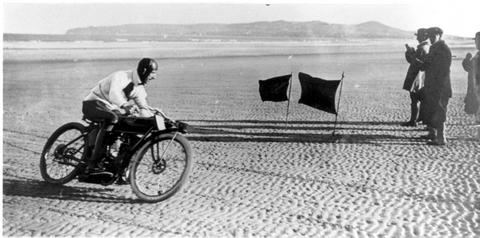
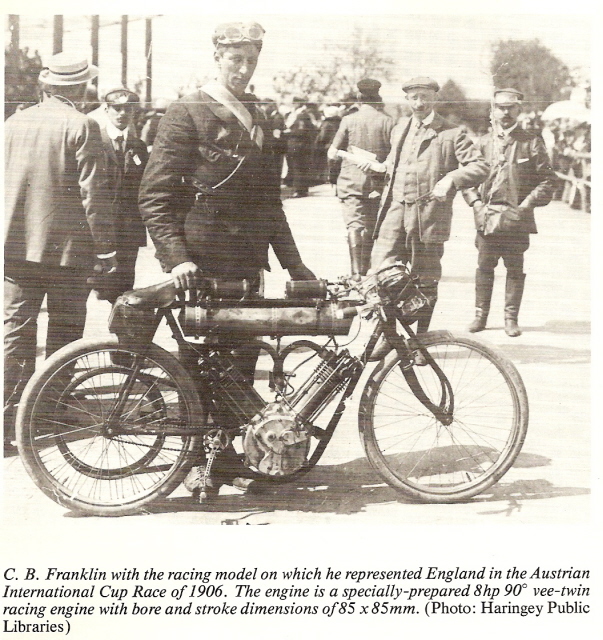
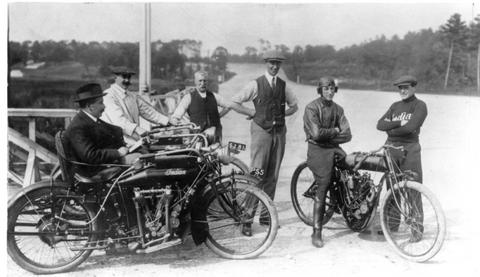
In 1905 the British team trials for the International Cup race were held on the Isle of Man. Franklin led for several laps and eventually finished third, on a JAP: his performance earned him a team place in France in 1905 and Austria in 1906. He began competing at Brooklands in 1910, finishing third on an Indian in a 160-mile Tourist Trophy race. In the same year, he quit his job with the Rathrnines electricity works in Dublin, and became Irish agent for Indian, then known as the Hendee Manufacturing Company.

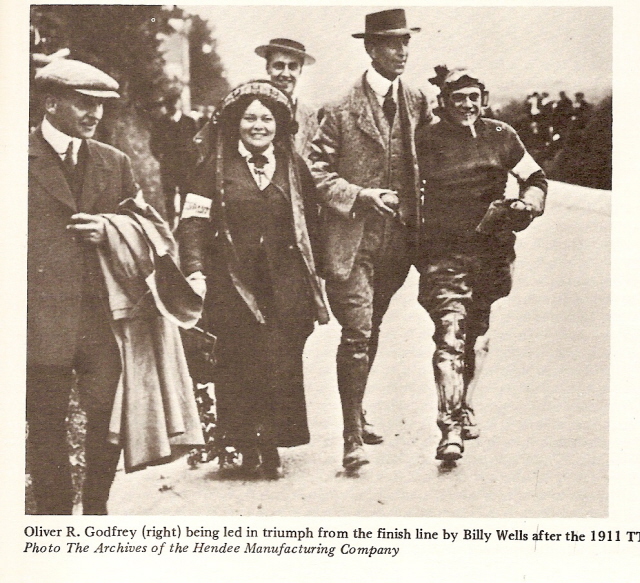
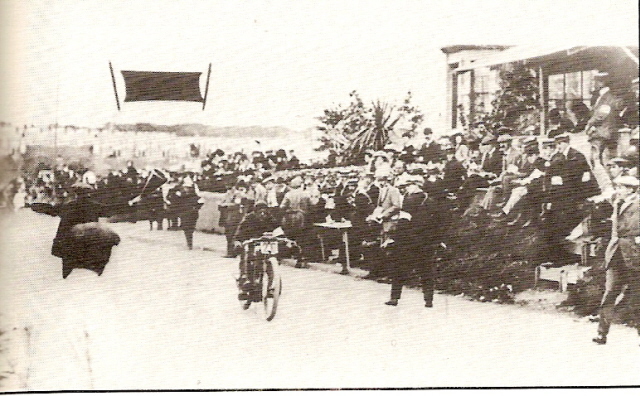
In 1911 Franklin led the 280-mile French GP at the 220-mile mark, and by 25 minutes! A series of punctures slowed him to third place, but in the Isle of Man TT, he finished second to team-mate 0 C Godfrey on that glorious occasion when Indians scooped the first three places.
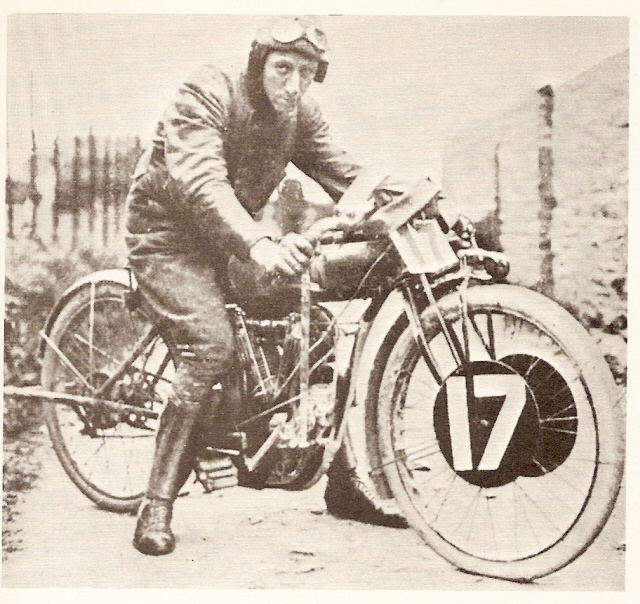
Historian Peter Hartley, in his Bikes at Brooklands, recorded the significance of these 1911 Brooklands events. Franklin, according to Hartley, accidentally fell upon the squish principle of combustion chamber design after welding a lump of metal in the combustion chamber roof of his inlet-over-exhaust Indian twin.
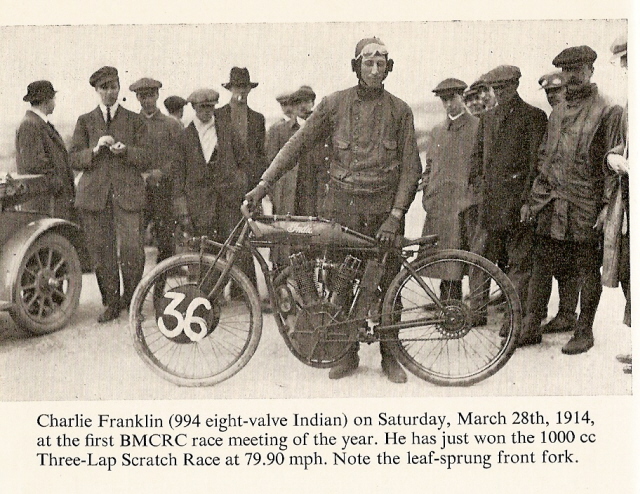
In 1912, Franklin broke seven world records at Brooklands, including the six hours, on an Indian V -twin. During this effort, he became the first motorcyclist to ride 300 hours in 300 minutes. In 1914, again at Brooklands, he set a new ten-mile standing start record of 77. 95mph. He won the last three scratch races he competed in at Brooklands, before retiring from competition.
[Page 2]