
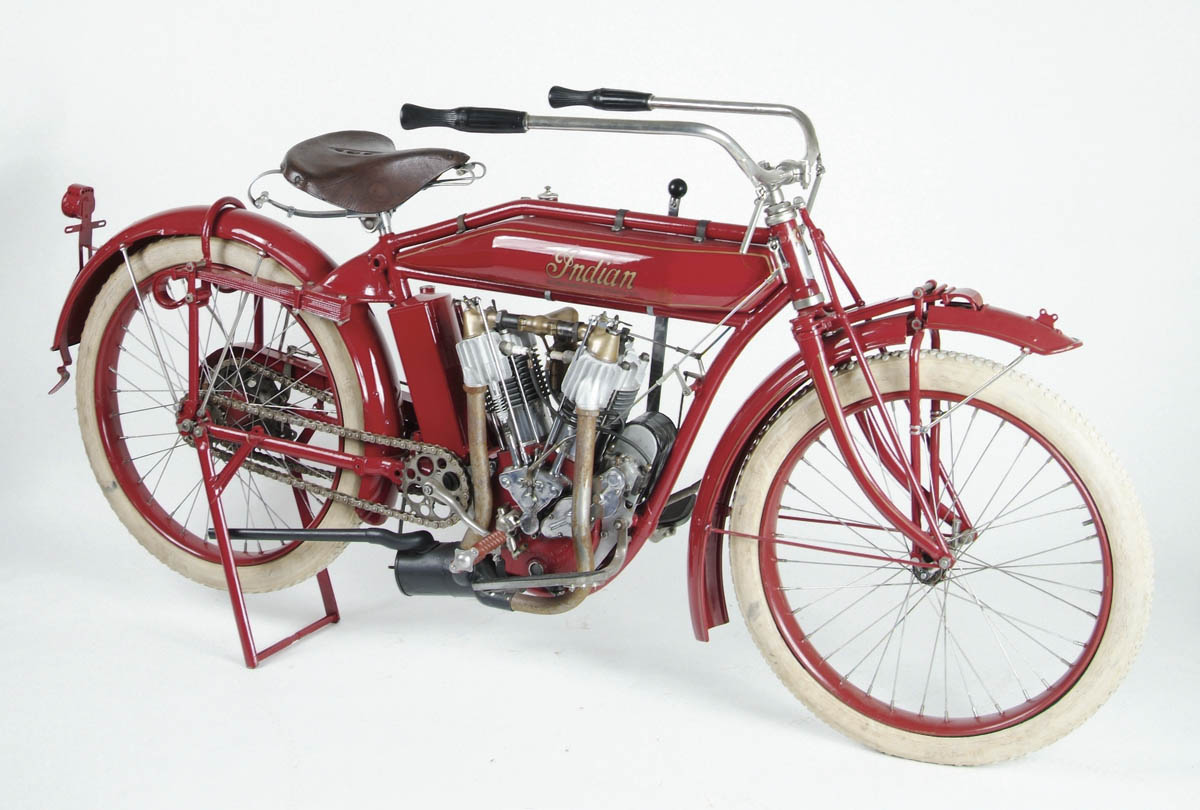
10. Franklin joined Charles Gustafson Snr, and Jnr, who were in the process of replacing Hedstrom�s inlet-over-exhaust (F-head) engines with a side-valve type they�d become familiar with during their previous jobs with Reading �Standard. This new side-valve engine, placed into the F-head chassis, became the famous Powerplus that kicked off a second golden age at Indian. The Powerplus gave sterling service in WWI, and in the 1920�s (because of its chain primary drive) it formed the basis of Indian racers such as Le-Vack�s winning bike in the 500 Mile Race;
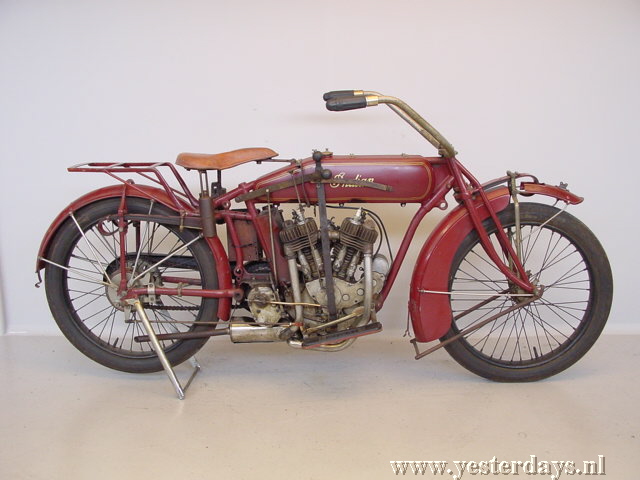
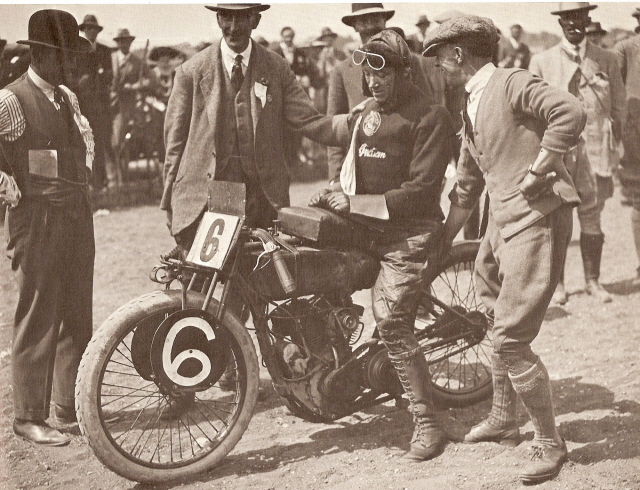
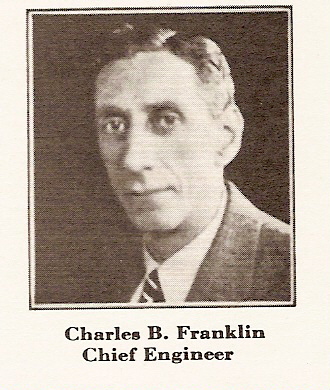
11. In 1919 Franklin drew upon ideas he�d been developing since 1912 to begin work on his brainchild, a new motorcycle that would represent a unified and integrated design. This was in contrast to the usual industry practice of making �parts-bin specials� comprising proprietary parts or left-overs from previous models. His 1920 600cc Indian Scout, a middle-weight v-twin, thus heralded the concept of the modern sporting motorcycle as a ground-up design package. It set a pattern containing fundamental design elements that all mainstream manufacturers would copy and use for decades hence;
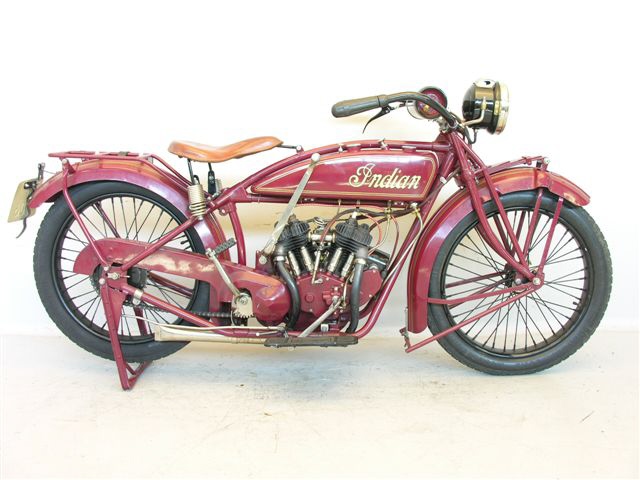
12. Franklin followed this up in 1922 with the Indian Chief, which was essentially a bigger Scout and intended as a workhorse. It was to be the only model still in production when Indian finally closed its doors in 1953. Harley-Davidson tried to ignore the existence of the Chief s.v. design and persevered with its own J-model (with fragile overhead-inlet-valve configuration) until 1929. At this time the reliability advantages of enclosed side-valves over exposed OHV (with negligible difference in speed) so obvious to Indian way back in 1915 were finally adopted by H-D for their J-model replacement, the s.v. VL-model. With these models, the US Big Two codified heavy-weight v-twins as the �Standard American Motorcycle� from that time to this;
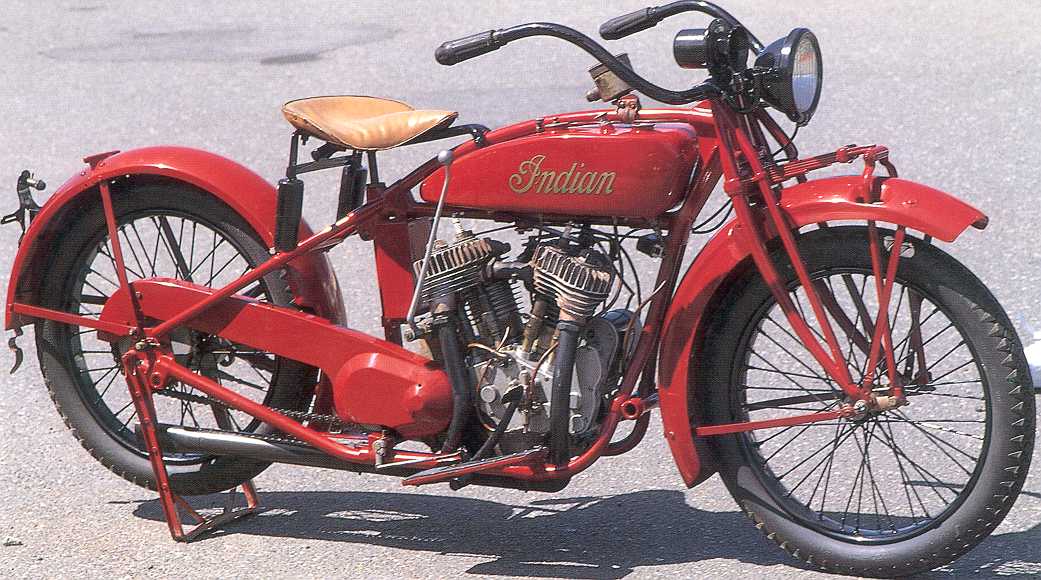
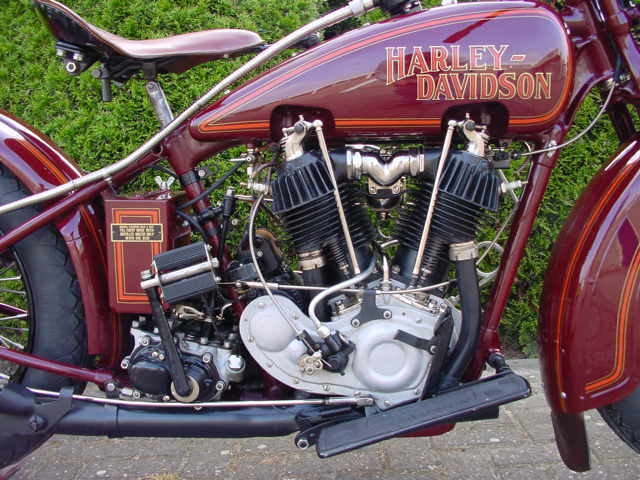
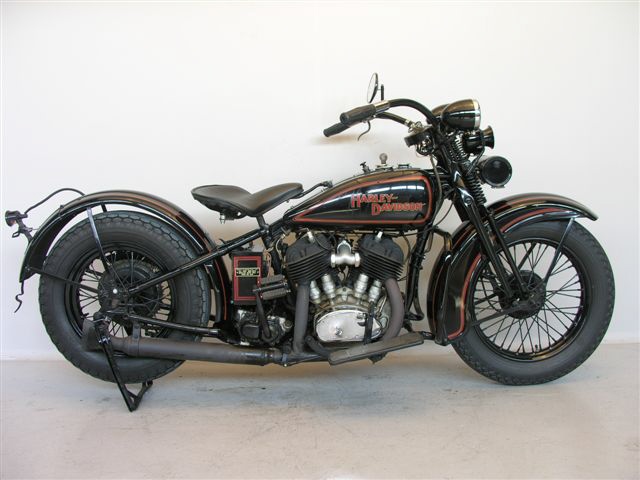
13. In the mid-1920�s Franklin designed English-style 350 singles with side-valve, OHV (similar to AJS) and prototype OHC (similar to KTT Velocette) configurations, but these did not sell in v-twin-oriented USA and did not penetrate in export markets partly because of heavy tariffs imposed on American machinery by Britain and its dominions, and partly because management woes blunted their marketing efforts;
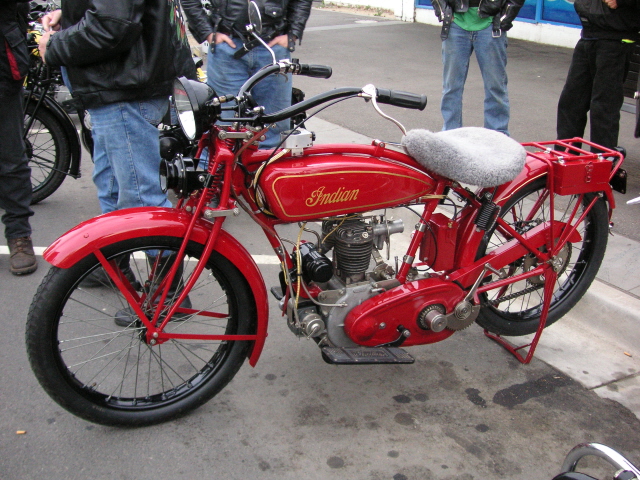
14. In 1925 he designed an OHV v-twin racing engine which record-breaking efforts in US, France and Australia subsequently showed would have had the legs on a Brough Superior in Brooklands competition had one ever appeared there, but fewer than 50 were ever made and they were only released to favoured US hill-climb racers;

15. General economic conditions in the late 1920�s, the ridiculous amount of effort that Indian put into development of the Ace Four as an Indian model, and Franklin�s own failing health, did not see him able to design any new production models thereafter, nor could he update his Chief and Scout which both urgently needed OHV and saddle-tanks by at least 1926 but only ever got the latter and that was in 1932. He took a leave of absence from Indian in 1930 and died in 1932 of a respiratory ailment, aged 52.
[page 5]