
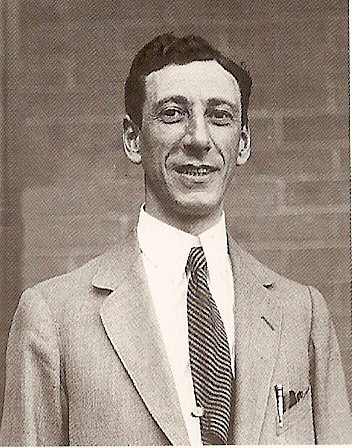
By Tim Pickering
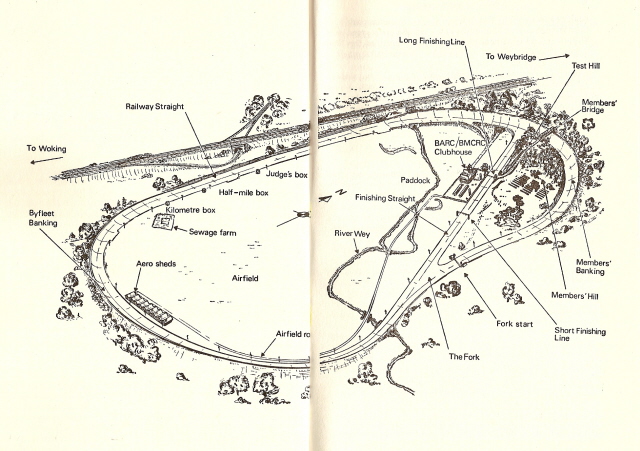
The Brooklands track is often described as the birthplace of British motoring, because it was the only proving ground where motor vehicles could legally be tested or raced at high speed for hours on end. One can go even further, and make a case that Brookland�s influence extended right across the Atlantic to also help shape the US motorcycle industry.
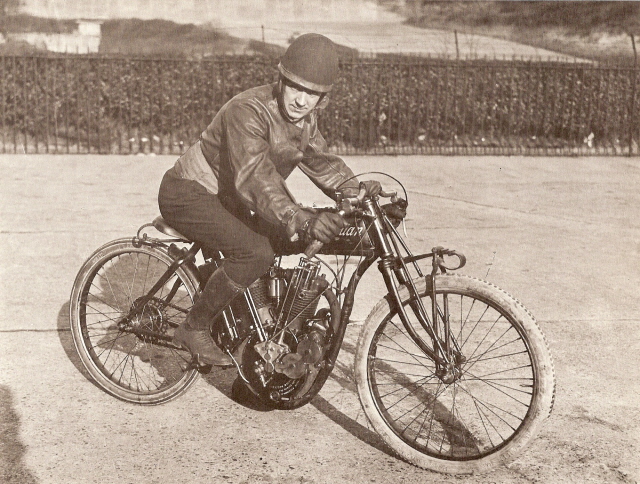
This may seem a strange statement to make, since the United States of America soon became quite isolated from mainstream (i.e. British) motorcycling and followed its own path to which it has adhered to the present day. Nevertheless it does appear that this path was strongly determined by events at the Brooklands track both pre-WWI and immediately post-war. These events and their outcome are nicely encapsulated by the photo of Bert Le Vack in the Vol. 31 No.1 �From WB� column, which shows him seated astride an Indian Powerplus racer after winning the Great 500 Mile Race of 1921.
It is fitting that Dr Anthony Bayley (in the Correspondence page of Vol.31 No.2) provided the needed clarifications about the photographs that accompanied WB�s column, since it is the two photos of Bert Le Vack on Page 67 and 68 of his father�s book The Vintage Years at Brooklands that contain the necessary clues to distinguish the 1911 Indian 8-valve racer which burnt Le Vack�s legs in 1920, from the post-war Powerplus-based racer upon which he won the Great 500 Mile Race of 1921.
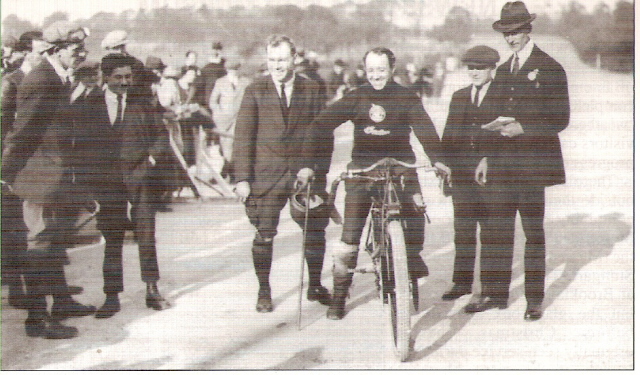
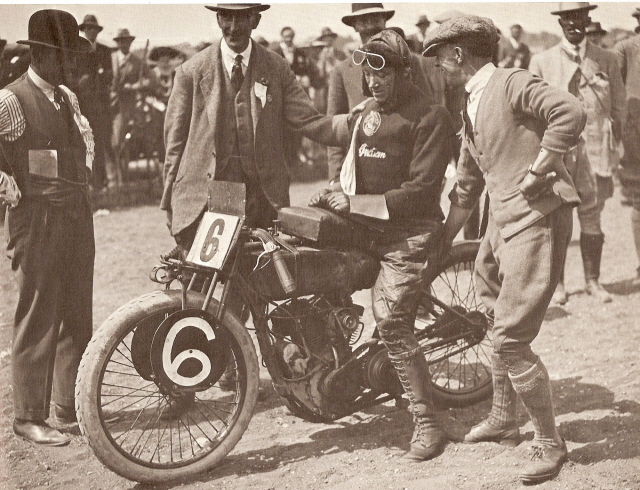
WB�s column in Vol. 31 No. 1, and the two mystery-solving photos in Dr Bayley�s book, both set me off on a train of thought and moved me to write this article. I�d now like to state my view that these two photos have a huge significance for motorcycling in general. In particular, they demonstrate the way in which the Brooklands track had an influence on the direction taken by motorcycle design in the USA in the 1920�s and beyond.
[page 2]