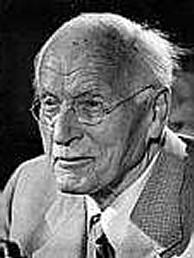
Such an influential man as Carl Jung has had many detractors. He was often criticized for the mystical quality of his theories, which were not held to be empirical enough for general scientific acceptance. To this criticism, Jung responded, “psychiatry must take into account all of man's experience, from the most intensely practical to the most tenuously mystical”7. Others suggested that Jung himself had a schizophrenic episode. This may have been true. He experienced a mental breakdown between the years of 1913 to 1917, during which time he conceived his theory of archetypes. However, the fact that he emerged from this breakdown with a strong knowledge of himself and his illness suggests it was the strength of his own creative powers which allowed him to overcome his encounter with this disorder. Indeed, Jung referred to this period as a “creative illness” and a “voluntary confrontation with the unconscious”8. It has been said that great thinkers swim in the same sea that drowns the madman . Jung viewed himself not only as a great thinker, but as a prophet who had been given special knowledge that must be released to the world.
Jung's purpose in the archetypes, then, was to reestablish an understanding of the unconscious that had been lost to the modern world when mythology and religion came to be considered irrelevant. As Nietzsche might have it, the scientific age killed our Gods. What Jung attempted to do was to bring the psychological guide that spirituality offered back into science and though his theories were rejected countless times for lacking concrete evidence, many psychologists supported his revolutionary ideals. The effect Jung's theories have had ranges far outside his own field: “Quite a few people find that Jung has a great deal to say to them. They include writers, artists, musicians, filmmakers, theologians, clergy of all denomination, students of mythology, and, of course, some psychologists”9. Whether accurate in a scientific sense or not, the ideas of Jung have created an impact on society, suggesting that they correspond to a need that had hitherto been ignored in our new scientific civilization. One man who has been influenced by Jung, the mythologist Joseph Campbell, maintains that the constantly evolving values of our modern society have caused the traditional guides to the unconscious, mythology and its source, religion, to be discredited. Audiences have changed, and what brought illumination to early Christians or the ancient Greeks often inspires disinterested culture shock in its modern students. Subsequently, “the lines of communication between the conscious and the unconscious have all been cut, and we have been split in two”10. What Jung provides in his theory of archetypes then, is the blueprints of a new guide to the unconscious. With it, Jung has revolutionized the understanding of mental illness, and provided a foundation for the rise of mythology suited to our modern world.