 |
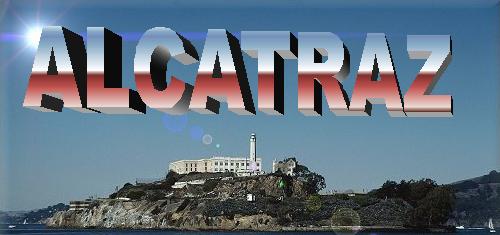 |
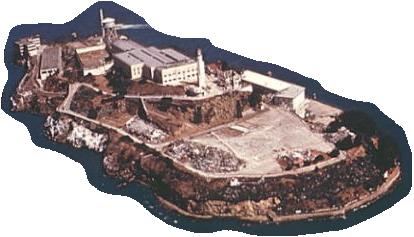
| From a mighty Army fortress to a penitentiary, then a Native American land followed by designation as a National Park, the island of Alcatraz has come back into play again as a major facility of incarceration. It is the newly opened GC Maximum Security Penitentiary under the direction of Warden Commander Marcus Antonius. The name, Alcatraz, is derived from the Spanish Alcatraces, which mean "Island of the Pelican." It was discovered in 1775 by the Spanish explorer, Juan Manuel de Ayala. In 1820 is was designated as a military reservation and the US Army built a Citadel on it. By the late 1850's, it began housing military prisoners who built the prison from 1909 to 1911. It was transferred to the US Department of Justice in 1933. |
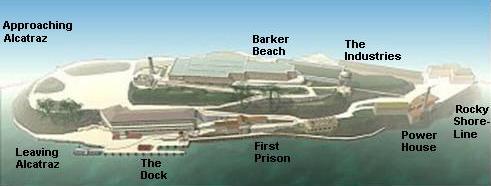 |
| The prison has 336 cells in B and C blocks, and 42 in D block. No one cell is adjacent to an exterior wall so that even if an inmate tunneled their way through a cell wall, they would still need to find a way to escape from the cell house itself. The squared soft bars are tool-proof and electricity is routed through utility tunnels that are completely cemented to remove a prisoner's ability to enter or hide in them. |
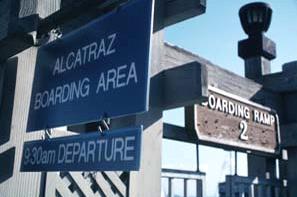 |
| Over the 29 years it operated as a Federal prison, 36 men were involved in 14 escape attempts. Of those, 23 were caught, 6 shot and killed, and 2 drowned. Some say that there was one successful escape, but that depends on the definition of successful. Officially no one ever succeeded in escaping because the five in question are believed to have drowned without reaching land and the one who did actually reach land was apprehended and returned to the island. Alcatraz closed on March 21, 1963 following a decision that was made because the institution was too expensive to continue operating. The major expenses are caused by the physical isolaction of the island, the exact reason it serves so well as a prison. The isolation means that everything, food, supplies, water, fuel, must be brought to the island by boat or by helicopter. The GC regulates these shipments and keeps a close eye on what goes in and what comes out. |
 |
| Tool-proof iron window coverings shield all areas accessible by prisoners and special gun galleries transverse the cell block perimeters and allow guards to carry weapons while they walk secured behind iron rod barriers. These galleries are elevated and out of reach of prisoners and control all keys and allow the guards the ability to oversee all inmate activities, even the most private. Special tear-gas canisters are permanently installed in the ceiling of the rooms prisoners can gather, such as the dining hall, library, and shower rooms, and can be activated from both the gun galleries and outside observation points. Guard towers are strategically positioned and every access point for the complex and for the building has been equipped with a Mark of loyalty reader. |