 CHILDRENS CORNER-FUN &
LEARNING
CHILDRENS CORNER-FUN &
LEARNINGClick on the following:- See also our LINKS page for other interesting and informative sites.
| HOME PAGE | ABOUT US | NEWS | SURVEYS | LINKS |
|---|
WEDNESDAY 20th May. AGM at Oasis Fellowship Church Hall, at 7.30 pm, followed by a Talk AT 8.00pm, entitled "WILDLIFE OF THE ARUNDEL WETLANDS CENTRE" - given by Paul Stevens, Wildlife photographer andGrounds Manager at Arundel Wetlands Centre.
All are welcome. The Oasis Fellowship Church Hall is on the corner of Hangleton Way, and Northease Drive, Hangleton Valley.
Just by the 5b bus stop.
Further details ring 01273 414936.
SUNDAY 14th June. Flower Identification Walk on Benfield Nature Reserve. Meet 2.30pm on the A27 by-pass bridge at the northern end of Benfield Valley.
Further details ring 01273 414936
SATURDAY 4th July. Count the Glowworms on Benfield Nature Reserve. Meet 10.30 pm at the Haqngleton Manor Hotel. You may want to bring a torch.
Further details ring 01273 414936
CHILDRENS CORNER-FUN &
LEARNING
Click on the following:-
See also our LINKS page for other interesting and
informative sites.
| On the Reserve | 1 | 2 | 3 | 4 | 5 | 6 |
|---|
| HAPPENINGS
GRAZINGThe "flying flock" of Sheep are again back, but this time not on the Reserve, but to the South of the West Hove Golf Course. There are 101 altogether. The invasive bramble and long grass needs constant managementMembers of our group are again attending, to assist the shepherd in looking after the sheep, even though they are not actually on the Reserve. GLOWWORMS. The maximum count on one evening this year was about 300. This is 200 less than the maximum count last year. It seems they go in two year cycles, so possibly next year, or 2010, will result in greater numbers again. The most prolific butterflies were Common Blue, Small Heath, and Meadow Brown. Plant life is showing improvement after the sheep and human conservation work. Amongst those now appearing are:- Kidney Vetch, Horseshoe Vetch, Hay Rattle, Milkwort,and Rockrose. The Common Spotted Orchids were well represented, and a few Tway Blades and Pyramidal Orchids. 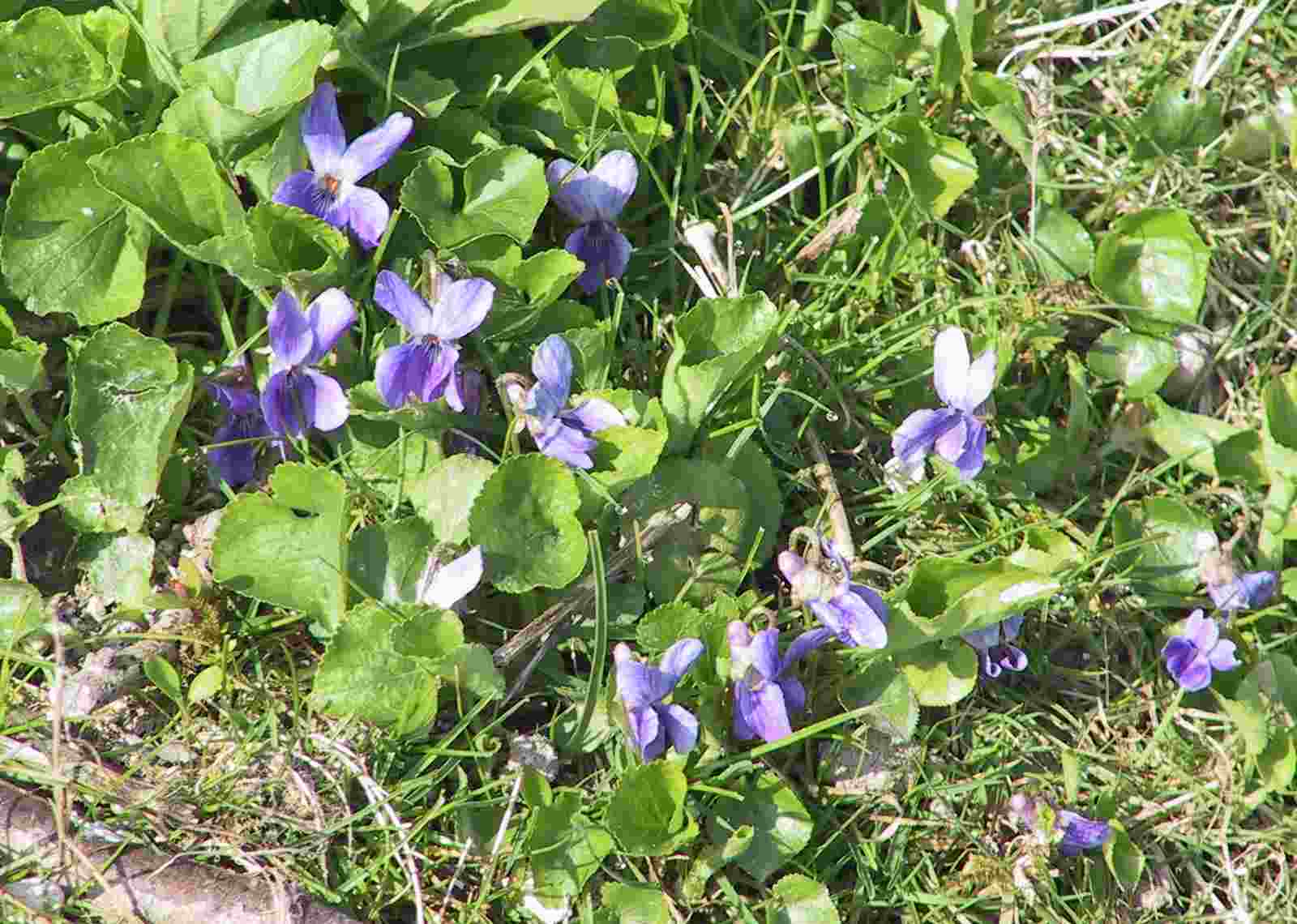 HAIRY VIOLETS (Viola hirta) were looking most attractive in Spring.
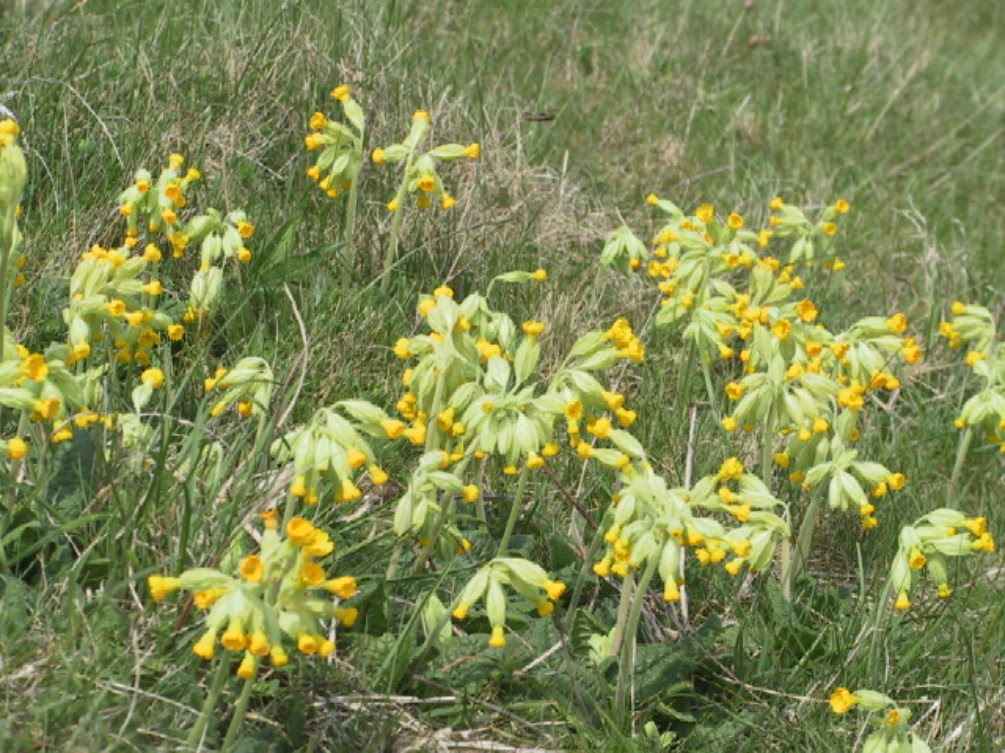 COWSLIPS (Primula Veris) Yet again they are continuing to spread even further
over the east slope in 2007.
COWSLIPS (Primula Veris) Yet again they are continuing to spread even further
over the east slope in 2007.
The Cinnabar Moth caterpillers were out in force this year, helpfully eating the Ragwort. |
|---|
| On the Reserve | 1 | 2 | 3 | 4 | 5 | 6 |
|---|
|
For Sussex Species Action Plan Click here
|
| On the Reserve | 1 | 2 | 3 | 4 | 5 | 6 |
|---|
We, and our single boyfriend, Harry, are employed here on conservation duties. We were born up north where the weather is colder than here.
Our C.V's were impressive, and we were brought down to various sites in Sussex, and now to Benfield. Our shepherd,
Gary, looks after us well and we are most grateful to be constructively employed. We are pleased to also have regular visits from Benfield Wildlife members, to ensure we are all ok. Our job
description was to shorten the grass in a sort of ad hoc fashion, so that next year the tiny
chalk grassland flowers will have a chance to bloom, and provide nectar for butterflies
and insects. We understand that only 3% of chalk grassland remains, so we feel that we are
doing a really useful job. We hope to be invited back again to continue the good work.
4 Bee Orchids were located on the reserve this year.
The life cycle of the Bee Orchid is very strange. The seedpod contains some 6000 minute seeds,
these are dispersed by the wind. A seed will only germinate on a very basic soil and must
have the assistance of a type of fungi. The fungi will then nourish the seed.
I'm Hetty, a Herdwick. I come from the Cumbrian Lake District,and my family are considered
to be one of Britains hardiest sheep.
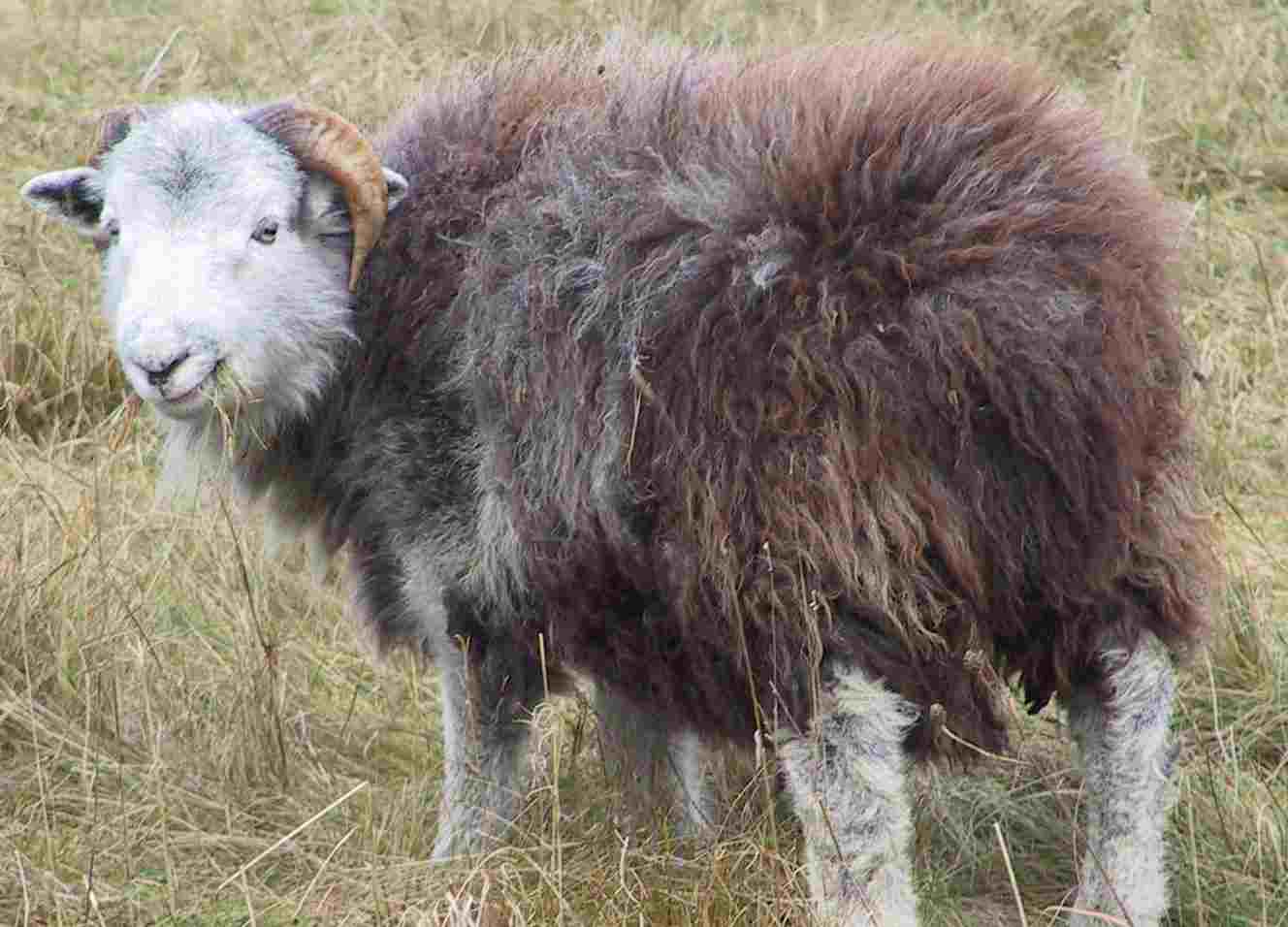
and this is Helen, a Hebridean. A hardy and adaptable breed.
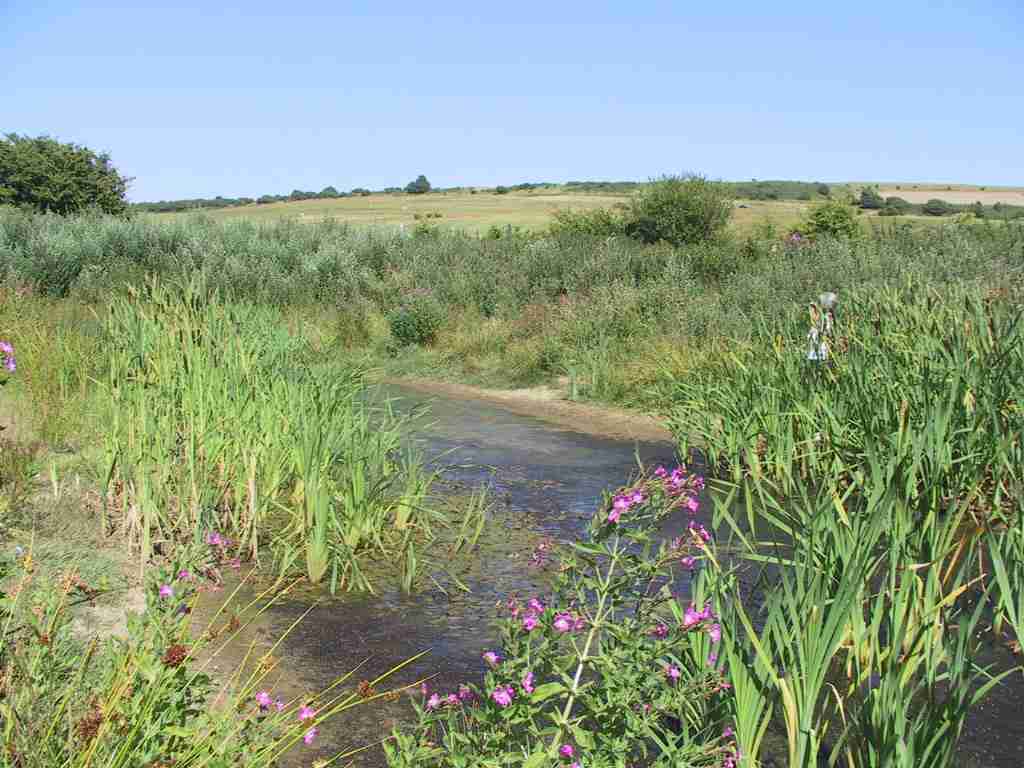 The pond at the north end of the valley started to build up with water in March/April, but has now drained away.
The picture shows it when it was full.
The pond at the north end of the valley started to build up with water in March/April, but has now drained away.
The picture shows it when it was full.