|
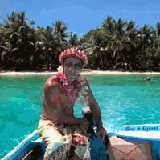
as glorious as I remembered it from our earlier visits. Joe Yetigmal, island medic, met us on the beach and led us to a cool shaded canoe shed. Joe was cordial, but concerned about the SARS epidemic; worried we might introduce it to the island. We reassured him. Michael hefted the heavy bag of rice to his shoulder to get formal permission from the chief to stay.
We made a detour to see the new church. At first glance it looked as though it was the canoe used as an altar base which was enshrined ---- fitting I thought! Surely most activities on this island centered around the canoe. But if the canoe was central, where stood the taro plant? Three or four old women sat droning Hail Marys. I wondered what visions they conjured up in their minds as they did so. Did they imagine as we might, the Virgin of the Bible? More likely I think, they were worshipping their old goddess Sinlaku, without whose blessings no planted taro or breadfruit would flourish. They had just been taught a new way of addressing her!
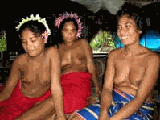
Joe's wife Catherine, and her brood welcomed us most heartily. Like all the women on the island, Catherine was bare breasted, her only garment a short sarong of heavy material woven on backstrap looms by the women themselves. Children gathered close and under the eaves of the hut two girls sat, picking nits out of each others hair. Joe brought fresh green coconuts for us to drink, while I pulled out gifts.
"Have you had many yachts in this year?" I asked Joe.
"No. You are the only one."
We made excuses to go home, but not before Catherine, with a few delft twists had fashioned a neat little palm-leaf basket that she filled with nutty-flavored cooked taro for us to take home along with a sack full of coconuts and papaya!
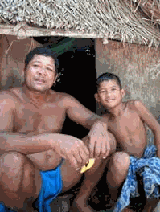
Lamotrek men are reserved. They spend nearly all their time in the company of other men, fishing, building canoes, repairing nets, making traps and rope, mending things or providing materials for community building projects or their own domestic ones.
The women grow the taro but otherwise stay close to the hearth cooking. Weaving is their pleasant past time and earning some hard currency if the product is sold in Yap.
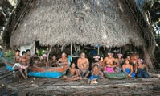
Five hundred people live on this island less than a mile long together with the plants, animals and shelter and canoes they need to survive. The whole resembles a liner at sea. Although we saw several large canoes, they are little used now but are still loved as a symbol of past expertise as navigators. Fiberglass longboats powered by outboards have usurped their place.
The church has evened out some of the traditional class differences, although people still pay due respect. School has had even more of an effect. Children are encouraged to complete high school. Those who do are a step higher than those who do not. Although the sexes each have their place, the society did not seem overbearingly patriarchal. Lineage is recognized through the woman's line. In the case of Lamotrek, the High Chief is a woman.
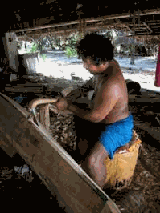
Since old Chief Lewis died in early Dec 2002. the islanders have taken a voluntary 18 month break from drinking tuba, coconut toddy a habit being abused by everyone. In its place groups of young men are learning traditional skills and were busy building a new seagoing canoe. The tuba drinking ban left the islanders more focused and industrious than we had found them to be on former visits. Even in the dying light of late afternoon it is common to see men, enjoying their work, patiently adzing a new canoe or twirling strands of senit for rope.
Michael found himself in strong demand to fix outboards and
|
|