|
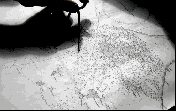
A high haze had changed the normally translucent water to a polished surface as reflective as a mirror. The looming coral was invisible. Michael had made a careful sketch with bearings of the zig-zag entrance channels. We followed them with exquisite care.
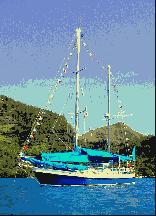
The anchorage of Rikitea lies in the lee of a great rocky massif. It is pleasantly shelter ---- except when a frontal system blows through or the island experiences a storm. Then the massif serves to concentrate the winds and send them hurtling down into the bay ---- with the result that yachts may drag if not very securely anchored.
Once we had anchored we settled into life in Rikitea for what would turn out to be a month-long stay. The fete was about to begin. Several other yachts were in the bay, and the skipper of one directed us to the office of the gendarme. He stamped our papers without comment. We were legally entered into French Polynesia.
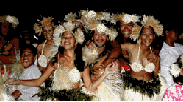
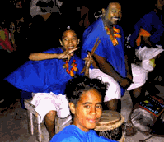
A wild drumbeat rumbled across the still waters on the hot night. I could feel my blood heat up and heart race. Dark figures ambled along the single street towards the fete grounds, only dimly lit by a few well spaced street lights. We found a place on some rickety bleachers, set up for the occasion, squeezed between a talkative old lady on one side and a host of quiet children on the other. Everyone smelled of the tropical scents of frangipani, tiare Tahiti,oleanders, and the crushed aromatic herbs from jungle vines. Young men and women huddled in groups waiting to perform, and then held us in thrall. French Polynesian dancing is perhaps the most sensuous and titillating in the world. To a fluctuating drum beat they danced, the girls swinging their hips in time while the young men clapped their knees together, while performing carefully choreographed moves with their hands. The people would cry out joyfully when a particularly difficult move was made, shouting out, "C'est jollie!"
The lady beside us said that in her day the church had banned these dances. But recently there had been a resurgence of interest in the old culture. Tiny tots watching from the sidelines, bedecked in flowers and bright sarongs stood swaying back and forth. It would take them another dozen years or more to perfect the difficult flick of the derriere, which was the essence of this dance.
Before our arrival I had often wondered if the month-long struggle from New Zealand would prove to have been worth the effort. Although we had barely scratched the surface, I had already fallen in love.
The ancient culture has all but disappeared, stamped out by the stern ministrations of the Brothers of the Sacred Heart of Picpus, In 1834 the population numbered more than 2,000. By the time, almost 40 years later, when the Tahitian Government forcibly removed the excessively zealous Honorere Laval, the fanatical Jesuit priest, it had dwindled to a mere 500. Father Laval had insisted that every pagan marae must be destroyed and replaced with a church. He also paved roads, built jetties, a seminary, school, and a host of other buildings large and small. The population was enslaved to do this work and rules of behavior originally intended to govern convents, were imposed. The elderly and the children were put to work growing the necessary food, adults sent to the motus, the tiny sandy islets perched on the edge of the atoll, to cut coral blocks. They died like flies. Their legacy however, is the collection of pretty whitewashed and blue-trimmed buildings and a solidly Catholic population.
In was in our last days in Mangareva that we received word that our son in California had suffered a terrible accident. A small boat he had been working on in his driveway exploded after gasoline fumes ignited. When we phoned, he was in critical care; his arms and legs badly burnt. For a few days his life hung in the balance. Fortunately he was strong and healthy and able to speak to us on the phone from his hospital bed. We could not leave the boat in Gambier to fly out to him. So it was agreed we would continue
|
|