|
|
|
|
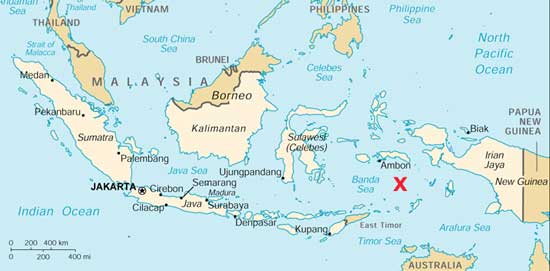
From the time of the Roman Empire, the tiny islands, part of the Moluccan
chain, were a well-guarded secret of Chinese and Arab traders, and the
mysterious source of the entire world supply of cloves, nutmeg, and mace.
Christopher Columbus, it is said, was looking for the Spice Islands when he
landed in the Americas. In 1511, Portugal located and conquered the Bandas. In
1621, the islands were seized by the Dutch, who amassed fabulous wealth by
cornering the spice trade. In 1511 the Portuguese were the first Europeans to land on Banda and the British arrived in 1603 but it was not until 1621 that the Jan Pieterszoon Coen of the United Dutch East India Company, the V.O.C., conquered the islands to monopolise the nutmeg trade. Nutmeg, and mace, the red surrounding membrane were the most valuable trading commodity of the day and were only found in the Banda islands. The monopoly was not broken until the British conquest in 1810 and trees were transferred to Ceylon and the West Indies, after that the islands declined in importance and today are only a quiet backwater in the vast Indonesian archipelago and it is hard to believe that they were once so important in world trade and politics.
|