Home| Biography| Philosophy| Gallery| Store
Philosophy
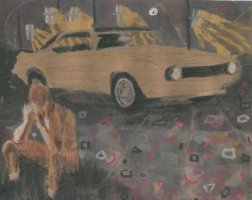
At the start of the 20th century, the photographer had usurped the traditional role occupied by the artist, the capturing of three-dimensional reality and fixing it in two dimensions, such as portraits and landscapes. Up to the advent of photography, art generally looked like something seen through a window or reflected in a mirror, a scene neatly fit into a rectangle, with highly structured rules for perspective, modeling and shading. Photography forced (or allowed) artists to reinvent the picture square, to show other forms of reality, such as memory, and time, and growth and development. Early proponents of the modification of the picture was a loose confederation of artists known as The Blue Rider. With its roots in German Expressionism, this group, including the greats Paul Klee and Wassily Kandinsky, went on to form the core of the Bauhaus school, which set the tone for design for the next 50 years.
Although it is called a dead movement, I follow the spirit of the Blue Riders when I paint.
My duty is to show the reality that the camera cannot.
Wayne Valin 2002
Information about the Blue Rider.