 |
 |
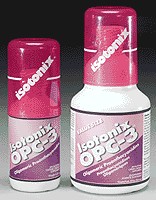
| Isotonix® OPC-3 |
Code |
Price |
|
|
13009 |
$64.95 |
|
|
13007 |
$27.95 | |
|
| |
[ More Product Detail
]
HISTORY OF OPC-3
In 1534, French explorer Jacques Cartier was leading
an expedition up the St. Lawrence River. Trapped by bad weather,
Cartier and his crew were forced to survive on a ration of salted
meat and biscuits. Cartier's crew began to suffer from severe
deficiency of vitamin C and showed symptoms of scurvy. Many
crewmembers died before the surviving members encountered a friendly
Native American who saved most of their lives. He told them to make
a tea from the bark and needles of the pine tree to cure their
malady. They complied and, as a result, Cartier and many crewmembers
survived.
Some 400 years later, Professor Jacques Masquelier of the
University of Bordeaux, France, read a book by Cartier detailing
their expedition. He concluded that pine bark not only contained
some vitamin C, but obviously was a good source of bioflavonoids,
whose effects are similar to those of vitamin C. Further studies and
research revealed that the pine bark contained an array of
proanthocyanidins complexes. These compounds were also found in a
variety of plants, including grape seeds, cranberries, peanut skin,
lemon tree bark and citrus rinds. Masquelier termed the active
ingredients of the pine bark "pycnogenols", which today are referred
to in the scientific community as oligomeric proanthocyanidins, or
OPCs.
OPC'S OUTSTANDING SAFETY RECORD
OPCs have been used in Europe under medical
supervision for over 30 years with no reports of adverse effects.
Over one million people worldwide utilize these valuable
bioflavonoids daily. OPCs have been tested time and time again for
safety by conventional, scientific methods at leading research
centers worldwide including the Pasteur Institute. OPCs have been
found to be non-toxic, non-antigenic, non-teratogenic,
non-mutagenic, and non-carcinogenic.
|