|
Make notes in this journal.
2.5 and 2.6 Circuit Switching vs packet switching
Using circuit switching a connection is not permanent
and must be set up each time a call is made. The line is
then used exclusively for that call and the network resources
cannot be used for anything else for the duration of the
call.
The limitations of circuit-switching which Davies tried
to overcome were:
- It was slow compared with the operating speeds of a
computer.
- It was expensive because the circuit was maintained
for duration of call.
Although this was acceptable for voice calls it was wasteful
for data communications which usually take place in short
intense bursts with long gaps.
Packet switching, on the other hand made better
use of the available space on the network. Data was broken
down into small chunks that were labelled to show both the
originating and destination addresses. The packets were
forwarded from one computer to another until they arrived
at their destination. If they were lost, they were automatically
re-sent be the originator. The recipient acknowledged receipt
of the packets as they arrived to eliminate unnecessary
re-transmissions.
As the data being transmitted was in small packets it was
able to be interleaved with other packets, from other sources,
as it travelled through the networks. The route the packets
took would be determined by each node as the packet reached
it. This meant that the network capacity was better utilised
and the system more efficient and cheaper to run.
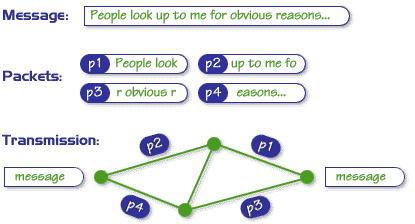
Diagram
from T171 site
back
to essay
|