The King Of The Beasts
Case Study 02/003
Purpose of Analysis
The following analysis was to determine the King of the Beasts from a
short-listed selection of twenty animals. The animals were proportionately
represented from the three domains of land, sea and air and were chosen by the
five analysts based on three criteria:
-
Strength.
-
Agility.
-
Specialised killer move.
Man was included to see how he would fair against the other nineteen animals in
a battle of strength.
 |
 |
xxxxxxxxxx |
 |
 |
| Bunsen burner |
Tripod |
Gauze mat |
Test tube |
Animals |
Method
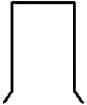
- Place the bunsen burner under the tripod with the gauze mat on the top.
- Put the animals in the test tube.
- Ignite the bunsen burner.
- Record the findings.
The analysis for this experiment was difficult as the analysts had to contend
with variances that would not normally occur in the real world. A short list
was drawn up, resulting in twenty representatives of the animal world, which
the analysts pitted against each other in a league. Each bout consisted of
three rounds, each of three minutes in length. Each fight was scored as three
points for a win, one point for a draw and zero points for a loss.
Each beast would fight each of his opponents at home and away, on his rival's
stomping ground. This is where analysis to find the "King of the Beasts" truly
came into its own. For example, many agree that the kodiak bear is indeed
powerful but how would he fair against a peregrine falcon on the away leg? At
several hundred feet from ground level not very good. Likewise, the shark
against a fox on the away leg. We rated this as a draw as it is unlikely the
fox could kill the shark and the shark's inability to swim on land coupled with
the fox's agility would enable him to keep out of the reach of the shark's
snapping jaws.
Each analyst rated each bout based on the specific skills each animal possessed
and its ability to win bouts both on home and away grounds. The analysts used
their experience in Animal Physiology and Animal Cognitive Thought Processes to
determine the results. The five score cards were then submitted to Thierry
Coulthard, who collated this raw data into something more meaningful.
Results
The results were encouraging.
Animals that couldn"t fly fared badly when fighting on the airborne away legs
owing, in no small part to gravity. The birds merely had to remain aloft to
claim victory. When the eagle and peregrine went head to head, the analysts
scored a draw. Despite the eagle's huge strength, the peregrine"s speed enabled
him to remain out of harm"s way for the duration of the bout. In the sea and on
land the birds favoured less well, losing all away legs in the sea and
virtually all matches on the ground excepting a few hard fought draws.
Battles against the aquatic beasts proved to be deadly. Many simply drowned and
thus, lost the bout. However, battles engaged on land proved equally crippling
for the aquatic participants. The shark, a deadly predator on his home turf,
suffocated to death and the remainder struggled with mobility: they were like
the proverbial "Fish out of water".
It is worth noting that all four reptiles finished in the top ten. Strength,
power and toxicity proving deadly on home legs. However, all reptiles,
including the deadly poisonous cobra performed badly against their aquatic
opponents: being reptilian, they inevitably succumbed to the extreme cold. Nor
could they fly. These factors became their undoing. Though the crocodile can
swim, most sea battles were scored a draw as it was agreed that they would be
agile enough to elude the crocodile"s snapping jaws.
Though man has exceptional brain power, these fights were conducted using
weapons nature had provided. This severely hampered man when pitted against
brute strength but where he was able to use his brain to his advantage, he
performed with great courage to earn a respectable fifteenth place in the
rankings. When considering at the fourteen killing machines who finished in
front of man, it is a great achievement on his part to score even the position
he did.
Table of results
Here are the results after all the bouts had taken place. The winner is at the
top; the loser at the bottom. There were a few surprises when the final totals
were computed.
| 1 |
Polar bear |
391 |
| 2 |
Kodiak bear |
382 |
| 3 |
Tyrannosaurus rex |
376 |
| 4 |
Anaconda |
363 |
| 5 |
Cobra |
353 |
| 6 |
Orca |
340 |
| 7 |
Golden eagle |
323 |
| 8 |
Great white shark |
319 |
| 9 |
Crocodile |
315 |
| 10 = |
Peregrine falcon |
309 |
| 10 = |
Tiger |
309 |
| 12 |
Lion |
299 |
| 13 |
Dolphin |
272 |
| 14 |
Octopus |
253 |
| 15 |
Man |
234 |
| 16 |
Coyote |
180 |
| 17 |
Badger |
171 |
| 18 |
Fox |
169 |
| 19 |
Anteater |
120 |
| 20 |
Ant |
48 |
Conclusions
All beasts were truly masters in their own field just having reached the final
twenty. Those in the top ten were true masters (or mistresses) or their
respective fields, each equally deserving a combination of fear and awe.
However, it was clear from an early stage that the winner of the much-desired
title, "King of the Beasts", would be one of the most adaptable when fighting
their away legs.
Therefore, the analysts concluded that the winner was the polar bear. The
combination of speed over land, brute strength and an ability to swim secured a
victory for the furry mammal. Both the polar bear and its cousin the kodiak
bear scored highly with impressive draws against the run of play and it soon
became a two-bear race. However, the polar bear"s deadly home-leg advantage
(the North Pole) finally edged it and with it, overall victory.
|











