it only came into existence in the late 1850s, when a group of Chinese tin prospectors settled where the Klang and Gombak rivers meet in what was then deep mosquito-ridden jungle. The mines developed into a trading post which in turn evolved into a frontier town.
Indeed, the city's name translates from Malay as 'Muddy Confluence', an unglamorous title for what has grown in a century and a half into one of Southeast Asia's most prosperous and vibrant capital cities.
Its development into modern day 'KL' began under British colonial rule, when the scruffy little settlement ridden by inter-gang rivalry between Chinese tin miners, was placed under the control of a Chinese Kapitan or headman. His name was Yap Ah Loy, and he was responsible for the layout of the city. The jungle was cleared, and the construction of more substantial brick and stone buildings commenced. The use of skilled Chinese carpenters meant that many of the buildings that sprang up resembled the distinctive shop houses of southern China. The construction of a railway line, the establishment of laws, courts, a prison and a school all contributed to the city’s early modernisation. This is turn led KL to being proclaimed national capital of the newly formed Federated Malay States at the end of the 19th century.
Different communities settled into distinct areas within the city – the Chinese around Chinatown and the commercial district, Malays and Indians along Java Street and the British around Padang, now known as Merdeka Square.
Its growth continued apace until capture by the Japanese in 1942, which halted progress for nearly four years. But British administration returned post-war, and preparations for Malaysian independence began in earnest, finally coming to fruition in 1963.
In 1969, the city was hit by race riots between the Malays and the Chinese. The May 13 Incident led to the deaths of almost 200 people and led to nationwide economic reform to reduce Chinese monopolies.
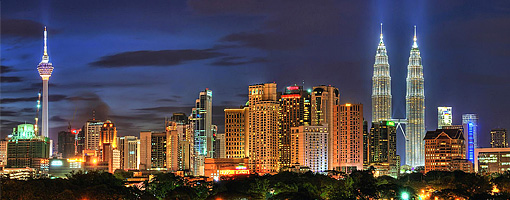
Despite this, since independence, KL has steadily grown, particularly during the economic boom years of the 1980s and 1990s, into the ultra-modern (in parts) city it is today. Completion of the Petronas Twin Towers in the late 1990s gave KL an icon of its new-found identity; at 379m (1,242ft), it was the tallest building in the world until 2004 when it was eclipsed by China’s Taipei 101.
The staging of the 1998 Commonwealth Games, and the now well-established Malaysian F1 Grand Prix, have further served to raise the city's international profile.
It is the stated aim of the Malaysian Government that the country will be regarded as 'fully developed' within a few short decades. KL is already the fastest growing region in Malaysia, in part thanks to its location on the west coast of Peninsular Malaysia, which is wider and flatter than the east coast.
The diversity of its population make it an intriguing melting pot for visitors – Chinese, Malays and Indians are now augmented by Eurasians and numerous indigenous groups from other parts of the country.
A delightful mix of cross-cultural influences and traditions, Kuala Lumpur radiates an exciting, enticing charm, which will no doubt pique your interest throughout your stay.
Let the city's warmth embrace you as you lose yourself in its unique blend of tradition, cultureold world charm and new world sophistication. Explore its nooks and crannies, and you'll discover captivating sights, sensational sounds, aromatic smells and fantastic people.
Kuala
Lumpur, affectionately known as KL, is an amazing cultural melting pot.
Here, you will wander through communities of Chinese, Malays, South
Indians, East Malaysian ethnic groups, Thais, Indonesians, Sikhs and a
huge community of expats. Each community offering its own festivals,
food, music, art and fashion while influencing each other's cultures.
KL
has a lively nightlife scene and a fascinating art and performance
culture, which blends contemporary and traditional styles from many
backgrounds. There is the widest range of sporting activities available
with state-of -the-art facilities to impress any sporting enthusiast.
The architecture is somewhat eccentric and is certainly unique, from
hundred year old mansions to awe-inspiring sky scrapers, and all within
metres of each other. Treat your tastebuds to Kuala Lumpur's extremely
varied cuisine, which is certainly a tasty adventure in itself! Above
all else KL is a shopping haven, offering everything from street side
trinkets to haute couture.
The resulting kaleidoscope of
cultures, costumes and cuisines is nothing short of a whirlwind for the
senses - more intense here than anywhere else in the country.
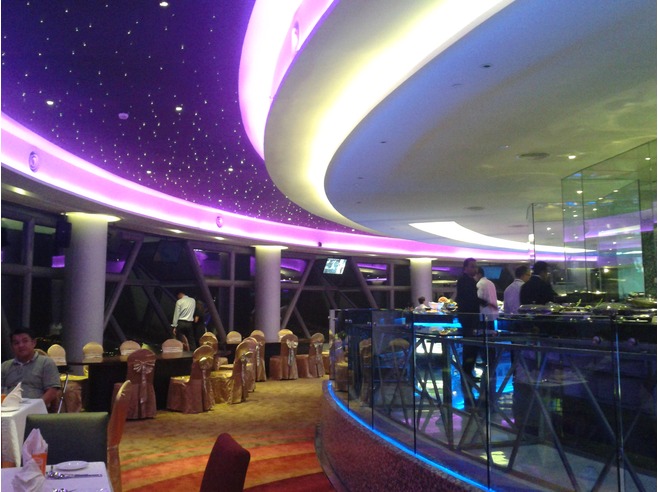
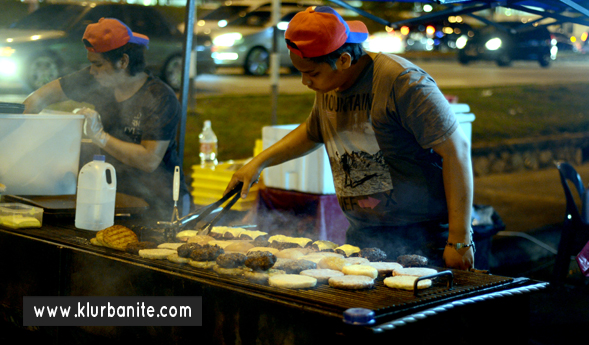
Then,The others famous food at Kuala Lumpur is "BURGER BAKAR'.It was a trending food at KL.One of the famous restarant of burger bakar is "BURGER BAKAR ABANG BURN".The beef or the patties of the burger is homemade patties and it will be grills with the charcoal before it will be serve to customer with cheese,fries,mayonaise,salad and corn.It is a kind of western food.
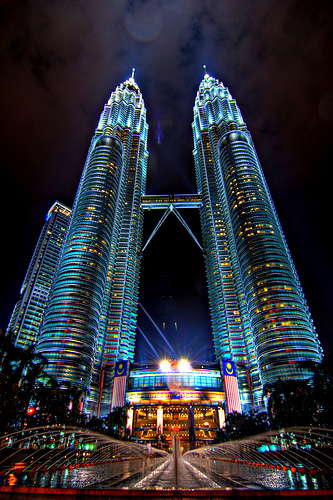
1. Kuala Lumpur Convention Centre-KLCC- is the most famous building in KL and also one of the famous building in
the world as it was listed as one of the tallest building in the world.At KLCC you can experiences many fun things.You can
experience the underwater world at the AQUARIA KLCC.Then, visitor also will not miss out the part "shopping' at the KLCC
as there are many of well-known and branded shopping shop at the KLCC.Others than that,for those who are interest in science
they can visit the PETROSAINS which is also inside the KLCC.We can also enjoy with many things in KLCC such as the pool,
the neon light at nights and many more.
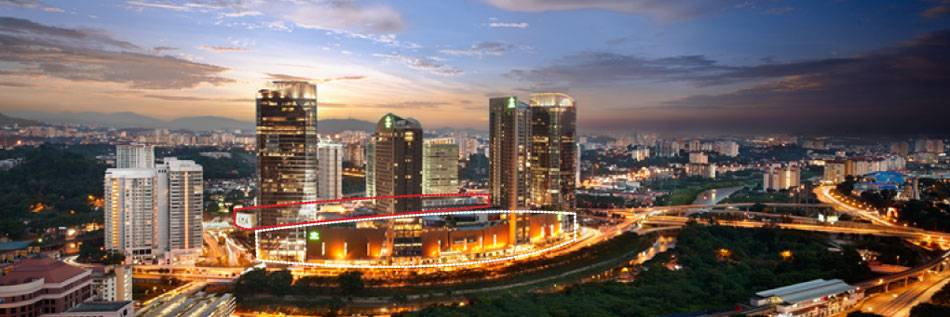
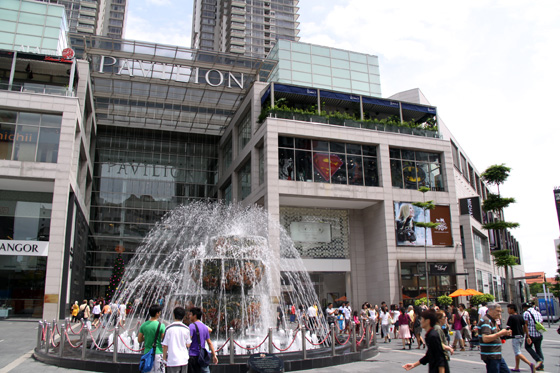
located beside to each others.This shopping mall is one of the largest most in Asia ang the largest most in Malaysia.Here
you can find 100 of branded and world well-known outlet to shop.You also can go to watch movies,play bowling and even had
a vacations or delighting foods at THE GARDEN HOTEL.