WILD FLOWERS OF THE ALGARVE
SOUTHERN PORTUGAL
SUMMER
WHITE & GREEN FLOWERS
|
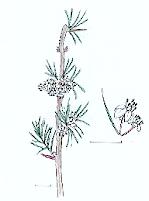
Asparagus
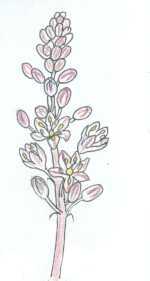
Sea Squill |
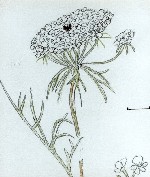
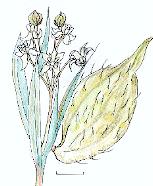
Sometime in August one of nature's miracles occurs. The tough spiny asparagus bush Asparagus albus is a dry mass of grey stems. The bare stems are suddenly covered with masses of tiny white sweet smelling flowers. A week later the flowers are dead and the bushes covered with tiny green immature berries. This plant is a botanical oddity. The spines are adapted leaves while the apparent leaves, appearing in September, are actually slender shoots known as cladodes. However the flowers are normal. Each has six white petals and six stamens with dark anthers. The feathery white flowered heads of the wild carrot have been blooming for a long time. They are one of the few plants of spring which bloom through the summer months. The leaves of this plant are thin and feathery well able to reduce water loss. The flower umbel is white or tinged with purple and in the centre a few dark flowers grow. The garden carrot is a sub-species of this plant. On the bare ground long stalked spikes of white flowers appear leafless straight out of the dry soil. The secret of the marvelous sea squill (Urginea maritima) is a very large bulb. After the flower has bloomed a rosette of green leaves develops and persists through the winter and spring producing and storing food and moisture in the bulb so that the flower stalk can be produced the following late summer and autumn. The Bristle-fruited Silkweed is a South African garden escapee which has become naturalised. It is grown for its white flowers and curious large fruit. About 4-6 cm long it is very bristly.
|
Wild Carrot
Bristle-fruited Silkweed |
SUMMER: RED
SUMMER: BLUE FLOWERS
SUMMER: YELLOW FLOWERS
SUMMER: PURPLE, LILAC AND VIOLET FLOWERS
© (Text and Artwork) Irene Shepard 2002 .