
In the early 16th century, the Sultanate of Johor was founded by the Alauddin Riayat Shah II, the son of Mahmud Shah, the last Sultan of Malacca who fled from the invading Portuguese in Malacca. Johor sultanate was one of the two successor states of the Melaka empire. Upon Malacca's defeat by the Portuguese in 1511, Alauddin Riayat Shah II established a monarchy in Johor which posed a threat to the Portuguese. The Sultanate of Perak was the other successor state of Malacca and was established by Mahmud Shah's other son, Muzaffar Shah I. During Johor's peak the whole of Pahang and the present day Indonesian territories of the Riauarchipelago and part of Sumatra Island was under Johor's rule.[5]
A series of succession struggles were interspersed with strategic alliances struck with regional clans and foreign powers, which maintained Johor's political and economic hold in the Straits. In competition with the Acehnese of northern Sumatra and the port-kingdom of Malacca under Portuguese rule, Johor engaged in prolonged warfare with their rivals, often striking alliances with friendly Malay states and with the Dutch.[citation needed] In 1641, Johor in co-operation with the Dutch succeeded in capturing Malacca. By 1660, Johor had become a flourishing entrepôt, although weakening and splintering of the empire in the late seventeenth and eighteenth century reduced its sovereignty.[citation needed]
In the 18th century, the Bugis of Sulawesi and the Minangkabau of Sumatra controlled the political powers in the Johor-Riau Empire.[citation needed] However, in the early 19th century, Malay and Bugis rivalry commanded the scene. In 1819, the Johor-Riau Empire was divided up into the mainland Johor, controlled by the Temenggong, and the Sultanate of Riau-Lingga, controlled by the Bugis.[citation needed] In 1855, under the terms of a treaty between the British in Singapore andSultan Ali of Johor, control of the state was formally ceded to Dato' Temenggong Daing Ibrahim, with the exception of the Kesang area (Muar), which was handed over in 1877. Temenggong Ibrahim opened up Bandar Tanjung Puteri (later to become Johor's present-day capital) in south Johor as a major town.[citation needed]

Temenggong Ibrahim was succeeded by his son, Dato' Temenggong Abu Bakar, who later took the title Seri Maharaja Johor by Queen Victoria of England. In 1886, he was formally crowned the Sultan of Johor. Sultan Abu Bakar of Johor (1864–1895) implemented a state constitution, developed a British-style administration and constructed the Istana Besar, the official residence of the Sultan. For his achievements, Sultan Abu Bakar is known by the title "Father of Modern Johor".[citation needed]The increased demand for black pepper and gambier in the nineteenth century lead to the opening up of farmlands to the influx of Chinese immigrants, which created Johor's initial economic base.[6][7] The Kangchu system was put in place with the first settlement of Kangkar Tebrau established in 1844.[8] The decline of the Kangchu economy at the end of the 19th century coincided with the opening of the railway line connecting Johor Bahru and the Federated Malay States in 1909 and the emergence of rubber plantations throughout the state.[9] Under the British Resident system, Sultan Ibrahim, Sultan Abu Bakar's successor, was forced to accept a British adviser in 1904. D.G. Campbell was dispatched as the first British adviser to Johor. From the 1910s to the 1940s, Johor emerged as Malaya's top rubber producing state, a position it has held until recently.[citation needed] Johor was also until recently the largest oil palm producer in Malaysia.[citation needed]
During World War II, Johor Bahru became the last city on the Malay peninsula to fall to the Japanese. Allied Forces, Australian, Malayan and Indian forces held out for four days in what was known as the Battle of Gemas,[10] the General Yamashita Tomoyuki had his headquarters on top of Bukit Serene and coordinated the downfall of Singapore.
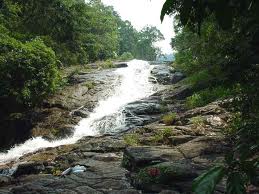 GUNUNG LEDANG
 HELLO KITTY TOWN AT KOTA ISKANDAR
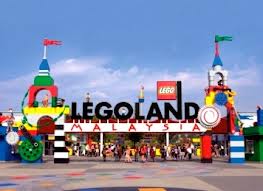 LEGOLAND
 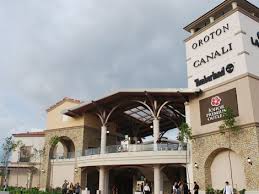 JOHOR PREMIUM OUTLET AS SHOPPING PLACES
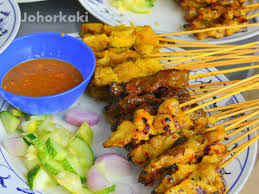 SATE AS ABREAKFAST IN MORNING
 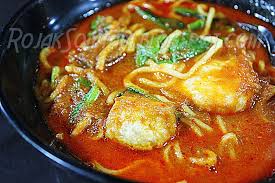 MEE BANDUNG IN MUAR
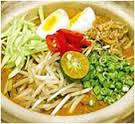 LAKSA
JOHOR
LAKSA
JOHOR
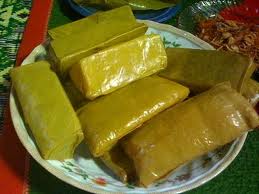 BURASAK
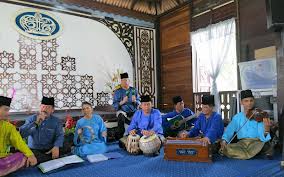 GHAZAL
 TARIAN KUDA KEPANG
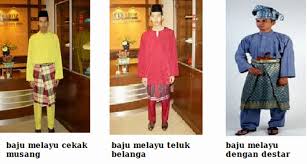 BAJU TELUK BELANGA