Stem Cells Research - Biology
Main menu:
Stem Cells Research
The Role of Stem Cells in Basic Research
Stem cells offer opportunities for scientific advances that go far beyond regenerative medicine. They offer a window for addressing many of biology’s most fundamental questions. Watching embryonic stem cells give rise to specialized cells is like peeking into the earliest development of the many tissues and organs of the human body. Stem cell research may help clarify the role genes play in human development and how genetic mutations affect normal processes. They can be used to study how infectious agents invade and attack human cells, to investigate the genetic and environmental factors that are involved in cancer and other diseases, and to decipher what happens during aging.

Stem cells may also revolutionize traditional chemical medicine. Because embryonic stem cells can continue to divide for long periods of time and produce a variety of cell types, they could provide a valuable source of human cells for testing drugs or measuring the effects of toxins on normal tissues without risking the health of a single human volunteer. In the future, thousands of compounds could be quickly tested on a wide assortment of cell types derived from stem cells, making drug discovery more efficient and cost effective.
Using nuclear transfer to produce stem cells could be particularly useful for testing drugs for disorders that are of genetic origin. For example, it is difficult to study the progression of Alzheimer’s and Parkinson’s diseases in the brains of live patients— but by using the cells of an Alzheimer’s patient to create stem cell lines with nuclear transfer, scientists could trace the development of the disease in a culture dish and test drugs that regenerate lost nerve cells with no danger to the patient.
Stem cells may also help scientists calculate the effects of toxic substances in drugs, food, and the environment.
The Role of Animals in Stem Cell Research
For medical research, as well as for research that explores the basic processes in the development of organisms and diseases, scientists often rely on animals. Implanting human cells into animals such as mice has long been common practice in order to test the safety and effectiveness of new drugs, procedures, and medical devices before clinical testing in human volunteers. For stem cell research, scientists use animals to make sure the stem cells are able to incorporate into the tissue, do not cause any harmful consequences, and function in concert with the rest of the body. For example, before using stem cells to replace the pancreatic cells that are destroyed by type I diabetes in humans, scientists will transplant human stem cells into a mouse to see whether the stem cells yield healthy, insulin-producing cells. If their methods prove successful in mice, scientists may eventually apply the technology to developing treatments for diabetes in humans.
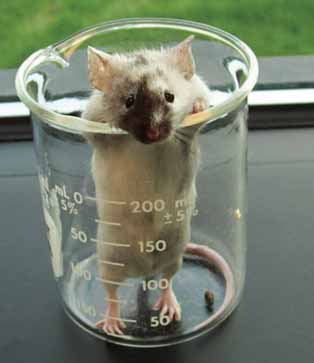
Animal studies can also reveal how human cells differentiate during normal development. For example, scientists may implant human stem cells into a developing mouse to observe the processes involved in building and organizing the different tissue types that make up the human body. Scientists can also trace the development and progression of certain diseases within an animal. By implanting human stem cells that lead to a particular disease into a mouse blastocyst, scientists can observe when and how the afflicted cells begin to show signs of disease and can test drugs that might prevent that process.
Organisms that contain cells or tissues from another individual of the same or a different species are called chimeras. A common example of a chimera is a mouse that has been injected with some human cells so that it can be used for studying a human disease or testing a new drug. A person who has had a blood transfusion or a person who has received a heart valve transplant from a pig is technically a chimera, as well. The making of chimeras for research
has unique ethical implications that have been the topic of discussions among scientists, ethicists and the public, especially when the chimeras contain both human and animal cells.