 |
Luxor Area!
Luxor
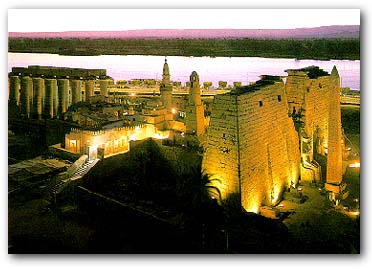
Luxor is the world's greatest open-air museum, filled with the awe-inspiring monuments of ancient civilization.
As Weset it was the capital of Egypt during the New Kingdom; as Thebes it was described by Homer as "the hundred-gated city." Its later name, al-Uqsur, means "City of the Palaces."
Testaments to a desire for immortality, built for eternity in sandstone and granite, the temples, tombs and palaces still stand, surrounded by souks and luxury hotels.
On the east bank of the Nile, in the City of the Living, Luxor and Karnak Temples greet the sunrise. The sunset on the west bank throws shadows through the City of the Dead: the Tombs of the Nobles, the Valley of the Kings, Queen Hatshepsut's temple.
Today, you can walk through history; past statues with the heads of gods and animals, beneath carved lotus buds and papyrus. Ride in a horse-drawn caleche, sail in a felucca, take a sunset cruise or see the city from a hot-air balloon.
|
Many festivals were celebrated in Thebes. The Temple of Luxor was the center of the most important one, the festival of Opet. Built largely by Amenhotep III and Ramesses II, it appears that the temple's purpose was for a suitable setting for the rituals of the festival. The festival itself was to reconcile the human aspect of the ruler with the divine office. During the 18th Dynasty the festival lasted eleven days, but had grown to twenty-seven days by the reign of Ramesses III in the 20th Dynasty. At that time the festival included the distribution of over 11,000 loaves of bread, 85 cakes and 385 jars of beer. The procession of images of the current royal family began at Karnak and ended at the temple of Luxor. By the late 18th Dynasty the journey was being made by barge, on the Nile River. Each god or goddess was carried in a separate barge that was towed by smaller boats. Large crowds consisting of soldiers, dancers, musicians and high ranking officials accompanied the barge by walking along the banks of the river. During the festival the people were allowed to ask favors of the statues of the kings or to the images of the gods that were on the barges. Once at the temple, the king and his priests entered the back chambers. There, the king and his ka (the divine essence of each king, created at his birth) were merged, the king being transformed into a divine being. The crowd outside, anxiously awaiting the transformed king, would cheer wildly at his re-emergence. This solidified the ritual and made the king a god. The festival was the backbone of the pharaoh's government. In this way could a usurper or one not of the same bloodline become ruler over Egypt