 |
Luxor Area!
Narmuthis Temple
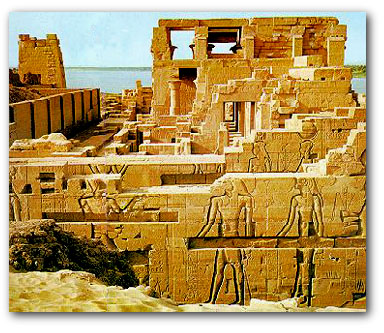
Located at Fayoum, Narmuthis is so vast it is not completely excavated. Built by Amenemhet III the temple is dedicated to the gods Sobek, Ernutet and Horus. Guarded by sphinxes and lions, the temples interior walls are covered with hieroglyphics and reliefs of Amenemhet III and Amenemhet IV. From an archeology viewpoint, this is considered to be the most interesting site in Faiyum.
|
Philae Temple
Philae Temple was dismantled and reassembled (on Agilika Island about 550 meters from its original home on Philae Island) in the wake of the High Dam. The temple, dedicated to the goddess Isis, is in a beautiful setting which has been landscaped to match its original site. It's various shrines and sanctuaries, which include The Vestibule of Nectanebos I which is used as the entrance to the island, the Temple of the Emperor Hadrian, a Temple of Hathor, Trajan's Kiosk (Pharaohs Bed), a birth house and two pylons celebrate all the deities involved in the Isis and Osiris myth. The Victorian world fell in love with the romance of the Temple. But at night you can also visit the Sound and Light Show, a magical experience as floodlit buildings are silhouetted against the volcanic rocks and water surrounding them. So today, Philae is more fun then every before.
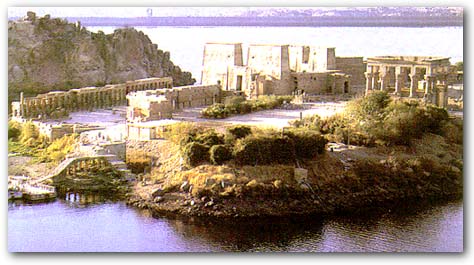 |
Although antiquities on the island date between the 26th Dynasty and the Roman Period, most of the work is from that of the Roman. This was a time of immense popularity of the Goddess Isis, and this was her island, where pilgrims would come from all over the Mediterranean. Construction on the island took place over an 800 year span, and it was one of the last strongholds of Ancient Egyptian Religion which continued to flourish here into the 6th Century. When the Temples where finally closed by Justinian in A.D 550, it ended 4,000 years of worship of the pagan gods.
The Philae Temple complex, prior to its removal and restoration, set alongside Biga Island. To the ancient Egyptians, Biga was the sacred mound, the first ground created from Nun out of Chaos. This was the legendary burial place of Osiris. The earth was considered to be part of his body so that only priests and temple servants were permitted to live there.
Ramseum
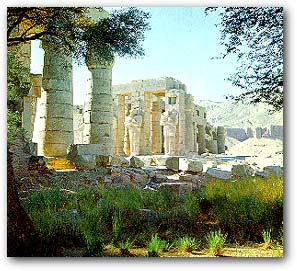
Ramesses II built the fabulous mortuary temple on the site of Seti I's ruined temple. This great temple reportedly rivaled the wonders of the temple at Abu Simbel. However, Ramesses built the temple too close to the Nile and the flood waters took their toll. Only a single colonnade remains of the First Courtyard. In front of the ruins is the base of the colossus of Ramesses that once stood 17m high. The statue would have weighed more than 1,000 tons. The statue fell into the Second Court and the head and torso remain there, but the other broken pieces are in museums all over the world. The ceiling in the Astronomical Room is still intact with the illustration of the oldest known 12 month calendar.
 |
Nobel Tomb
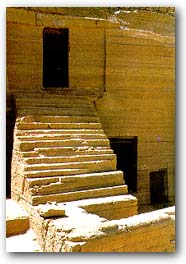
The northern hills of the west bank (Qubbet el-Hawwa or Qubbet el-Hawa meaning windy dome) are filled with the rock-hewn tombs of princes from the Old Kingdom to the Roman period. The 6th Dynasty tombs, some of which form linked family complexes, contain important biographical texts. Inside, the tombs are decorated with vivid wall paintings showing scenes of everyday life, hieroglyphic biographies and inscriptions telling of the noblemen's journeys into Africa. At night they are illuminated with hidden spotlights and can be clearly seen from Aswan.
|
 Get your own Free Home Page