Luxor Area!


Valley of the Kings

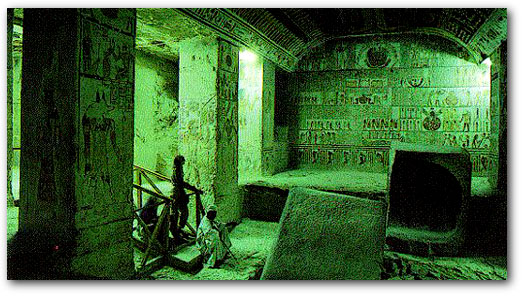
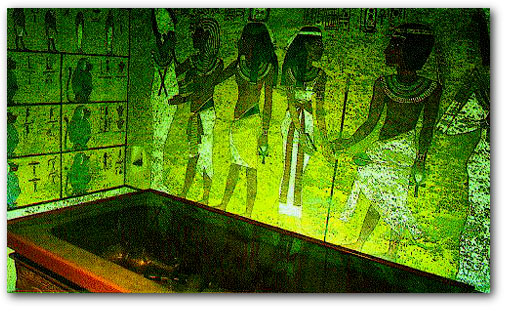
The Egyptian belief that "To speak the name of the dead is to make him live again" is certainly carried out in the building of the tombs. The king's formal names and titles are inscribed in his tomb along with his images and statues. Beginning with the 18th Dynasty and ending with the 20th, the kings abandoned the Memphis area and built their tombs in Thebes. Also abandoned were the pyramid style tombs. Most of the tombs were cut into the limestone following a similar pattern: three corridors, an antechamber and a sunken sarcophagus chamber. These catacombs were harder to rob and were more easily concealed. Construction usually lasted six years, beginning with the new reign. The text in the tombs are from the Book of the Dead, the Book of the Gates and the Book of the Underworld.

RamessesIV
Three white corridors descend to the sarcophagus chamber. The chambers ceilings depict the goddess Nut. The lid of the pink granite sarcophagus is decorated with Isis and Nephthys, which were meant to serve as guardians over the body. Their duties fell short, however, as the tomb was robbed in ancient times. Originally the priests placed the sarcophagus in Amenhotep II II's tomb in order to hide the body, which was a common practice.

RamessesIX
Two sets of steps lead down to the tomb door that is decorated with the Pharaoh worshipping the solar disc. Isis and Nephthys stand behind him on either side. Three corridors lead into an antechamber that opens into a pillared hall. The passage beyond that leads to the sarcophagus chamber.

Merneptah
The steep descent into the tomb is typical of the designs of the XIX Dynasty. The entrance is decorated with Isis and Nephthys worshipping the solar disc. Text from the Book of the Gates line the corridors. The outer granite lid of the sarcophagus is located in the antechamber, while the lid of the inner sarcophagus is located down more steps in the pillared hall. Carved on the pink granite lid is the figure of Merneptah as Osiris.

RamessesVI
Originally built for Ramesses V, three chambers and a 4th pillared chamber was added by Ramesses VI. Complete texts of the Book of the Gates, the Bof Caverns and the Book of Day and Night line the chambers. Portions of the Book of the Dead are located in the pillared chamber, along with scenes of the skygoddess, Nut.

RamessesIII
The tomb is sometimes referred to as the "Harpers Tomb" due to the two harpers playing to the gods in four of the chambers. Ten small chambers branch off of the main corridors. These were for the placement of tomb furnit.

SetiI
The longest tomb in the valley, 100m, contains very well preserved reliefs in all of its eleven chambers and side rooms. One of the back chambers is decorated with the Ritual of the Opening of the Mouth, which stated that the mummy's eating and drinking organs were properly functioning. Believing in the need for these functions in the afterlife, this was a very important ritual. The sarcophagus is now in the Sir John Soane Museum, London.


Luxor


Hosted by www.Geocities.ws

1