

My particular Elan+2 was imported from the UK in 1969, driven for a few years and subsequently parked, mostly outdoors, for twenty three years. She was owned by the original owner until last spring (1998), when she was purchased by a dealer who removed the engine and then, after deciding it was too much work, sold it to me. The dealer had it for about two months.
The following pictures show what condition it was in initially.
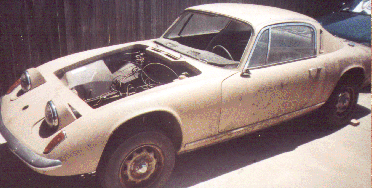
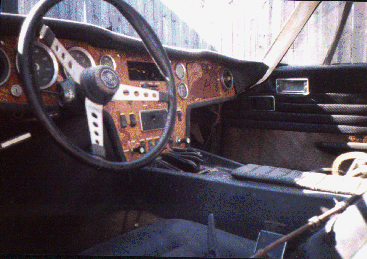
I decided to proceed in steps, separating the jobs so the overall task of restoring didn't become too overwhelming.
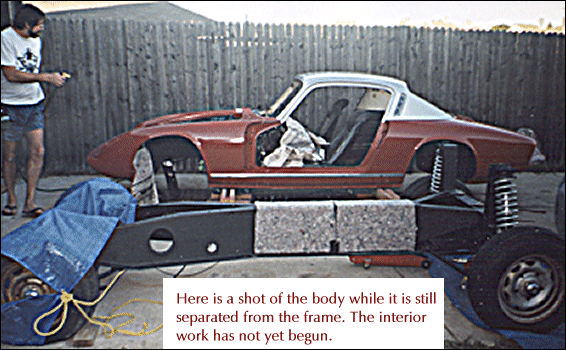
The first job was to separate the chassis and body. I purchased a used workshop manual (which did not show all the connection points holding chassis to body) and proceded to lift the body from the chassis. The following photos give some idea of this process:
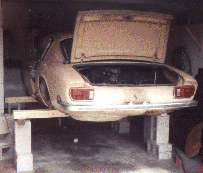
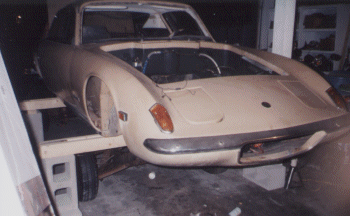
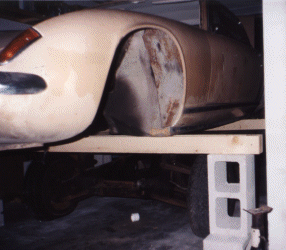
Be sure to remove the seat belts and the two bolts by the gas tank (bolted to the strut towers.) Raise the body up slowly, about 1 inch on each side so it doesn't twist too badly. The rear strut towers have to clear the underside of the boot compartment. It's best to remove the rear tires and put the frame on a small dolly. The body needn't be raised quite so high as I show here.
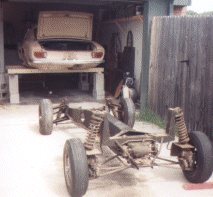 After separating the body and chassis, I rolled the bare chassis out of the garage. I lowered the body, placed it on dollies, carefully rolled the body out of the work area and covered it. I then rolled the chassis back in and started work on that.
I proceeded to scrape down the frame, which had a tar-like substance on it . The frame was in remarkably good condition, considering this is a 30-year-old machine. There was a slight amount of rust on the sills where water had collected over three decades. Apparently, the tub filled with water and seeped out to where the seat belts bolt to the chassis. But I really lucked out here: the rest of frame was like new.
I started repairs at the front, checking the steering rack, replacing the boots and inspecting the shocks. The shocks themselves were fine but the rubber bushings had deteriorated. (It was cheaper to just buy new shocks). I had to build a spring compressor to install the springs on the front shocks, since normal spring or strut compressors won't work.
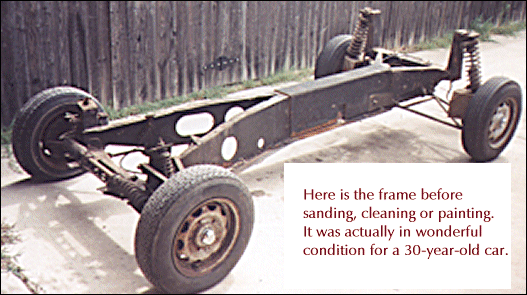 Next, I found play in the right rear wheel bearing. I decided to replace the bearing on both sides, while I was in here. Getting the hubs off was a b****. (It is the only job on this project I had to have a mechanic do. A small propane touch won't get the hubs hot enough.)
To re-assemble, I put the bearings and the axle in the freezer before assembly. However, watch for too much condensation during assembly. The struts are airtight. Rust may form.
I then installed new donuts. (These can be quite expense. Not a good design!)
I repainted frame with Rustolem paint. (Probably a bad choice as the paint seems too brittle and tends to flake off...)
Brakes can be a real problem. I removed the calipers and found most of the pistons were frozen in. I used the clutch master cylinder to apply hydraulic pressure to the calipers. To the seized pistons: I let the calipers heat up (in the record-breaking 100+ Dallas summer heat) and dropped ice cubes into the center on the pistons. Then I applied pressure. (It worked great!)
Apparently Lotus made a change to their calipers about the time my car was built: The left side is the old style, while the right side is new. This required another rebuilding kit, of course.. The flexible brake hoses connected to the calipers were all stopped up, so I ran a wire through them. They work but I'm concerned that the rubber may be shot, possibly contaminating the system. (I will need to replace them before I install fluid.)
When removing pistons, always insert some wood between the pistons before applying pressure. All my pistons need to be replaced eventually, although only one piston was seriously bad. I purchased two servo repair kits but will probably not install them. I have changed the stock .875" master cylinder to .75" (Won't know for a while whether this is the correct bore...)
This photo shows the frame half-finished. The front half is done and painted at this point.
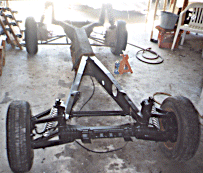 I finally wheeled the chassis out, painted and looking new. I had also painted the springs silver (to make them stand out.) The rest of the chassis was black. I covered the chassis, had a cigar and poured myself a beer.
I removed the bumpers, trim, lights and etc. and sent the bumpers out to be re-chromed.
The fibreglass body was very bad. But at least, other than the bonnet, she had only two real cracks. Both were about 1" to 2" long in the wheel arches. I repaired these with fiberglass and resin but still had millions (no exaggeration) of small pin holes and spiderwebbing. I used the magical orange body filler from Walmart to fill these in. (It dries quickly and is easy to sand. No complaints so far.)
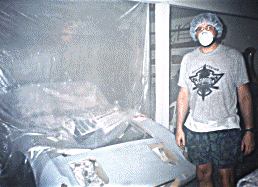
This step was followed by a coat of epoxy primer. If the surface wasn't smooth I put on more filler than reprimed. Sounds easy but took about a month and a half to get the car patched and smooth. The initial sanding to remove old paint was minimal since she still had on her original paint job.
I decided to paint the roof silver and main body red. (A silver roof is not quite correct for a Plus 2, but that is what I wanted at the time.) I sprayed the roof first and she came out quite nicely; metallic paint can sometimes be difficult to get right.
I masked off the roof and sprayed the front half of car. Several days later, I sprayed the rear half.
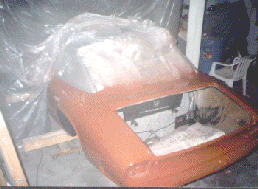

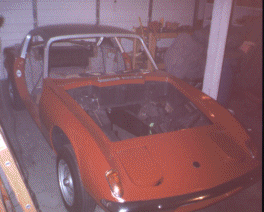
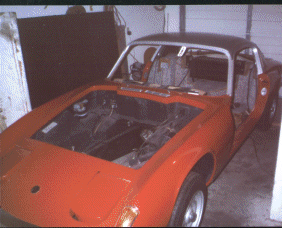 I re-installed the newly rechromed bumpers, moldings, lights and a new gas cap. The rear bumper had been rusted badly and needed to be repaired. It should have a slight curve to it but when the bumper was returned from the chrome shop, it was straightened some (about 3/8" on each side). Still fits but had to redrill several holes. Not sure how they did that...?]
I decided to spray the boot, bonnet and doors separately. The bonnet was badly cracked in several places and needed extensive refiberglassing.
 Now it was time to remove the fuel tank. Someone had dumped several cups of sand and gravel in the tank--and the tank is built in sections, so it wasn't easy to remove all that sand. A lot of shaking took place. Once cleaned, I painted and reinstalled the tank.
I found some light camel-coloured Berber carpeting and installed it in the boot. I also installed the freshly painted boot lid. Lots of tear-out and cleanup now began: I removed the interior (what was left of it). The original carpeting had deteriorated to almost a powder. There were skeletal remains of spiders, lizards, flies and several unknown creatures.
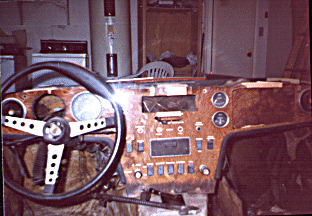
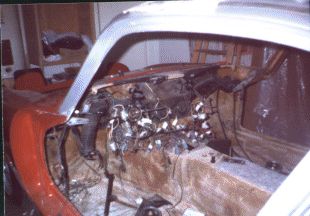
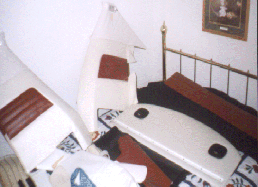
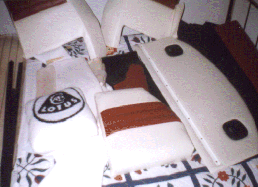
Deciding the original black interior was not a wise choice for this HOT climate, I choose a cream and maroon combination for the interior colors. The original headliner material is not available anymore. However, I found some era style material for $2 a yard at a nearby sewing center. I located some good quality marine-grade upholstery vinyl and recovered the front and rear seats.
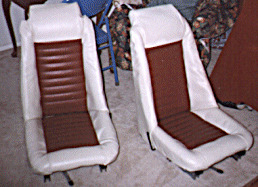
The front seats were rather difficult, with lots of complex angles. I used the original seat covers as patterns but they had stretched over 30 years time. Still, they came out fairly well in the end.
I refurbished the airbox, replaced the form and seals. I also had the heater core pressure checked and then reinstalled the airbox.
Now what?
I started this project on Father's Day, 1998. It's now almost Easter, 1999- but I am still making progress. The mechanical repairs loom in the near future, and all the finishing work on the interior is still waiting to be installed. (My livingroom is a paradise-on-earth for a Lotus Lover: door panels, rolls of upholstery material, a working sewing machine, cut carpet pieces...)

Do you have a Lotus, too?
Back to the British Sports Car Page?
Or on to the Sutcliffe's Home Page?