


The Ultimate "Classic" Chevy
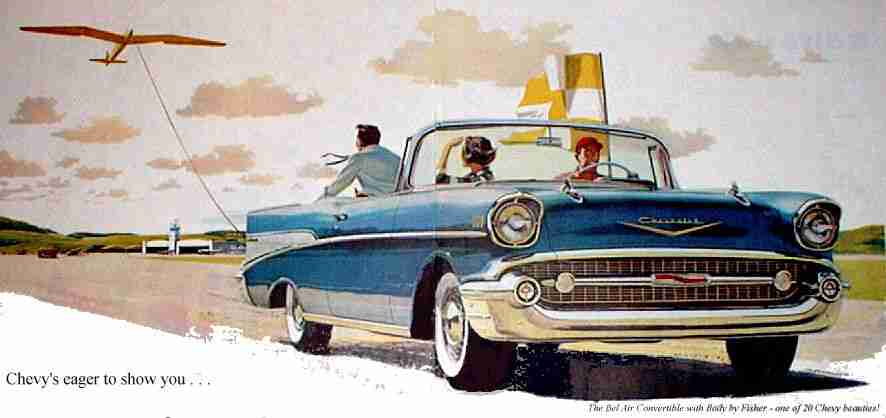 Riding new 14 inch
tires, the 1957 Chevrolet stood 2.5 inches longer and 1.5 inches lower
than the ‘56. Twin rocket shaped windsplits down the hood replaced the
usual hood ornament. Modest but still sharp, fins brought up the rear -
a mere hint of things to come. Bel Airs were available in seven models,
trimmed with anodized aluminum panels on the rear body sides. In pastel
shades, or ice cream colours as I call them, a ‘57 Sports Sedan (ours Surf
Green and India Ivory) is enough to send shivers up your spine. The Nomad
again was the higest ticket Bel Air, with just 6013 built in the US - far
below the 166,426 Sport Coupes and 47,562 convertibles. Ours is a Canadian
car, only 3,486 Sports Sedans were produced here. The best selling Bel
Air was the four-door post sedan.
Riding new 14 inch
tires, the 1957 Chevrolet stood 2.5 inches longer and 1.5 inches lower
than the ‘56. Twin rocket shaped windsplits down the hood replaced the
usual hood ornament. Modest but still sharp, fins brought up the rear -
a mere hint of things to come. Bel Airs were available in seven models,
trimmed with anodized aluminum panels on the rear body sides. In pastel
shades, or ice cream colours as I call them, a ‘57 Sports Sedan (ours Surf
Green and India Ivory) is enough to send shivers up your spine. The Nomad
again was the higest ticket Bel Air, with just 6013 built in the US - far
below the 166,426 Sport Coupes and 47,562 convertibles. Ours is a Canadian
car, only 3,486 Sports Sedans were produced here. The best selling Bel
Air was the four-door post sedan.
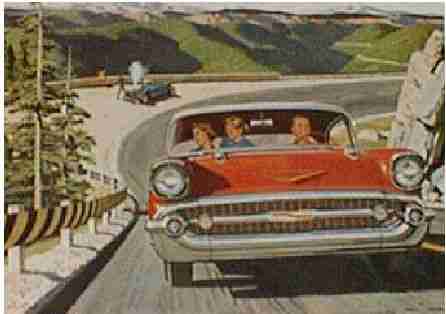 In the engine
compartment, Chevy owners could choose from the long-lived six or 265 V8
to half a dozen variations of the enlarged 283 engine. Some Bel Airs were
even fuel-injected V8s ranging as high as 283 horsepower. “The road isn’t
built that can make it breathe hard”, boasted the ad for V8 models. No
wonder with this kind of power under the hood. Inside, an all new dash.
Factory accessories included everything from air conditioning and a power
antenna to Autronic Eye headlamp control, seatbelts, Continental kit, and
a “Kool Kooshion” ventilated seat pad.
In the engine
compartment, Chevy owners could choose from the long-lived six or 265 V8
to half a dozen variations of the enlarged 283 engine. Some Bel Airs were
even fuel-injected V8s ranging as high as 283 horsepower. “The road isn’t
built that can make it breathe hard”, boasted the ad for V8 models. No
wonder with this kind of power under the hood. Inside, an all new dash.
Factory accessories included everything from air conditioning and a power
antenna to Autronic Eye headlamp control, seatbelts, Continental kit, and
a “Kool Kooshion” ventilated seat pad.
Ford may have put us on wheels, but during the late ‘30’s and ‘40’s it was Chevrolet that most buyers chose. By World War II Chevrolet was well established as number 1. Dull but dependable, it appealed to millions because of its low price, practicality and pleasant styling.
In 1955, Chevrolet shed its stodgy old image, replacing it with all new “Motoramic” styling and two “silk and dynamite” V8s. So impressive were the new Chevys that they are now often referred to as “classics.” After a rousing 1955, fans might have wondered how Chevrolet could follow up for 1956. They needn’t have worried, for there would be more style (bigger and more “important” looking), more power, and more refinements - all geared “to make the going sweeter”.
Chevrolet pulled out the stops when it redesigned the 1957. Few body
parts would interchange with the 1956, which was itself a complete re-do
from the 1955. The automobile was offered in three standard series But
now the 150 had four models , the 210 had eight and the Bel Air was available
in seven. Nineteen different combinations were available.
|
|
|
|
|
|
|
|
|
|
|
|
|
|
|
|
|
|
|
|
|
|
|
|
|
|
|
|
|
|
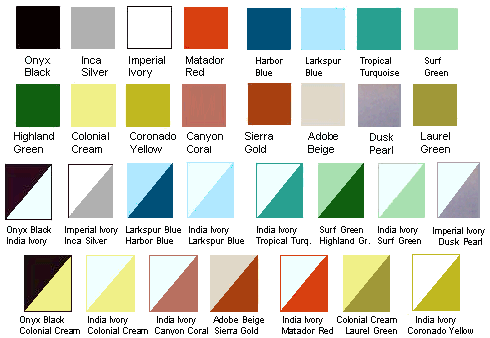
Also offered were seven new colors. The lacquer paint came in seventeen
colours, sixteen solids choices and fifteen two-tone combinations. There
was a staggering 466 model / colour varieties. The convertible was available
only in a solid colour, but one of five colours could be selected for the
top, a new vinyl impregnated material called Chevrolon. This represented
the greatest colour / model combinations ever offered by Chevrolet.
The new Chevrolet was 200 inches long, and 1 1/2 inches lower at the hood line. Because of the frame design and new fourteen inch tires, height was also reduced. The 1957 was longer and appeared even longer still, due to the new styling. The wind-shield was 58 1/2 inches wide and seven percent taller. Visibility was enhanced by the peaked front fenders, helping the driver judge distances better.
Body changes for the ‘57s were more noticeable than the changes from ‘55 to ‘56. New front and rear styling was used including lower and flatter hood, two widely spaced hood rockets and air intakes incorporated into the headlight bezels. The new rear end design included backup lights and taillights that blended into the rear bumper, a gas filler door hidden in the trim that ran from the bumper ends.
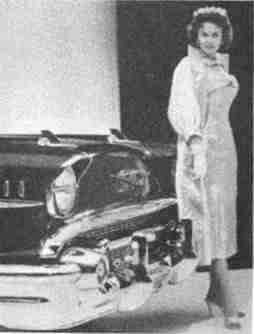 The new front
and rear bumper design must have presented assembly problems for the GM
plants. Alignment of the body, frame and bumper was critical, with little
room for error. The original design of 1957 rear bumper had the exhaust
expelled from under each taillight. This idea was dropped, due to discoloration
of the bumper chrome as well as other production problems.
The new front
and rear bumper design must have presented assembly problems for the GM
plants. Alignment of the body, frame and bumper was critical, with little
room for error. The original design of 1957 rear bumper had the exhaust
expelled from under each taillight. This idea was dropped, due to discoloration
of the bumper chrome as well as other production problems.
Owners of the first Bel Airs to roll of the assembly lines complained about the poor appearance of the gold emblems and scripts, it was due to the gold plating wearing off. After November 1st these parts were made from a more durable material, gold anodized aluminum.
Aluminum side trim was added to the Bel Air models. This was to give the car a look of motion even while standing still. All in all, the body changes made for 1957 were well received, and that appreciation is still evident today, as the 1957 Chevrolet is one of the most desirable collector cars ever produced in North America
Chevy touted it’s ‘57 as “Sweet, Smooth, and Sassy!” And indeed, the new styling was sweet, the finest of the 1955-57 “classic” Chevys; the new Turboglide transmission was “as smooth as velvet underpants”; and the new fuel-injected 283 V8 was very sassy. It's seem ironic that in 1957, Chevrolet, now advertising #1 USA, was out sold for the first time by Ford. It would be years before the 1957 Chevrolet was appreciated for the classic it has become today.
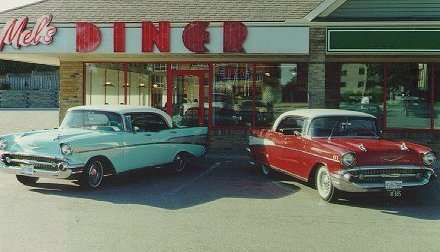
Generations have enjoyed the ‘57 Chevy, and will continue to appreciate
them. We can’t tell you how many times people will look at the car and
say “My dad used to have one just like this”. Or “This was the kind of
car we had when we first took the kid on holidays”. Or “I remember my first
ride in my neighbours ‘57”. Everyone can associate to the ‘57 Chevy. Almost
from the day production ceased, it’s been coveted not only as the last
of the “classic” Chevys but the best - the definitive example of the
Fabulous Fifties.