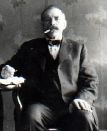
| Name | Tosten (Thom) Knudson |
| Birth | 5 Jan 1850 |
| Death | 2 Jan 1942 Age: 91 |
February 5, 1931
Rothsay Enterprise
So many have asked me from time to time to write a few reminisences of pioneer days that I will attempt to comply with the request.
I was not one of the earliest settlers in the Rothsay vicinity as I did not settle here until the fall of 1874, having lived near St. Peter in Sibley County six years and prior to that in Fillmore County from 1860. Nevertheless when we arrived in this vicinity there was no railroad here -- to say nothing of graveled highways, automobiles or air-ships and the principal means of travel were by ox-team or afoot.
My wife, one child and I made the trip from Sibley County in a covered wagon drawn by a yoke of oxen. I also had another yoke of Oxen and wagon which another young fellow drove up for his board. My other property consisted of two cows, which made the trip afoot, a stove and few kitchen utensils, a plow, a few drag teeth, a home-made bobsled, a few tools and $15 in cash. The trip took us 16 days, traveling every day but one when we had to stop so my wife could bake bread as there were no bakeries in the few towns along the road and one could not buy a loaf of bread even if you had a money. We came to the farm of my father-in-law, Amund Smikop, on what is now the Wood farm south-west of Rothsay where we made our home the first winter. I well remember helping thrash that fall. My father-in-law and his three neighbors, A. C. Flatin, Ole Hanson and Gilbert Ingelson, had a few acres in crop that sumer from which they had harvested one setting, four stacks of grain. They were able to get ahold of an old horse-power threshing outfit from Becker County but none of them had horses to put on the horsepower and did not know where to get them even if they had had the money with which to rent them so I volunteered to hitch my oxen to the horse-power. This we did but had to work the oxen in relays as a yoke of oxen will get dizzy walking in a circle and when we noticed one yoke started to get unsteady we would unhitch them and replace them with the other yoke who were then rested. At this time there was no Rothsay and our post-office and trading point was Elizabeth where we also had our wheat ground to flour. A few years later Manston was started and we got our trading and got our mail there. A.C. Flatin and I made alternating trips to Manston each week for the mail which was then left at Flatin's where the neighbors for miles around would come for their mail. This arrangement we continued until the railroad came to Rothsay and was certainly quite a contrast to our present day rural free delivery system but nevertheless it served us well in that day and age.
The winter of 1874-75 was quite severe with a lot of snow and raging storms. Several of us hauled a good deal of wood and building logs from what was called the Altner place about 5 miles north-west of Elizabeth. Here we erected a temporary camp with stables for our oxen on a certain piece of land where we could pick up all the wind-falls and dry trees for nothing. We would leave home Monday morning's with hay for the oxen and enough food for ourselves to last all week and then return home on Saturday afternoons. I well remember one stormy afternoon when Mr. Smikop and I were on the way home with our ox teams. The staple in the yoke of Mr. Smikop's ox team broke and he set out to walk a half mile to a black-smith to get it fixed. I was to take care of the oxen and wait for him. The storm increased steadily and the more it stormed the more unruly the oxen became. Finally it got dark and I started for home as I could not manage to keep the teams quiet any longer. When Mr. Smikop, who had waited a long time for the black-smith to return home, had the necessary repairs made and came to the place where he had left me I was of course not to be found and he had to walk 12 miles in the face of a raging blizzard. At that he missed the home place where I had arrived some time previous but luckily stumbled onto a pile of rocks and a fence about a quarter of a mile north of the house and from these got his bearings again.
Another stormy morning that same winter my father-in-law and I started for the barn to do our usual chores. The barn was not the large, imposing structure of today but built of logs and sod. We were each supplied with a shovel as we expected the door to be drifted over and our expectations were certainly fulfilled. We both shoveled snow but so fast did the snow drift in that we were unable to clear the snow away fast enough to get the door open. We finally gave up shoveling but after dinner we were able to work our way thru the hay roof of the hayshed and thus manage to get a little hay to the stock. It was not until nearly dark that the storm let up enough so that we were able to get the door open in order that the stock might be watered.
In the fall of 1875, I was appointed county commissioner for the third district to fill a vacancy. There were then only three districts in the county. Our first meeting was to be held at Breckenridge on Monday, Jan. 1st 1876 and while there was a railroad at Breckenridge there was none on this side of the county so the only means of getting there was to walk or drive across the flats where there were no settlers to be found between Tollef Gronseth's farm and Breckenridge. We did drive over as Gilbert Ingelson took me across county behind a yoke of half broke steers -- we never called them oxen until they were at least five years old and well brok. Rather a different mode of transportation to a meeting than in our pre week and during that time I had to stay with the section foreman as the hotel they had was filled to over-flowing. On Saturday morning which was clear and quite mild I started to walk home only a matter of 20 odd miles across the wild prairie which was covered with two feet of loose snow. When I had come about 3 miles from Breckenridge I noticed a dark cloud in the northwest and knew a storm was coming. After debating a few minutes as to whether I should go on or return to Breckenridge. I decided to keep on as my wife was home alone and I was anxious to get home and see how she was getting along. I took careful note of the direction of the wind and started ahead. At first the snow was wet but as the storm increased it grew colder and soon a hard crust had formed on top. This crust was not strong enough to carry my weight and to any one who has tried walking in snow two feet deep with a hard crust to break I need not tell how hard the going was and to those who have not tried it I doubt if words can fully describe the task that lay before me. Just at sundown the storm let up and as it did I could see Tollef Gronseth's place right ahead of me. I was dead tired but declined Tollef's kind and persistent invitation to rest and have a cup of coffee as I knew that if I ever sat down to rest I would not be able to get home that night. So after drinking some water from a spring on his place I again started for my home which was then on the place where Math Matheson now lives, the old Chris Hanson place. This I reached after two more hours of heavy going and after I had sat down to wait for my to get supper ready I was hardly able to get to the table as my legs refused to support me any longer. The next day I would not have started out on a trip like that again for $50, no matter how scarce the money was in those days.
I was re-elected county commissioner and during this term we tried to regain Range 44 which at one time belonged to WIlkin or Andrea County as it was first known. We had lost Range 44 by some hook or crook while Ole Jurgans was county auditor in Otter Tail County. Our first attempt was to have our assessor -- Gilbert Ingelson, attempt to assess some of the settlers in Range 44 and thus have to pay taxes to WIlkin County but he did not meet with much success. Next our board of county commissioners appropriated $50 and appointed Chas. Felley, County Auditor and James Harris of McCauleyville who was later sheriff to go to St. Paul to investigate the records to see if there was any hope of regaining the lost Range 44. They went to St. Paul and spent the county's $50 but when asked to make their report at our next board meeting their only reply was that we didn't want range 44 anyway. Breckenridge feared the addition of Range 44 might lose them the county seat an McCauleyville favored Breckenridge rather than any town on the east side of the county seat. Also in this term there was also a demand made that we issue bonds to build a courthouse. This I opposed on the ground that the county was too thinly settled to impose such a burden of taxation and with the help of Rueben L. Messer, commissioner from the 2nd district we defeated the proposal to issue bonds. While this fight was going on I made a trip to Breckenridge on horseback. I was sick at the time court was in session but after the third summon I got up and made the trip. Upon my arrival before the court, I was asked if I wanted to build a courthouse. My answer to the court was "No" and the court said, "That settles it" so the courthouse was not built until several years later. In the fall of 1878 I declined to run for re-election and K.G. Stordock was elected commissioner. During his term of office we again tried to regain Range 44 and also have the county seat moved to Manston which then had the railroad. I circulated a petition and got signers here in the eastern part of the county. All our attempts were again unsuccessful. At this time the townships of AKron and Tanberg were one school district No. 5 and I helped build the first log school house on what was then the (Andreas & Augusta) Gronlund farm, northwest of Rothsay.
All our winters were not stormy. The winter of 1877-78 was unusually mild. We would have a day or two of real cold weather -- colder than we have had this winter but then there would be a week when the temperature did not fall below freezing. The farmers worked the fields and seeded at some ..... every month of that winter.
I could keep on writing but I will see if this meets with the approval of the editor before continuing.
Thos Knudson
Editors Note: We want to say to Mr. Knutsen that the above written article is greatly appreciated and any further efforts on it's behalf will be more than ... the columns of the ....
We are greatly endebted to ..... (probably Ole) Amundson for his assistance in assembling the above story for our "old timer."
The first creamery was organized in 1886 with these people listed as organizers: J. E. Tupper, John Jacobson, Tollef O. Gronseth, Tom Knudson, H. L. Shirley, John Wigdahl, and Anton Wester.
Wilkin School District #27 (2516) was built on land donated on the north side of section 14 of Tanberg Township by Tom Knudson and Sigrid (Amundson) Knudson.
The petition to organize was signed on November 13, 1885. Petition signers were: Thomas Knudson, Peder Olson, Torger Kantrud, Peter Nordemu, Christian Krogh, Hans Kinzelsia, Gilbert Blegen, Herman Martinson, Johan P. Lundstad, Johan I. Skuler, Thor Johnson, Yotranes Traile, Ole Ringstad, Peder Jopensen, P.H. Skaug, S.E. Bowman, Jur Molden, C. Hanson, G. Engelson, Erick O. Bergebaker, Amund Monson, Christ Bjorgen, Ole Stenseth, Nils Hval, Clark Goodell, Knudt Johnasen, Ole Amundson, Anders L. Ellefsrud, Andrew Ringstad, Christian Hoff, Jacob Gunderson, Iver Berger. The Jakob Amundson family lived in this District. Teachers in District 27 included Christine Gronseth, Ella G. Rorvig, Luella Jocobson Franks, Mathilda Bratlein, Ethel Cowie, and Gina Gronseth.
Tom Knudson, 92, Dies at Pelican Rapids in 1942
Former Reisdent of Fergus Falls and Rothsay Community
Rothsay, Jan. 5--Tom Knudson 92, former resident of Fergus Falls died at Pelican Rapids Saturday afternoon at the age of 92 years.
He was born in Hallingdal, Norway, Jan. 5, 1850, and came to the United States in 1860 with his parents, who settled in Nicolet county. He was married to Sigri AMundson at Eau Claire, Wis., in 1872. A few years later they moved to a farm two miles southwest of Rothsay where they resided for a number of years. Then they moved to Fergus Falls where they resided until his wife's death Oct. 5, 1927. SInce then Mr. Knudson has made his home with his children.
Surviving are five children--Mrs. F. A. Halbakken, Pelican Rapids; Mrs. Clara Knutson, Rhome, ND; Theo. of Los Angeles; Carl of Amden, ND, and Albert of Fergus Falls. He also leaves 18 grandchildren and four great grandchildren. One sister, Mrs. Chas. Nelson resides at Lawndale, and a brother, ANdrew Kaupang, lives at Harlow, ND. A daughter died in 1927 and a son in 1883.
Funeral services will be held at the Hamar church Wednesday at 1:30 o'clock, Rev. Salveson officiating.
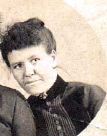
| 1 | Sigrid Amundsd Amundson |
| Birth | 27 Feb 1855 |
| Death | 5 Oct 1927 Age: 72 |
| Father | Amund (Smikop) Amundson (1818-1895) |
| Mother | Ronnaug Jakobsd Huschelien (1822-1893) |
| Marriage | 1872 |
| Children | Belle Regina (1874-1960) |
| Clara (1876-1969) | |
| Marie (1879-1927) | |
| Theodore (1880-1944) | |
| Albert (1882-1883) | |
| Carl (1884-1964) | |
| Albert (1888-1950) |