| TREE PLANTING AND CARE |
| continued from the previous page |
|
| ��� Topping
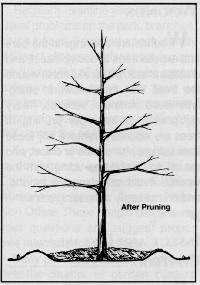
is not a recommended pruning practice for any tree. The stubs that are left will soon
decay and provide an entryway for insects and disease. Instead of leaving stubs, make all
pruning cuts where branches fork, or back to the main trunk. Pruning on most trees should
be done during the dormant season, preferably in late winter or early spring. Wounds ��� Wounds are openings in the bark that expose trees to decay, insect, and disease attack. Be careful not to wound the trees with lawn mowers, string-type weed trimmers, vehicles, heavy equipment, or improper pruning. If trees are wounded, remove any loose bark using a sharp knife or chisel, and cut off ny wood protruding from the wound. Avoid enlarging the wound, and do not apply a dressing paint. Insect and Disease Control ������ ��� Keeping
trees healthy is the best prevention from insect and disease problems. Drought, improper
planting, or roots disturbed by digging or soil compaction can stress trees and make them
more susceptible to insect and disease problems. By determining the primary cause of the
stress, you can treat the initial problem, before the stressed tree becomes vulnerable to
insect and disease attack. |
|