-
The canoe is a symbol unique to Canada, a symbol of enduring signifigance to all Canadians. It is one of the greatest gifts of the First Peoples to all those who came after.
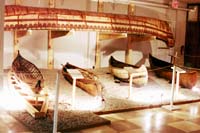
Today the canoe continues to be important to many Native cultures. For instance, the revival of the building of the great sea going canoes on the west coast in the last decade is central to the sense of rebirth and renewed pride amoung west coast First Nations. For them the canoe is a spiritual symbol and the revival of canoe building has become the central symbol is a resurgence of the cultures and a renewed sense of pride. This cultural renaissance has now taken the shape of canoe gatherings of thousands of west coast Native Poeple every few years.
The canoe is perhaps the greatest gift of the Native peoples to later cultures. It is the most powerful symbol joining the three founding peoples - Aborginal, French and English. It is a symbol of exploration and discovery, of individual courage and partnership, of heroic enterprise and of a quiet harmony with Nature.
What symbol could better represent Canadians abroad than the magnificent sculpture, The Black Canoe, by Haida sculptor Bill Reid, which now resides in a place of honour at the Canadian Embassy in Washington.
To continue learning about our native roots please choose the next button or you may return to the Table of Contents.


 Get your own Free Home Page