-
Long before there was a country called Canada, the Native Peoples lived in harmony and in balance with Nature. Nature also provided them with the raw materials with which to fashion various art forms. The Mi'kmaq of Atlantic Canada perfected the art of quillwork into an intricate and beautiful expression of their culture.
The Mi'kmaq people have inhabited the Atlantic coast of Canada for thousands of years. They were a hunter gatherer society, consisting of skilled trappers and trained hunters. Traditionally, the Mi'kmaq people believed in one supreme creator - the Great Spirit, who delegates authority through his mediators the sun, moon, earth and stars. The Mi'kmaq never considered themselves better than anyone else, as people and animals were considered equal. As a result, there was respect for animals that were hunted for food or clothing, including prayers given in reverence for their lives.
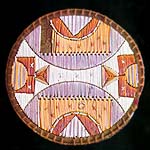
The Mi'kmaq excelled in art of quillwork, the mastery of elaborate designs using the quills from porcupines. One of the most beautiful of the art forms native to North Americal, quillwork intricately brings together materials of fauna and forest into complex symbolic patterns.
Mi'kmaq women have long been noted for their exquisite work, particularly their mosaics of quills on birchbark. The quills were removed from the porcupine then sorted and dyed, using natural organic colours. Porcupines, heavyset, relatively short-legged, normally have between twenty to thirty thousand quills, constantly regrowing those that are lost or moulted, so there was always a renewable harvest of artist's materials. Birchbark, as the artist canvas, was also an important material to the Mi'kmaq and they used it to make everything from canoes to dishes to boxes. Their dependence on Birchbark is reflected in the enormous vocabulary the Mi'kmaq evolved to deal with every conceivable aspect of birch and birchbark. You may continue on your journey of our native roots or you may return to the Table of Contents by choosing the home button below.

 Get your own Free Home Page