


|
Guestbook Wessex The Bronze Age Stonehenge Ritual Barrows Artefacts Pottery Learning More Dating the Past Links Me |
||
|
All Bronze Age Wessex pottery was handmade (the potters wheel had not yet been invented) and fired in small bonfires. Nevertheless, the craftspeople (probably mostly women) produced some very fine wares. Bronze Age pottery, unlike most Neolithic wares had flat bases. this may indicate that settlement had become more permanent and surfaces better: a flat surface is required to give a flat-based vessel stability. In preceding ages pottery had round bottoms and was placed on rings or hollows on the ground. Much Neolithic pottery also had lugs which were threaded with string in order to suspend bowls etc. above the ground. |
||
|
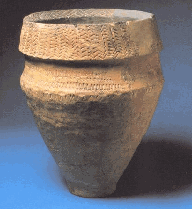
During the Early Bronze Age different types of vessels were used for funerary (sepulchral) and domestic purposes. Pictured left is a collared urn, a type of pottery that was almost exclusively used to hold cremations. thanks to its thick over hanging rim it probably is the easiest class of pottery to identify. The vessel would have been placed upside down, and containing the ashes, in a small pit over which a barrow was constructed. Small grave goods (e.g. faience beads) often accompanied the cremated remains. Domestic pottery usually consisted of foodvessels of different sizes. |
||
|
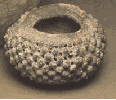
Pictured left are two miniature vessels (a grape cup at the top and a slotted cup below). the grape cup in particular is a form which is typical for the Wessex region. This form of pottery is also known as incense and/or pygmy cups. Strictly speaking these term should be avoided, because they are inaccurate. Neither of these vessels could ever have served as a cup, nor is it likely that incense was burned in them. They are probably best considered in the same category as other grave goods, such as metal work. By the Middle Bronze Age they have all but disappeared. Later versions tend to be very plain. |
||
|
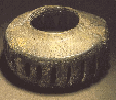
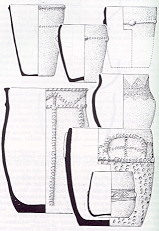
Middle Bronze Age pottery (shown right are examples of the Deveral-Rimbury tradition) was quite different from earlier forms in as far as it was dual-purpose. the strict separation into sepulchral versus domestic pottery ended at around 1500 BC. In some cases pieces of the same vessel have even been found accompanying a cremation and buried within a domestic refuse pit. This was the time (1500-1000 BC) in which the focus of society moved away from the ritual landscape, towards the deliberate (and practical) enclosure of farmed land. |
||