




Comments?


- Contents
- Mistake on Medical College Admissions Test
- So You've Decided to Try Your Hand at Cloning Sheep ....
- Great Expectations
- Feeling Just Like Another Student Number?
- Euthanasia on Trial
- Beyond Glory & Glossary
- UTIHP Leads You Through International Health Issues
- Alternative Medicine: Surfing Away Those Studyin' Blues
- MRI - The Magnetic Vision Expanding Its Scope
- Is MRI Alone?
- Pre-Med Society News
- the excitement and pride that comes with doing original research
- the opportunity to work closely with other students sharing the same passion for learning
- learning what research really entails, and what is involved in scientific process
- it is an effective means to permanently retain all the information you learn in "lecture-based" courses through active learning
- the realization that professors (yes, professors), actually have PERSONality
- NOOOOOOO TESTS!!
- and most importantly, it is a chance to determine whether a life of academia/research is for you
- Unite your essay and give it direction with a theme or thesis. The thesis is the main point you want to communicate.
- Before you begin writing, choose what you want to discuss and the order in which the materials are going to be presented.
- Use concrete examples from your life experiences to support your thesis and distinguish yourself from other applicants.
- Start your essay with an attention grabbing lead – an anecdote, quote, question or engaging description of a scene.
- Write about what interests you, excites you. That’s what the admissions staff wants to read.
- End your essay with a conclusion that refers back to the lead and restates your thesis.
- Revise your essay at least three times.
- In addition to editing, ask someone else to critique your personal statement for you.
- Proofread your personal statement by reading it out loud or reading it into a tape recorder and playing back the tape.
- Write clearly, succinctly.
- Why do you wish to study medicine?
- What do you think individuals expect and need from a physician?
- How do you think you will be able to fulfill these expectations?
- What would you offer to the field of Medicine?
Mistake on Medical College Admission Test
(MCAT)
By The Princeton Review
- New York, NY, May 12, 1998 – Thousands of pre-med students who took
the MCAT on Saturday, April 18th were surprised to find a major mistake
on the medical school entrance exam. In the verbal reasoning section,
there were a series of questions that bore no relation to the corresponding
reading passage. After reading a passage that dealt with fast food
restaurants, students were supposed to answer questions on astronomy.
"A few students spoke with the proctor, who then announced that there were problems in some exams," said Madhavi Reddy, a student who prepared with The Princeton Review to take the MCAT in Columbus, Ohio, on Saturday. "We were told to answer the questions as best we could, but we couldn’t answer those questions at all. I lost so much time on the problems that I wasn’t able to answer questions for two reading passages."
The Association of American Medical Colleges (AAMC), which administers the MCAT, will send letters to students affected by the mistake within two weeks. The students will be given the choice to void the test and either receive a refund or have their admissions fee rolled over to the next MCAT they take. If students do not reply to the letter, their scores will count, with the defective questions not used in determining the score. If students so request, the AAMC will send a letter to medical school admissions offices explaining that their score may have been aversely affected by the mistake.
The MCAT, which plays a major role in admission to medical school, is administered twice a year, in April and August. Last August, students in seven cities across the country were unable to take the MCAT because tests were not available due to the UPS strike.
"The problem here is not that mistakes happen," said John Katzman, president of The Princeton Review, one of the country’s leading test preparation companies. "The problem is that admissions offices remain over reliant on standardized tests."
 The
Princeton Review was established in 1981 and is the nation’s fastest growing
educational services company with 500 locations in more than 60 cities
in the U.S. and Canada. In addition to the MCAT, The Princeton Review
prepares students for the USMLE, SAT, LSAT, GMAT, GRE, and a host of other
standardized tests. The Princeton Review is the first test prep company
to offer preparation in courses, books, and software, and can be found
on the World Wide Web at www.review.com.
The
Princeton Review was established in 1981 and is the nation’s fastest growing
educational services company with 500 locations in more than 60 cities
in the U.S. and Canada. In addition to the MCAT, The Princeton Review
prepares students for the USMLE, SAT, LSAT, GMAT, GRE, and a host of other
standardized tests. The Princeton Review is the first test prep company
to offer preparation in courses, books, and software, and can be found
on the World Wide Web at www.review.com.
By Ivan Pasic
Vice-President, Molecular Genetics and Biology Student Union
 Well,
before you get yourself in any trouble and your life is confined to the
major groove of a DNA molecule, let me give you some advice on how to handle
the Molecular Genetics and Biology Program at the University of Toronto.
Well,
before you get yourself in any trouble and your life is confined to the
major groove of a DNA molecule, let me give you some advice on how to handle
the Molecular Genetics and Biology Program at the University of Toronto.
Molecular Genetics and biology (MGB) is an undergraduate program offered as a result of a combined effort by several departments of the Faculty of Arts and Science and the Faculty of Medicine, including the Department of Molecular and Medical Genetics. There is no such a thing as the Department of Molecular Biology and Genetics per se; if you decide to join the Program, you actually belong to various departments in the University. This has both advantages and disadvantages. On the one hand, you are exposed to quite distinct fields and aspects of Molecular Genetics and Biology. On the other hand, there seems to be a lack of unity and cohesion, particularly among the professors. This does not cause much trouble for me personally as long as I get my Hon. B. Sc. in one piece.
Your first encounter with the Program will probably be BIO260S, the second-year Genetics course. This is probably what discourages most students from pursuing a career in Genetics. Yes, BIO260S is a difficult course; it is one of the courses with the lowest retake rate at the University. However, this is not because the course is poorly organized (in fact, the material is very interesting, and is definitely a good preparation for third-year courses), or because the professors are too demanding. The problem seems to be that this is a half-year course: there is simply too much material to be covered in one term. However, this is being taken care of. As we have learned, BIO260S is going to be split in two half-year courses. BIO260S is very much problem-based. Just as you could not get a good mark in MAT137Y, CHM135Y, or PHY138Y without doing problems, you cannot hope to do well in BIO260S without being able to apply theoretical concepts.
 This
year, there are only about twenty-five third-year MGB students. All
of them are taking the same courses: MGB311Y (lecture-based Molecular Biology
course), BCH321Y (lecture-based Biochemistry course), MGB312H (Genetics
laboratory course), and BCH371H (Biochemistry laboratory course).
As a result, we all know each other, which is very different from what
we’re used to during the first two years. As time goes on there is
less competition and more cooperation amongst the students. This
is very helpful for each of us, as the workload in the third year is significant
(compared to the Immunology Program, for instance, which requires no third-year
lab courses). Most third-year courses complement each other nicely:
some of them even cover different aspects of the same material (for example,
the structure of nucleic acids is presented both in MGB311Y and BCH321Y).
The two lab courses are indeed intense and demanding; they are, however,
interesting and rewarding. Professors and TA’s are generally approachable
and helpful.
This
year, there are only about twenty-five third-year MGB students. All
of them are taking the same courses: MGB311Y (lecture-based Molecular Biology
course), BCH321Y (lecture-based Biochemistry course), MGB312H (Genetics
laboratory course), and BCH371H (Biochemistry laboratory course).
As a result, we all know each other, which is very different from what
we’re used to during the first two years. As time goes on there is
less competition and more cooperation amongst the students. This
is very helpful for each of us, as the workload in the third year is significant
(compared to the Immunology Program, for instance, which requires no third-year
lab courses). Most third-year courses complement each other nicely:
some of them even cover different aspects of the same material (for example,
the structure of nucleic acids is presented both in MGB311Y and BCH321Y).
The two lab courses are indeed intense and demanding; they are, however,
interesting and rewarding. Professors and TA’s are generally approachable
and helpful.
The Molecular Genetics and Biology Student Union (MGBSU) has been working hard to make the Program, and student life more enjoyable. The Union published several test packages this year, organized a movie night (we went to se GATTACA), and a ski trip. We also fashioned T-shirts with two very inventive designs. In addition, we were involved in organizing the BIG (Biochemistry/Immunology/Genetics) Party and will help prepare the MSSU Formal at the end of the term. MGBSU cooperates with the Biochemistry and Immunology Student Unions, seeing as many MGB students hand out with their Biochemistry and Immunology friends. You can check out the MGBSU web-page at http://bioinfo.med.utoronto.ca/MGBSU/.
By Clement Zai
 What
is it like being a doctor? As many pre-medical students are panicking
over their GPAs and resumes, they probably have the same question in mind.
What are we getting ourselves into? However, before that, one has
to finish medical school. May be the question should be modified
as follows: how is it like to be a medical student? After interviewing
with a number of former and current University of Toronto medical students,
it was found that the life of a medical student is quite similar to that
of a pre-medical student. The only difference is that the workload
is heavier and more stress is being put onto studies and application of
knowledge acquired through the program.
What
is it like being a doctor? As many pre-medical students are panicking
over their GPAs and resumes, they probably have the same question in mind.
What are we getting ourselves into? However, before that, one has
to finish medical school. May be the question should be modified
as follows: how is it like to be a medical student? After interviewing
with a number of former and current University of Toronto medical students,
it was found that the life of a medical student is quite similar to that
of a pre-medical student. The only difference is that the workload
is heavier and more stress is being put onto studies and application of
knowledge acquired through the program.
The first two years of medical school basically act as primers for the last two of the four-year medical undergraduate program at the University of Toronto. A great deal of memorization is involved in courses like structure and function (anatomy), metabolism & nutrition, neuroanatomy, pathobiology (cell biology behind why diseases occur), and foundations of clinical medicine (to gear up for clerkship). Laboratory work in histology and human dissection is very intense. ASCM, Art & Science of Clinical Medicine, is considered a good course in which students learn to interact with patients in a hospital. HIC, Health & Illness in Community, on the other hand, is a course that no one likes and some students think it is a waste of time. Students work in a community agency and they have to submit a big paper and organize a big presentation at the end.
A new section has been added to the curriculum and is called problem-based learning (PBL). It is designed to help students learn and better retain concepts of medicine in a context close to the situation where they can be applied in clinical settings, and to improve skills in problem-solving and application of concepts. Some students have doubts whether this course is achieving its objectives because of inadequate evaluation process of assignments. Moreover, in courses like PBL where students learn in small groups, the value of the learning experience depends very heavily on the mentors and the students themselves. The third and fourth years of the program are very similar. The curriculum revolves around two core courses: medicine and surgery, with rotations around the hospital among the different specialties. Clerkship also begins in the third year.
The interviewees mentioned that although the tests are very challenging, people are very smart, and therefore the class averages are in the 80s. It is difficult to fail out because of the remedial work over summer. However, if you don’t put in much effort, it is difficult to survive. The overall learning experience is described as "worthwhile".
Even with such an intense program, medical students do have free time. No one is there to make sure you go to class and some students prefer to study from the text. The whole night is off, so students can study. Most students are also actively involved in sports and different clubs like the talent show Daffodil. There are also regular parties after tests as well as dinners. It seems that medical school life is not as dull as most people think!
After the four years, residency begins. The number of years in residency depends on whether you are specializing or not. After that, graduation comes. Job opportunities for graduates have decreased due to the closing down of hospitals, but it should be easier to find a job up north or in the States. More years in specialty, fellowship, or research also help. Here are some comments from the medical students: "what you give out may not equate to what you get back, but in general, the process of becoming a doctor is not bad and there are no regrets if you like the profession. If your reason behind wanting to become a doctor is money, keep in mind that there is not as much earnings and freedom as before in this profession. It is not easy to succeed, and always remember to keep your eyes open for other fields that may also be suitable for you."
By Camilla Wong and Tiffany Poon
 Welcome
to the University of Toronto. Despite its overwhelming class sizes,
which are intimidating to most, Canada's largest academic institution is
the heart of this nation's cutting-edge research. As such, even second-year
undergraduates can have the precious opportunity of exploring this exciting
environment firsthand through the Research Opportunity Program (ROP), also
known as the 299Y course.
Welcome
to the University of Toronto. Despite its overwhelming class sizes,
which are intimidating to most, Canada's largest academic institution is
the heart of this nation's cutting-edge research. As such, even second-year
undergraduates can have the precious opportunity of exploring this exciting
environment firsthand through the Research Opportunity Program (ROP), also
known as the 299Y course.
 The
Research Opportunities Program allows students to work in close contact
with a supervising professor on original research. There are a variety
of projects to choose from. The research we are conducting concerns
the molecular cloning of a glycoprotein (SC1), which may play a significant
role in the early embryonic development of Xenopus laevis (an African frog).
We have employed various molecular techniques as part of our strategy to
isolate this clone, including PCR, plasmid preps, transformation, gel electrophoresis
and colony hybridization.
The
Research Opportunities Program allows students to work in close contact
with a supervising professor on original research. There are a variety
of projects to choose from. The research we are conducting concerns
the molecular cloning of a glycoprotein (SC1), which may play a significant
role in the early embryonic development of Xenopus laevis (an African frog).
We have employed various molecular techniques as part of our strategy to
isolate this clone, including PCR, plasmid preps, transformation, gel electrophoresis
and colony hybridization.
So you want to know what our day is like?
9:00 am group meeting with our professor to discuss progress and future
strategies
10:00 am perform plasmid preps on promising clones
11:00 am restriction enzyme digest on preps
12:00 pm gel electrophoresis
2:00 pm analyze data, interpret results
3:00 pm prepare gel for blot analysis
So what is so rewarding about this experience? The following just
to name a few:
Here is what other people think about the program:
"Even though [the students] are only in second year, it is wonderful to see how they can learn complex concepts effectively under a dynamic environment. It’s refreshing to see such enthusiasm at the second-year level." – Professor M. Ringuette, 299Y Supervisor
"You get to appreciate the research process. If you think you might be interested in research at the graduate level, it’s a good idea to have the 299Y experience since it will help you find out if research is something that you like. I really enjoyed my 299Y course, and I plan to take more research courses in my 3rd and 4th years." – Poney Chiang, 299Y student
"299Y helped to bring a touch of reality to the often boring and routine courses offered in second year. You get the opportunity to see that university is not just about doing well on tests and memorizing facts you’ll never use again." – Olga Wrenzel, 299Y student
"The excellent academic experience described by Camilla and Tiffany reflects the great enthusiasm which students across the Research Opportunity Program feel for their work. The 299Ys courses are unique to the University of Toronto, representing an opportunity for a carefully selected group of undergraduates to be part of the dynamic research activity of Canada’s leading research institution. As Camilla and Tiffany say, it will probably be the most exciting experience of your undergraduate years. Also, I am delighted that 299Y students have discovered that professors have personality!" – Kenneth Bartlett, Professor of History, Program Coordinator
By Clement Zai
Edited by Peter Chang
"Proceedings open today in one of the most hotly debated prosecutions ever undertaken in Nova Scotia as Nancy Morrison faces a charge of killing a terminally ill cancer patient at Victoria General Hospital."
(The Globe and Mail, Monday, February 9, 1998.)
In May of 1996, Nancy Morrison, a 42-year-old respirologist, was accused of hastening the death of Paul Mills, a cancer patient, by administering lethal injections of potassium chloride and nitroglycerine. Some people call it "mercy killing"; others call it "murder". As more and more doctors are put on trial, public opinion is becoming increasingly polarized. There has been pressure to change the law regarding this issue. Nancy Morrison’s case only added more steam to an already heated debate.
Euthanasia is defined as "a deliberate act undertaken by one person with the intention of ending the life of another person to relieve that person’s suffering where the act is the cause of death". (Lavery, p. 1405) Since ancient Greece, physicians have faced similar situations when the lives of dying or suffering patients were in their hands. Do physicians have the right to make a decision between life and death on behalf of a patient?
Physicians take oaths to save lives and end suffering. In situations like a common cold, a sore throat or a broken bone, the treatments are not clouded by ethical and moral issues. But when patients become terminally ill, the situation becomes more complicated. If they are of sound mind, they may convey wishes for the treatment to be terminated. Physicians have to therefore respect and honour their patients’ decision. If a patient has already lost motor and communication skills, however, the decision would undoubtedly become the responsibility of family members and the physician. Should the treatment be continued if there is no chance of improvement? The treatment may only prolong an inevitable death. Moreover, due to reduced government funding and a shortage of resources, shouldn’t available resources be spent on patients who will benefit most? Yet what if a new treatment is invented tomorrow? Research in diseases such as cancer and AIDS is being carried out by thousands of scientists all over the world, and new treatments and medications are being developed each year. In the United States, for example, the latest treatment of breast cancer involves an operation of the spinal cord in addition to chemotherapy. It is now in general use, and it has been shown to be most effective in preventing the spread of cancerous cells.
Pain often accompanies terminal illness. To relieve the pain, physicians may have to increase the dosage of pain relievers to a level where the side effects of the drugs may be potentially lethal to the patients. In some cases, patients develop resistance to the drugs; in this case, there is no means to relieve their pain. Patients at this stage may wish to die. If so, should physicians assist by injecting high concentrations of potassium chloride or nitroglycerine to make the death of their patients as quick and painless as possible? In doing so, physician dishonor another part of their oath, which is to never use lethal drugs on patients or even suggest doing so.
The degenerative nature of some diseases is another reason why patients request the administration of poison to end their lives; they fear the physical and mental suffering that would result when their health deteriorates. They also do not wish to be a burden on their family because not all treatments are covered by health care. Moreover, some patients want to die with dignity. In these situations, should physicians respect the wishes of their patients?
Canada’s criminal code considers assisted suicide and intentional killing a criminal offense even if it is an attempt to reduce suffering. That would include delivering lethal dosages of pain relievers and the removal of treatments. On the other hand, the Canadian Charter of Rights and Freedom permits patients to decide whether or not they want treatments to be administered. However, when patients are not able to express themselves, physicians are required by law to do everything it is in their power to keep their patients alive. In reality, many physicians practise removal of life-support devices upon the requests of patients or patients’ family members. There are also circumstances where patients request termination of life if they fall into a coma. Does the law permit physicians to honour their patients’ wishes?
In most cases where physicians are tried in court for assisting or actively participating in euthanasia, they are convicted. An example would be the case of the Toronto M.D. Maurice Genereux, who was charged with two cases of administering a fatal overdose of sleeping pills to terminally ill HIV-positive patients. He was convicted late in December of 1997, and he is currently on bail until sentencing in April. Another case is Dr. Nancy Morrison’s first-degree murder charge. The case was dismissed early in March, but only because of insufficient evidence. There does not seem to be leniency in the legal system for these acts of compassion. As the twenty-first century approaches, new treatments and medications are bound to be invented to sustain and prolong life. However, our body is not designed to sustain life for such a long period of time. As a consequence, new degenerative diseases are constantly being diagnosed. As the generation of the baby boomers ages, more and more people will suffer from degenerative diseases. If patients wish to die, they should have the right to die. The law should be modified to allow mercy killing, because a patient’s right should never be denied.
References:
Beauchamp Tom L., Childress James F. Principles of Biomedical Ethics, 4th ed. Oxford University Press, Inc., New York, New York, 1994.
Brian Bergman. "The Final Hours", Maclean’s. March 9, 1998.
Contemporary Issues in Bioethics, 4th ed. Edited by Tom L. Beauchamp & LeRoy Walters. Wadsworth Publishing Company, Belmont, CA, 1994. Pp. 351 - 506.
Lavery James V., Dickens Bernard M., Boyle Joseph M., Singer Peter A. Bioethics for clinicians: 11. Euthanasia and assisted suicide. Can. Med. Assoc. J., May 15, 1997. 156 (10). Pp. 1405 - 1408
Sobel Richard M. Physician-Assisted Suicide: Compassionate Care or Brave New World? Arch. Intern. Med., vol. 157, August 11/25, 1997.
The World Wide Legal Information Association. URL: http://www.wwlia.org/ca-euth.htm
By Sylvia Lee
- One day I had to nag for a reference letter:
"Oh, tick the other box, I’m not applying for the research degree," said hopeful eyes with the application.
"What’s wrong with research?", said he who does research 10 hours a day + dreaming time.
"Nothing, don’t be so sensitive," said hopeful eyes with a wicked smile.
Dr. Paul Doherty’s arthritis research lab resides on the fourteenth floor of the Mclaughlin wing at the Toronto Western Hospital, overlooking most of downtown Toronto from an uniquely tranquil angle under every weather. Of all the places I have ever found myself, this is one of the most charming.
Research is not torture chambers and dim basement laboratories without windows.
The first day I met Dr. Doherty he tried to explain what his research is about, in language that I might understand. He is trying to find a solution to osteoarthritis by (1) gene therapy and (2) chondrocyte transplantation. Osteroarthritis often has severe adverse consequences for individual patients, primarily pain, deformity and limited movement, and places a huge economic burden on society. The incidence of osteoarthritis steadily escalates with advancing age to become the most prevalent disease adversely affecting quality of life. This form of arthritis is a degenerative disease that usually involves the large weight bearing joints and the hands and appears to originate in the cartilage.
Despite the medical and economic consequences of osteoarthritis, therapies that can reverse the degenerative changes that occur in articular cartilage and restore cartilage to normal have not been forthcoming. At present, all forms of treatment are focused on treating the symptoms of the disease rather than on retarding or reversing the disease process itself. We are attempting to repair and rebuild damaged cartilage. We are taking a two pronged approach. We combine gene therapy approaches with transplantation of chondrocytes to cartilage. The cartilage transplantation allows for an increased population of chondrocytes that can contribute to the healing of injured articular cartilage. The second approach is to supplement the transplanted cells with a gene whose product will bolster synthesis of new cartilage matrix. We believe that combining these two approaches enhances the potential to repair and resurface damaged articular cartilage. Dr. Doherty has been working on this research since 1996. The current group includes Dr. Wayne Marshall, Dr. V. Manolopoulos, Hongwei Zhong, Dr. Seung-Suk Seo, Sylvia Lee and Domi Kim. Instant gratification is non-existent, not expected and not the object of pursuit. So why do it?
Research is not your everyday job posted at the Career Center.
 "This
is different from other jobs. Progress in any form of research results
from the sum total of contributions made by many different laboratories.
Although unusual, it is nevertheless possible for an individual laboratory
to make a contribution that has wide ranging and long term beneficial effects.
This is not the case with most other career choices. In research
there is always the chance of hitting a home run however distant the fences
may be.
"This
is different from other jobs. Progress in any form of research results
from the sum total of contributions made by many different laboratories.
Although unusual, it is nevertheless possible for an individual laboratory
to make a contribution that has wide ranging and long term beneficial effects.
This is not the case with most other career choices. In research
there is always the chance of hitting a home run however distant the fences
may be.
Research is not boring, whether you find it or not.
"How did you get to where you are today?" I asked in the interview.
"Undergraduate and graduate course work and research contributions
toward a Ph.D. all require substantial effort, commitment and endurance.
Beyond graduate school and prior to any staff position it is usual to engage
in postdoctoral research for a number of years usually outside the country
and in the best lab you can find to enhance your training and your prospects.
I became involved in research into arthritis with the support and enthusiasm
of the Department of Rheumatology, particularly Dr. Ron Laxer, at the Hospital
for Sick Children. Since then I have had many enjoyable years studying
various aspects of Arthritis with funding provided by The Arthritis Society
and other agencies that support medical research.
Research is not easy.
"So what would you advise undergraduate students about a career in research?"
Research is certainly not for everyone particularly because of the
constant need to raise funding to support the laboratory. Dollars
for funding medical research are declining in this country. Nevertheless,
if you can live with some insecurity, it is a very stimulating life working
with enthusiastic people who enjoy the sense of discovery. Every
day is unique and you can always hope that as you are groping about in
the dark you’ll come across a light switch…
Research is not for everyone, but it may be for you.
By Raveen S. Pal, UTIHP Co-Director
- The University of Toronto’s International Health Program (UTIHP) is
one of the largest multi-disciplinary clubs on campus. Its primary
focus is to promote the awareness of international health and development
issues. As such, it provides an excellent forum for the interdisciplinary
interaction and collaboration of faculty and students with a common interest
in international health. Some of our primary initiatives include
a summer scholarship program, an outreach program, a speaker series, and
a new multi-disciplinary project.
The summer scholarship program provides financial support for approximately 10 students every year to participate in health-related research projects in the third world. We also raise funds through various events (Fall Ball, IHP Gala Night, Spring Fling) every year to support independent, non-profit, development organizations in the third world which are related to an academic interaction we have set, our outreach program. As for the speaker series, we invite approximately 10 speakers every year to address relevant and topical development issues in the third world. The multi-disciplinary project is being developed to allow students from all the faculties on campus to participate in development work overseas. As these various activities highlight, UTIHP is dedicated to establishing a strong and active interest in international health and development issues.
In the 1997/98 academic year, UTIHP is one of the most active clubs on campus. It has already hosted 2 fundraising events and has invited 6 special speakers. More than $800 was raised for Outreach through incredibly well-supported events like IHP Gala Night and Fall Ball. Spring Fling, the last of these social events, is being planned for early May. The funds generated will be used to assist a community development project in a third world country. UTIHP was also fortunate to have motivating and educational talks by Dr. Kevin Kain on the Ethical implications of research in the third world, Sylvia Maracle on Aboriginal health issues, Miles Schulman on development issues in areas of conflict, Dr. Robin Williams on the effect of the US Embargo on Cuban health and nutrition, and most recently, a historic talk by Dr. Aleida Guevara March on the Cuban health care system. In addition, students from the Faculties of Medicine (Marc Freeman and Abha Gupta) and OT/PT (Sylvia Quant and Lori W.) presented on a special student presentation night. Notably as well, Margaret Catley-Carleson, director of the population council, was invited by Faculty’s IHP to deliver an insightful and educational talk. Two more talks are scheduled for this year and we hope again to receive the same incredible support from you, the students and the faculty.
In addition to UTIHP activities on campus, the Faculty’s IHP subsidized the attendance of 20 student delegates to the 4th Annual Canadian Conference on International Health and Development in Ottawa. UTIHP members presented a strong and visible University of Toronto group reflecting U of T’s responsibility for and interest in international health promotion.
Gains have also been made in establishing financial support for a multi-disciplinary project. This project will enable students from faculties outside of medicine to have the same opportunities to participate in projects overseas which are currently supported by, and therefore limited to, the Faculty of Medicine.
The summer scholarship program this year has also seen almost a doubling in the number of applications submitted by medical students, reflecting a promising increase in interest and commitment from students. The faculty, in return, also demonstrated an appreciation of this interest by securing funds for 17 students (8 scholarships more than last year) to pursue their development interests this summer.
The UTIHP program has been very well supported this year. This year’s success has only been made possible by the active involvement and participation of students and faculty members from many different disciplines, who share an interest in international health and development issues. The rest of the year promises to be incredibly special with our annual Spring Fling and a couple of speakers yet to come (while there are no definite dates and locations yet, all events will be highly publicized with email, posters, and class announcements so just keep an eye out).
UTIHP is looking forward to more of the stimulating discussions and the development of international health issues as a priority of the University of Toronto that we have seen so far. U of T is fast becoming a leader in international health and we look forward to the increased student awareness and participation in international health work that has been reflected by you. We would like to thank you for your interest and support so far and we are looking forward to your continued involvement and enthusiasm.
Edited by Cath Lam
 Don’t
know what to do with your time now that school is blissfully over?
Especially for YOU, those of you who are recovering from exams, about to
plunge into work and/or summer school and dealing with pressures relating
to future career plans, we’ve sneaked out some special goodies from the
medicine cabinet to relieve your suffering!
Don’t
know what to do with your time now that school is blissfully over?
Especially for YOU, those of you who are recovering from exams, about to
plunge into work and/or summer school and dealing with pressures relating
to future career plans, we’ve sneaked out some special goodies from the
medicine cabinet to relieve your suffering!
(At the time of printing, the surgeon-general did not find these products to be hazardous to your health; at any rate, this medicine should leave a better after-taste than 99 bottles of cough syrup...)
DIAGNOSIS: Dunno-what I'm-trying-to-say Syndrome PRESCRIPTION
:http://www.geocities.com/~disneyitis/MED_REPORT_BOOBOO.htm
SAMPLE: "On the second day the knee was better and on the third
day it had completely disappeared."
COMMENTS: If you think you’re having problems expressing yourself,
you’ll find good company in these doctors’ reports!
DIAGNOSIS: Looney Toon Syndrome
PRESCRIPTION : http://members.tripod.com/~disneyitis/MARY-LAMB-DNA.HTM
SAMPLE: "Mary had a little lamb, its fleece was slightly gray/It
didn’t have a father, just some borrowed DNA..."
COMMENTS: Nursery talk to relieve grown-up blues!
DIAGNOSIS: Dehydration Syndrome
PRESCRIPTION : 25 mg of http://www.druglibrary.org/schaffer/MISC/beergood.htm
COMMENTS: Sit back and sip the debate between the "goods" of
beer and illegal drugs
DIAGNOSIS: Curious George Syndrome
PRESCRIPTION : http://www.geocities.com/COLLEGEPARK/6174/phd-md.htm
COMMENTS: Do you know the real difference between Ph.D.’s and
M.D.’s?
DIAGNOSIS: Anachronistic Masochism Syndrome
PRESCRIPTION : http://www.irmss.org
COMMENTS: Would you survive an 18th century surgical procedure?
 Dr.
Seuss and Dr. Einstein: "The world of science is a made-up world,
no less strange than the world of Dr. Seuss." (Raymo, Chet, spring
1993, Orion, vol 12, issue 2)
Dr.
Seuss and Dr. Einstein: "The world of science is a made-up world,
no less strange than the world of Dr. Seuss." (Raymo, Chet, spring
1993, Orion, vol 12, issue 2)
By Gabriel Chan
- A typical magnetic resonance imaging (MRI) machine looks like a large,
50-ton and a few-meters-long donut standing vertically in a room shielded
by copper sheets. The magnetic field generated by the machine can
whip a screwdriver out of one’s grasp and send it hurtling across the room,
and disrupt or stop the function of a pacemaker. How does MRI work?
What is it used for? And how much do you know about this rapidly
developing technology? In this article, we shall explore how this
magnetic probe sees through the body, and its latest technological breakthroughs
and applications.
Magnetic resonance imaging is a non-invasive technique that produces high quality and detailed images of internal organs. It does not use ionizing radiation, as in X-ray, which can possibly damage cells. Instead, it utilizes magnetism and radiofrequency waves to manipulate hydrogen nuclei in body fats and water, generating images that distinguish different tissues and structures.
MRI, once known as Nuclear Magnetic Resonance Imaging (NMRI), is based on a comparatively older technique, nuclear magnetic resonance (NMR), that has been used by chemists since 1946. By modifying NMR, scientists first produced images of the human torso in 1977. Clinical application, however, did not come until 1982, when it was first used as cancer-identifying tool in the brain. Since then, with great research efforts, MRI has undergone tremendous development. Today, MRI is used for diagnosis – screening tumors and diseases – not only in the brain but also in various parts of the body. More so, recent development gives MRI a great potential for intervention, treating diseases and guiding surgeons through brain surgery. In fact, MRI is so powerful that some see it as "the jewel in the crown of diagnostic imaging."
How does MRI work?
MRI employs a large static magnet field of 0.08 to 2 Tesla (the earth’s magnetic field strength is only 0.00005 Tesla) generated by superconducting materials. Several additional, smaller magnetic fields and a radiofrequency coil are also placed inside the core of the magnet. Radio waves are emitted to the patients and the signals are received and interpreted by a computer, which generates an image.
Microscopically, the nuclear spin of the hydrogen generates a tiny magnetic field that allows the probing of MRI. For the purposes of understanding MRI, hydrogen nuclei may be regarded as small bar magnets, with north and south poles, which spin on their axes. When placed in a large MRI magnet, these nuclei can exist in two states: either aligning themselves parallel or antiparallel to the magnetic field. When a radiofrequency wave is sent to the protons, the protons have more energy and will not align with the magnetic field. The protons are said to be in their excited states. They then return, or decay, from the excited state to the original one via radio wave emission that can be detected by the MRI machine. Two types of decay, known as spin-lattice (T1) and spin-spin (T2) decays, can be monitored. Since different tissues have different decay times, the distribution of organs and tissues can be studied. T1 and T2 decays produce different images and yield different information on the same tissues.
 Where
does "magnetic resonance" come into play? The microscopic properties
are responsible for such a phenomenon. In addition to spinning around
their own nuclei, the protons turn about the axis of the external magnet
and wobble. This wobbling, or precession, is like the spinning of
a top. First, it will revolve about its axis, and then as the speed
slows, it will get a second spin or a wobble. Since the nuclei revolve
at a specific frequency, called the Larmor Frequency, the nuclei will only
absorb radio waves at this frequency. A specific resonance
occurs – thus the term magnetic resonance. Protons in different environments
have distinct Larmor Frequency and therefore different tissues and cells
in the body can be identified. Through the manipulation with an additional
small magnetic field, the location of the protons can also be determined
and an image can be created.
Where
does "magnetic resonance" come into play? The microscopic properties
are responsible for such a phenomenon. In addition to spinning around
their own nuclei, the protons turn about the axis of the external magnet
and wobble. This wobbling, or precession, is like the spinning of
a top. First, it will revolve about its axis, and then as the speed
slows, it will get a second spin or a wobble. Since the nuclei revolve
at a specific frequency, called the Larmor Frequency, the nuclei will only
absorb radio waves at this frequency. A specific resonance
occurs – thus the term magnetic resonance. Protons in different environments
have distinct Larmor Frequency and therefore different tissues and cells
in the body can be identified. Through the manipulation with an additional
small magnetic field, the location of the protons can also be determined
and an image can be created.
Interpreting an image
A MRI image provides clear details of the body and can distinguish between blood, fats, bones, tendons, and most importantly, tumors and inflammation. Generally, the majority of tumors, inflammation and pathologic foci increase the tissue’s free-water content.
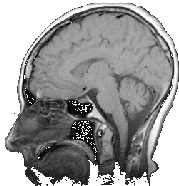
To illustrate this effect, let’s take a look at a real image. Imaging the brain is a common MRI procedure and Fig. 1 shows a T1-image, produced with a contrast agent, of the head of a 54-year-old man, looking from the top. There is a large, enhancing mass in the temporal lobe that extends slightly across the midline. From this, a physician can deduce that there is metastasis or other primary brain tumor. Unfortunately, at this stage, the mean survival length for the patient is around 8-10 months, with less than 10% surviving beyond 2 years.
Having the ability to produce fine details, MRI is often used for diagnosing brain tumors and diseases, such as stroke, multiple sclerosis, dementia and encephalophathy. Moreover, MRI has become the procedure of choice when screening the neck, spine and pelvis for tumors, and is very effective in scanning the eyes and knees for diseases.
Pin-pointing breast tumors
Today, MRI is used commonly to scan regions such as the brain and the spine. MRI scanning of other areas of the body, such as the breast, is now being explored. Magnetic resonance mammography is an exciting recent development that has shown high sensitivity. According to the U.S. National Cancer Institute (NCI), mammography, the most widely accepted screening tool, is ineffective in women under 50. Moreover, mammography is not very useful for women with large or dense breasts, breast implants and post-operative scarring, or with genetic predisposition to breast cancer. MRI offers significant advantage over traditional methods in these groups. "Dynamic MR mammography", which is the repetitive MR imaging of the same slices before and at short intervals after the administration of a contrast medium, can screen 40% of women for whom mammography has limited effectiveness.
Moreover, MRI can also detect tumors that are not easily detectable by mammography or a physical examination. For example, two years ago, a newly developed form of MRI, called three-dimensional rotating delivery excitation off-resonance MRI (3-D RODEO MRI), provides physicians with the ability to detect lobular carcinoma, a highly malignant breast cancer.
From Diagnosis to Intervention
While traditional MRI produces images that can identify tumors and abnormalities, in the past few years, a great deal of research has focused on developing MRI into a tool of treating diseases. Interventional MRI (I-MRI) is a recent jump from diagnosis to intervention. By producing images that guide physicians during an operation, a surgeon can accurately and effectively perform a task.
One of the areas undergoing the fastest development is using I-MRI during a brain surgery. At first, MRI images could only be generated before and after, but not during, an operation. This is simply because the patient has to lie inside a hole of a massive MRI machine and the surgeon cannot get in there with the patient. A few years ago, a group in Calgary tackled this problem by suspending the machine on a track above an operating room. Images are taken by lowering the giant magnet over the patient for a few minutes. The magnet is then raised and the operation can continue. This system, called the Neuro II, can inform a surgeon whether a surgical task is met. For example, if images show that some tumor is left, the surgeon can immediately remove it while the operation is still under way.
While the Neuro II takes images of a patient at intervals, a revolutionary MRI unit that takes 3-D real time images during a brain surgery is now being developed here in Toronto. Developed by researchers at Sunnybrook Health Science Center and the Toronto Hospital, this system is like a pair of floor-mounted earmuffs that grants openness to a surgeon. A surgeon can perform a brain operation on a patient lying on this new MRI machine, and be guided, in three-dimensional space, by MRI images during the entire operation. Both the surgeon’s instruments and the tumor can be located with unprecedented accuracy. This contrasts with conventional operations, where blood and fluids are all over the place and therefore a small piece of tumor may easily be left behind.
As well as guiding doctors during an operation, the system would be of immense help in taking a biopsy – a procedure in which a thin needle is used to remove a tiny sample from a suspicious lump in the brain and in other parts of the body. MR-guided needle biopsy of breast lesions, a recently developed technique, allows physicians to easily and accurately take a small sample of tumor from the breast, with the help of a gentle breast immobilization system.
Can we benefit?
Given such exciting developments of MRI, can we foresee a widespread use of MRI in Canada? The answer is unclear. While MRI has tremendous ability and potential, there are also some drawbacks. The major disadvantage of MRI is the very high cost compared to other imaging modalities. Conventional MRI machines cost about one to two million dollars, and there are also heavy expenses on maintenance, staff and upkeeping with the latest technology. In Ontario, not every hospital has a MRI machine; only those designated by the provincial government have one. For those having one, such as Sunnybrook Health Sciences Center, the waiting time before a patient can take a MRI scan can be as long as three months, depending on the health of the patient.
New MRI technology may also not be common soon, not the least because some are only at their experimental stages. Using MRI to replace older alternatives will also raise administrative problems. For example, if the expensive and uncommon MRI breast cancer scan replaces X-ray mammography, does it mean that the X-ray technician will be fired? And where should the X-ray machine go? These issues may further hinder the widespread application of MRI. In fact, detailed analysis of the benefits and costs of introducing the new technology is necessary before hospitals decide to incorporate this powerful, yet expensive, technique.
References:
"Magnetic Resonance Imaging (MRI)." Clinical
Reference System. Dec 1997. Pg.2568 "Basics of MRI."
"MRI technology can diagnose form of breast cancer often
missed by mammography." Cancer Biotechnology Weekly. May 6,
1996. Pg.10 (1).
"NRI technique commercialized for breast cancer diagnosis
and therapy." Cancer Weekly Plus. Oct 31, 1996. Pg. 18
(1).
"MRI-guided cancer surgery." Cancer Weekly Plus.
May 5, 1997. Pg.28 (2).
"An insider view." Maclean’s. Feb 16, 1998.
V111, n7, Pg. 60 (1).
- Nope! The computerized tomography (CT) has also been widely used
in diagnostic imaging. Images generated by computerized tomography
and MRI look very similar. In fact, both techniques show the same
anatomy and both use three-dimensional analysis techniques. However,
there are fundamental differences between the two:
| Computerized Tomography | Magnetic Resonance Imaging | |
| Basic Technique | X-ray is transmitted through the body. Different tissues and bones absorb different amount of X-ray, allowing the formation of an image. | An external magnetic field aligns the protons, and a radio wave can change the alignment of the protons. The time required to return to the original position is monitored. |
| Type of Energy | X-ray | Magnetism and radiofrequency waves |
| What Is Measured | Transmission through the body | Variations in magnetic properties of atomic nuclei in the body |
| Relative Amount of Information | Less information Depends on two factors:1) the number of atoms in a given volume;2) atomic number of the atoms. | More informationDepends on four factors:1) proton density, or number of hydrogen nuclei in a given volume;2) Two relaxation times (time for the proton to return to original state), T1 or T2;3) motion of the protons. |
| Ionization Radiation | Yes | No |
Pre-Medical Society News
By Bhavana Sawhney
- During the April meeting, representatives from the Michener
Institute provided exciting information with regards to a new program offered
by the Michener Institute in association with the University of Toronto.
The program will enable students to earn an Hon. B. Sc. and a diploma in
Radiography or Nuclear Medicine Technology simultaneously. Students
will be eligible to apply for this program after completion of two years
of university education and will then complete the program requirements
within the next three years. In other words, the total length of
the program is five years. The pre-requisites for the program are
as follows: one full credit in each of Physics, Chemistry, Mathematics
and Biology. A credit in Statistics is recommended. Details with
regards to the program may be obtained from Sue Henwicks, the Registrar
at The Michener Institute, at (416) 598-3144 or at [email protected]
.
Here are some tips to help pre-med students fill in their applications
this summer (cited from: A Guide to Canadian Medical Schools 96-97,
by the Pre-Med Society):
Remember it is never too early to start thinking about questions like: