The Vickers Wellington
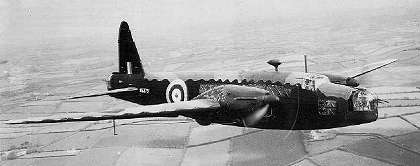
The Vickers Wellington Bomber
The Wellington was the main British bomber for the first two years of
the war, although once it had
been supplanted from the European theatre by Lancasters it flew until
the war's end in many other
theatres and in many roles. It was particularly effective in North Africa,
where it could fly faster than
most of the Italian fighters, and carried a heavier bomb load than the
Italians. Its utility is proven by
the large number built, 11,461.
Technical Details
One of the Wellington's claim's to fame was the unique geodetic construction
of the fusilage. This can
be seen in the cross members visible in the side windows of the pictured
Mk II bomber. Combined
with a fabric covering, the manner of construction made it extremely strong
while light, able to
absorb a lot of punishment and easy to repair. The Mk IC was crewed by
6, a pilot, radio operator,
navigator/bomb aimer, observer/nose gunner, tail gunner and waist gunner.
It was powered by two
1050hp Bristol Pegasus XVIII engines that pulled it to 235 mph. It had
a ceiling of 19,000 ft and a
range of 1,805 miles. It came armed with eight 0.303 machine guns and
could carry 4,500 lbs of
bombs.