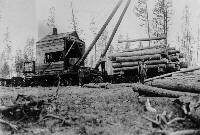
From 1887 through to 1900 logging in East Kootenay was accomplished by horsepower. Sawmills were built near to water or in the centre of large tracts of merchantable timber, and the logs were felled and piled for winter transportation by sleds. Some logs were brought in by horse-drawn wagons. The milled product was used to build local houses and businesses.
After the arrival of the B.C. Southern Railway in 1898, the sawmills were able to start responding to the increasing demand from Canada's prairie provinces. Everything from barn and granary doors to siding and mouldings were shipped east. Export meant a larger demand for logs and a way of transporting them to the mills at low cost. The logging railways of East Kootenay came into being.
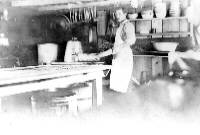
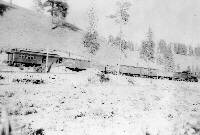
Foremost among them was the Staples Lumber Company of Wycliffe. This company also had portable camps that were transported by rail from one logging show to the next. They ranged widely in the Cranbrook and Kimberley area, as demonstrated in the attached map. Research into the workings of this company continues.
Another of the large lumbering companies that used locomotive power was the Crow's Nest Pass Lumber Company out of Wardner. Peter Lund and John Breckenridge combined forces to construct the North Star branch line from Cranbrook to Kimberley. They went on to fill several tie contracts and in the process discovered the timber wealth of the area. The Crow's Nest Pass Lumber Company Ltd. was formed, with the original shareholders including both William Carlin and Alfred Doyle of Fort Steele.
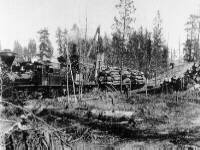
The CNPL used the Kootenay and St. Mary's Rivers, and their drainages to transport raw logs to their several mills. They also employed a large number of logging wagons and sleighs, water flumes, and other methods of conveyance. But demand outstripped supply and, in 1909, the Crow's Nest Pass Lumber Company built the first of five separate logging railways in East Kootenay.
The East Kootenay Railway Company will, over time, take its inspiration from these strong forebearers and provide a gripping experience of days gone by.