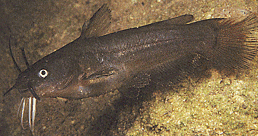
Ameiurus natalis LeSueur
Other names -- brown bullhead, white-whiskered bullhead, Mississippi bullhead, butterball, paper skin.
Ameiurus natalis LeSueur
Other names -- brown bullhead, white-whiskered bullhead, Mississippi bullhead, butterball, paper skin.
Primarily a species of lakes and ponds, the yellow bullhead is abundant nowhere in the state. It is taken occasionally in the flowing water of major interior rivers and the Mississippi River but tends to favor clear water. It is occasionally found in the man-made lakes, farm ponds and oxbow lakes.
The color of the yellow bullhead is light olive-brown to yellow on top, with white or cream belly. It can be immediately distinguished from other bullheads by the white or cream-colored barbels or whiskers on the chin. The tail is convexly rounded. There are 24 to 27, usually 25 or 26, rays in the anal fin.
Spawning activity takes place in May and early June in water from 1 1/2 to 4 feet in depth. Nests are constructed by the male and the female deposits 2,000 to 7,000 eggs. Eggs hatch in 5 to 10 days, and the fry are guarded by the parent fish until late July or August. They reach a length of about 3 inches at the end of the first year and mature in the third year of life. Individuals weighing as much as 2 pounds are taken from the Mississippi River. Yellow bullheads appear to be somewhat more selective in their feeding than other bullheads, but the principal foods include insects and larvae, crustaceans, small mollusks, crayfish, and small fishes.
This information obtained from the Iowa Department of Natural Resources - Fisheries Department.