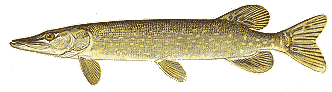
Esox lucius Linnaeus
Other names -- common pike, northern, jack fish, snake, pickerel.
Esox lucius Linnaeus
Other names -- common pike, northern, jack fish, snake, pickerel.
The northern pike is generally distributed over the upper
two-thirds of the state. It varies from occasional in a few man-made
recreational lakes to common in the natural lakes and large rivers depending on
reproductive success. It prefers sluggish, heavily vegetated habitat and is
quite numerous in the upper reaches of the large interior streams, such as the
Des Moines, Wapsipinicon and Iowa rivers. It is especially abundant in the
Mississippi River above Clinton.
The northern pike is an elongated fish with a long head,
which is depressed forward into a pair of large duck-bill shaped jaws imbedded
with numerous canine teeth. Body color is extremely variable, depending upon the
waters from which it is taken. Usually it is bluish-green to gray on the back,
and the markings on the sides are in the form of irregular rows of light yellow
or gold spots. These little markings distinguish it from the grass pickerel and
muskellunge. The dorsal fin is located far back on the body and has l6 to l9
soft rays. The cheeks are fully scaled, but the lower half of the opercle is
scaleless. There are from l4 to l6 branchiostegal rays contained in the membrane
just below the gill cover. The number of sensory pores located along the
undersides of the lower jaws is never more than l0. There are about ll9 to l28
scales in the lateral line. This fish species attains a length of 3 to 4 feet
and weights of over 30 pounds. Individuals weighing l0 pounds or more are fairly
common in the larger lakes and rivers.
The northern pike is a voracious feeder, and one of the most predatory fishes known in our waters. The species is an opportunistic carnivore and feeds primarily on living organisms. The food of the young consists largely of insects and their larvae, but as the fish matures, it feeds primarily on fish. Fishes, such as perch, drum, small suckers, sunfish and even smaller northern pike, comprise a large part of the diet. Large pike have been known to eat small muskrats, ducklings and shore birds.
Reproduction of the northern pike begins immediately after
the ice melts from the lakes and streams. In Iowa, ice out is usually by
mid-March and spawning begins when the water temperature approaches 35 degrees
F. In fact, the pre-spawning movements into the shallow waters are underway
before the ice is out. A large female, usually accompanied by several much
smaller males, finds her way into shallow marshy areas of streams or flooded
grassy margins of lakes. Pike are random spawners, and the adhesive eggs are
carelessly deposited over the bottom or on submerged vegetation. Once spawning
is completed, the adults return to the lakes and rivers. The eggs are left
unattended and hatch in about l2 to l4 days. An average of 63,000 eggs are
produced by a female northern pike measuring 25 to 28 inches in length.
Individuals weighing 25 to 30 pounds have been known to produce 250,000 to
500,000 eggs. Northern pike usually reach sexual maturity in the third year of
life.
The young remain in shallow nursery areas feeding on zooplankton before converting to a fish diet. By fall they reach a length of 6 inches or more, and at the end of their third year measure l7 to 23 inches. Large specimens have been taken, but fish exceeding 20 pounds are rare in Iowa waters. The Iowa record fish weighed 25 pounds, 5 ounces.
Although the northern is generally distributed over much of the state and is held in high esteem by most fishermen for its fighting ability and excitement generated during the catch, sport harvest remains quite low in numbers. Most northern are probably caught incidentally while fishing for other species. Northern pike were removed from the commercial species list in 1959 on the Mississippi River. Since that time, the northern remains as one of the most under-exploited fish species in the upper Mississippi.
This information obtained from the Iowa Department of Natural Resources - Fisheries Department.