Gardening Action for Wildlife
Climbers
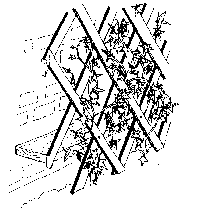
Climbers especially, ivy, provide food and shelter for whole host of wild creatures. They are
an important winter food supply and habitat for birds and butterflies. It will be an even better
habitat if you can put a trellis behind it 10cm from the wall. This makes a great space behind in
which birds can nest. (See diagram and infobox).
 |
|---|
| Ivy provides a wonderful wildlife habitat and it doesn't damage trees or walls unless you have soft, old lime cement. Many species such as blackbirds and brimstone overwinter in ivy, taking advantage of the late berries and flowers. Plant 30cm from wall bottom or fence so the roots are not in the 'drought zone' then chop it down to 10cm in height, this increases the root stock and side shoots. If its located on the sunny side of wall, shade plant when it's young by leaning piece of wood against wall over it and water during early stages. |
Pond in a tub
Fill a pot up with water - as big as you can fit into the area you have as a garden. Wide and
shallow is better than deep and narrow! Either grow pond plants from seed (suppliers
overleaf) or buy a established plants. Make sure some of them provide oxygen (such as curled
pond weed, water milfoil and willow moss). Don't overcrowd the pot and make sure there is
some water showing so animals can find and use the water.
Water butt
Catch the rainwater from your roof and use it to water your plants and top up the miniature
pond. It is much better than tap water for the creatures and plants which will now thrive in
your garden and is also better for the rest of our wildlife in the countryside as we use less
water from our rivers and aquifers.
Window boxes for butterflies
There are many native and non-native species that provide nectar for butterflies to feed on. In
towns we can use a mixture of these to provide a source of nectar year round. Beneath the
window you may be able to grow a dwarf buddliea in a pot. On the windowsill try planting
species such as dwarf michealmas daisies, primula dendiculata, marjoram, Arabis, bugle,
Auberieta and sweet rocket
Fences
If untreated, fences provide a good site for pupating insects, for example butterflies and
moths.
Strawberries

Put a drainage pipe down the middle of the strawberry pot and fill the compost in around it. This will allow you to pour water on the surface to reach the top plants and down the drain pipe to reach the bottom plants - saves water and increases the yield of the strawberries.
Shady Patch
If you have or can create a shady patch, native ferns and woodland species will thrive
particularly well in this environment. Leave a few logs in a pile - this is one of the habitats of
the rare stag beetle and provides a popular hibernation spot for newts, frogs and hedgehogs.
Shelf bird table
If you don't have room for a traditional bird table, make one in the form of a shelf attached to
a wall. You can hang nets of peanuts etc from the side and place water and foods on the
surface. If you put it next to an upstairs window - you may be able to get to it but a cat
certainly can't!
Cracks in pavements
Sow species such as bluebells, birds foot trefoil, camomile, and thyme in the cracks in your
patio - they will grow where you don't tread too much, and if you do stand on them some of
them will produce a wonderful aroma! Many of the species are also excellent for attracting
butterflies.
Compost
Compost your waste to make yourself a more self sufficient gardener and provide the plants in
your minihabitats with a sustainable supply of excellent nutrients.
Trained fruit tree
Many fruit trees, including varieties of pear, can be trained to provide a tree that grows flush
to your wall. Dwarf varieties can be grown in a pot with a little yearly maintenance. You can
keep and store fruit in a cold place and leave it for birds to eat during the autumn and winter.
Hanging baskets
Herbs that are suitable for hanging baskets include garlic chives, pineapple mint, curled
parsley, caraway thyme, marjoram and rosemary. Many of these attract butterflies and bees.
You can also grow trailing varieties of tomato, such as 'tumbler'.
Meadow in a tub
Plant annual meadow species in a pot. Cornfield annuals will work well and once they have produced seed you can collect these and use them for your display next year. You can either buy a general mix or selected species. (suppliers overleaf). The beauty about growing species in a pot is that you will not be constrained by the soil type of the local area. However - think globally act locally! Don't create a meadow that needs to much input to keep it alive as you will have to purchase resources that are expensive both to yourself an to the planet!