 Living Gardens
Feathered friends
Bird feeders and bird platforms
20 million birds/year are sustained by bird tables. Half the fat
acquired in a day is used to keep warm during a winter night, so it is easy to see how valuable
feeding birds in the garden can be.
Birds have preferred feeding habits and foods - those with hard bills (finches) are mainly seed
eaters; those with pointed bills (tits and warblers) are mainly creepy-crawly eaters. Try to offer
both hard and soft foods, distributed around the garden at varying heights and locations.
Here's how:
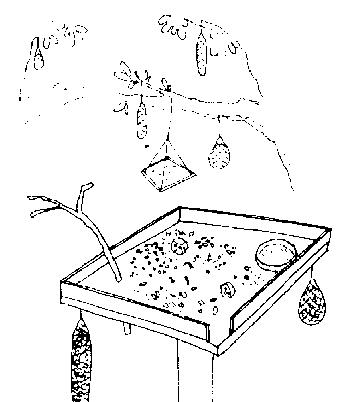
- Bird tables, (and ledges, which are attached to walls) of at least 30cm2, with sides to stop
food blowing away, a gap for sweepings, sloped slightly so water drains off, and also a
landing twig. Site -1.5m high, near handy perching branches. To catproof, raise to 1.75-2m
high, or suspend from a safe tree, 2m from cover
- Mesh feeders, with nuts and some with fatballs - hung near perching branches at different
heights and positions; high, low, in the open, in bushes or under shrubs (but exercise cat
caution)
- Some birds (e.g. sparrows, blackbirds) prefer foraging on lawns or patios, where there is
good visibility. Sprinkle food around, 2m away from cover (to thwart moggie menace)
To stop disease, move feeders once a year, check for old food daily.
Which sorts of food?
- Cheese, cooked potato, porridge oats, fruit, melon seeds, raisins, stale cake, sultanas,
tinned cat/dog food, unsalted peanuts, chopped bacon rind, currants, mealworms, nuts,
moistened bread, suet, uncooked pastry, black sunflower seeds
- Avoid: white bread, hydrogenated fat (in many margarines), salty food, desiccated coconut.
Beware! Cheap peanut mixes may harbour poisonous alfatoxin packet should bear the
RSPB/BTO stamp. Put peanuts in a mesh, where the adults can peck little bits, whole
peanuts can choke nestlings
- Provide sources of clean drinking and bathing water nearby (watery sounds also attract
some warblers)
Natural foods
Artificial nest sites and food sources form important habitat supplements for wild birds, but
gardens can be managed to provide these more naturally
- Wild birds need wild plants as they produce a steady supply of food caterpillars and other
insects. Exotics support fewer insects, and so fewer birds. Grow as many native plants in
the garden as you can (see below). Cut out chemical sprays, and let the birds do the pest
control work for you
- To attract specific birds, plant teasels (goldfinches), sunflowers (cut off the heads as they
ripen and them hang up for the tits and finches), crocuses and honesty (chaffinches,
bullfinches). Cultivate berry and nut/seed bushes: Berberis, Pyracantha, vines, guelder rose,
cotoneaster, crab apple, hawthorn, and female holly are all birdy favourites
- Tolerate some untidiness. Leave cuttings on the lawn for a short while after mowing (for
juicy grass dwelling invertebrates and soil creatures), flowers in path edges, and windfall
fruit on the ground. The birds will be truly grateful
Bird boxes - who nests in a box like this?
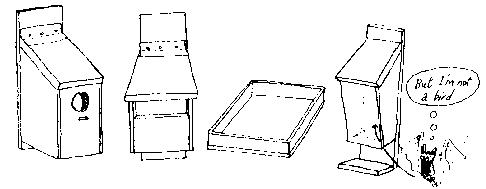
Build boxes from unstained, untreated, unplaned, roughcut timber. Moulded plastic sweats,
and prepared/treated or painted wood is poisonous, (a new 'rockcrete' compound seems more
promising). Plain, subdued functional boxes suit avian tastes! There are many different nest
box types:
- The TRAY: 10 x 15cms, with a 3cm raised edge, placed 2m high (lower for robins) against
a climber covered wall. An abundance of cover will serve blackbirds or even spotted
flycatchers. Put up in a garage or shed with a clear approach and access, and you may get
nesting swallows
- The ROBIN BOX, with an open front. Make sure these have a good overhanging roof as
protection against magpies
- The TIT BOX, with an entrance hole. The hole diameter determines who nests there: ~3cm
= blue tits, 3.5cm = great tits, 5cm and above = sparrows. If you live near a wood,
nuthatches and woodpeckers might make their own modifications Position your bird boxes
out of the direct sun, facing away from the south-west prevailing wind (i.e. with the
entrance opening to the north-east), at a height of at least 2m. Walls are preferable to tree
trunks if cats patrol your garden. To avoid territorial disputes (see above), ensure that nest
boxes and bird tables are at least 20m apart.
Natural nests
- Garden birds need cover for nesting and roosting and the key feature is likely to be the
garden hedge. Enhance it with species such as hawthorn, blackthorn, holly, yew, privet and
dogwood, with ivy, Clematis and honeysuckle. Don't trim your hedge until winter, when
nesting and fruiting are over
- Ensure that suitable nest building materials are readily available: moss from the lawn, dead
twigs, dry grass, and a soaked patch of bare earth for fresh mud (used for nest lining)
To feed or not to feed?
- STOP putting out food as nesting starts. Adults become territorial, having to defend a
feeding station all day is almost impossible. It is thought that nestlings will not learn how or
which foods to forage for in the wild.
- Leave potential nesting material on your table instead - old leaves, feathers, moss, short
rope, wool (NOT cotton wool), pet hairs, fresh mud, spiders' webs, twigs, dried grass.
These will be collected over 500-1000 separate expeditions! The birds need to build up a
store of calcium to help them make their eggs, so put out a few cuttlefish bones for them to
peck at.
- Resume feeding in late summer, (caterpillars become scarce), keep feeders and tables
well-stocked throughout the winter
Did you Know ?
Some birds are attracted to gardens by 'habitat reminders'. Blue tits like the smell of oak because moth caterpillars that feed on oak make up a large part of their wild diet.
|
Attracting Butterflies
. . . . The Serious Wildlife gardener