|
The
Fire Skink Common
Name: Fire Skink Introduction
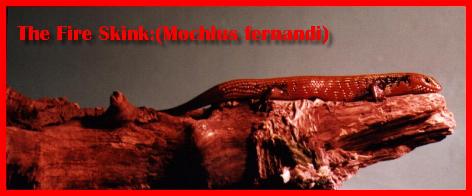
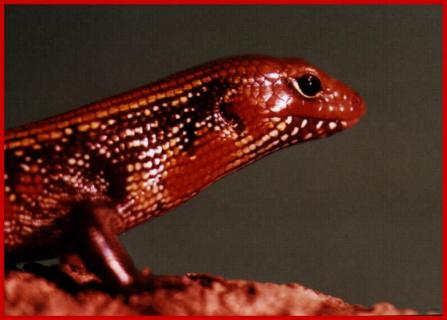
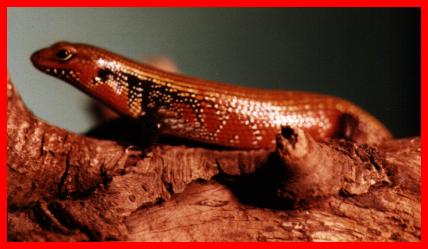
Appearance. The
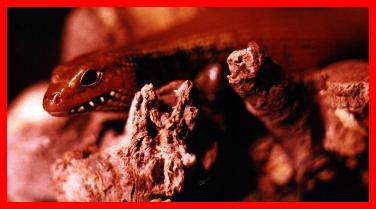
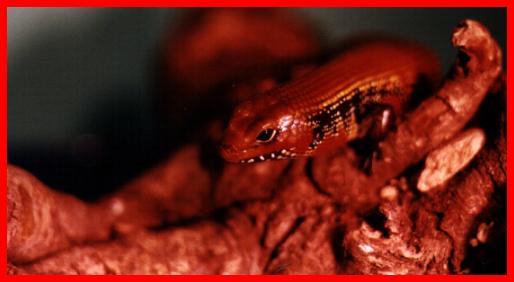
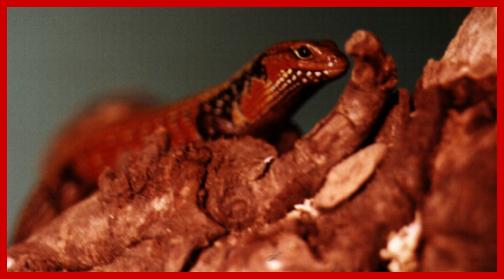
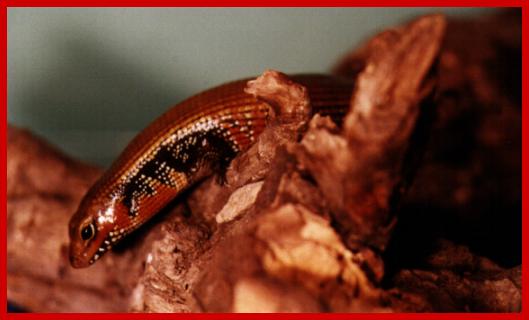
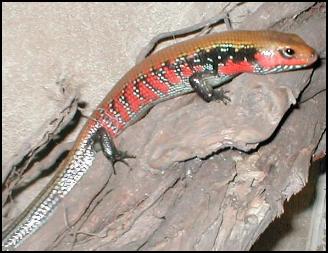
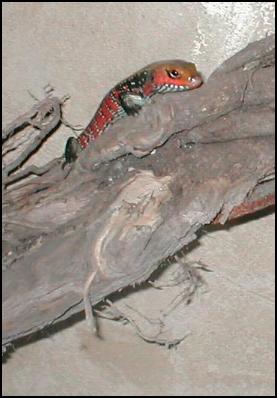
Fire Skink has a wide gold/brown/tan stripe down it's back with bright
red sides interspersed with white and black striped lines along the
sides, and black legs. The
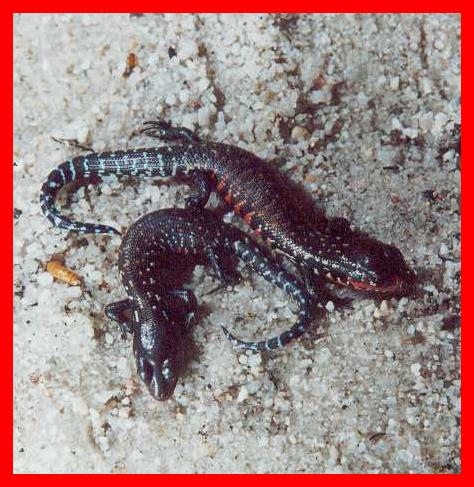
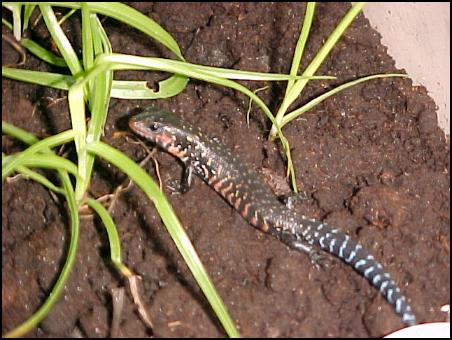
tail of these animals is has a dark blue-black colour with a speckling
of paler blue which may be more apparent in juvenile specimens. Captive Habitat The
fire skink is a burrower most of the time, but will spend time above
ground basking and even climbing; the best substrate for this skink is
compost. I would recommend peat free compost for environmental reasons.
This compost can be mixed with moist sphagnum moss to help retain
moisture the substrate should be to a depth of at least 6 cm.
The terrarium temperatures should be a gradient from should be
75f - with a hotspot of up to no more than 90f, there should be a
nighttime drop to 60f. Hiding places can be provided with the addition
of cork bark halves, and pieces of wood for climbing lay across the
floor. These skinks will not climb to high in
branches; in their natural environment they are foragers of the soft,
damp forest floor. Terrarium conditions should where possible mimic
these conditions. Humidity is important and can be kept high by frequent
misting of substrate, keep it damp, not wet. Rocks add variety and
interest to the terrarium make sure rocks are buried in the substrate,
as not to topple down on the burrowing skinks. Artificial plants make an
attractive addition to your terrarium. The fire skink is
a secretive lizard, and will dart away from sight with speed at being
observed. The Fire skink may not be an ideal choice of lizard if the
keeper requires the animal to allow it’s self to be handled
frequently. It is not a skink that should be handled by inexperienced or
young hands. It can prove quite persistent in it’s attempts at
escaping and may bite. The
forests and grasslands of Western
and Central Africa do not experience the seasonal fluctuations of highs
and lows in temperature that we do, as the vicinity of the country is an
area close to the equator. However they do have a distinct wet and dry
period. This skink does not need to be brumated as harshly as other
skink species because of the climatical considerations of its natural
habitat discussed here. Use
an ordinary incandescent bulb or heater, not a spot lamp, as these
skinks do not regularly bask. I do not believe this skink to have a
necessity for UVB lighting although providing it would not hurt the
skink, as they spend much of the day hidden and being from shaded forest
areas it is arguable if the skink would spend a long time soaking up
sunshine. A photoperiod of 12-hour on/ 12 hour off should be provided A heavy ceramic water filled bowl that will not tip up for drinking should be provided. Two
adults require a minimum sized 36"x12"x12 the larger the
enclosure, the better. The length and width of the tank is more
important than the height. Feeding The
Fire skink is a carnivore, likes insects and arthropods. Feeding is a
simple task; Crickets are probably made up the basic diet. As with
feeding all reptiles variety is the spice and it important to make the
diet as interesting as possible, the addition of mealworms and wax
worms, during the warmer weather small insects can be collected from the
garden, as they will probably eat any small insect that they can catch.
Woodlice make a useful readily available food source if collected and
bred indoor in compost filled container, Earthworms, and snails will
also be accepted. Adults may eat will eat an occasional pink mouse, and
of course a good quality low protein dog food. It is important to dust
food items with good calcium, vitamin,
mineral,
D3 supplement, Handling The
Fire Skink is not skink that will allow it’ self to be handled on a
regular basis. It is more a skink to be enjoyed visually rather picked
up. I would not advise handling by inexperienced or young hands as this
skink may bite. The
Fire Skink is diurnal (active primarily during the day) but also has
some
crepuscular
habits. These
skinks should never be picked up by their tails; these tails will drop
off if mishandled. The tail will rejuvenate a re-grown tail, being
darker in colour than the rest of its body. It is important to realise
that these skinks are faster than you may think, making a quick and
sometimes unexpected escape. Life
expectancy
The
Fire skink may live up to 20 yrs if properly cared for in captivity.
However it is difficult to accurately state the age of wild caught
specimen when adult. Sexing Summary To
summarise these skinks are very attractive and hardy in captivity. They
should in my opinion be considered a skink to watch rather than to be
regularly handled, respecting the fact that these animals are highly
likely to have been an imported wild caught specimen. Disclaimer The
information produced here is to the best of my knowledge the best
possible care for the captive husbandry of the Fire Skink. The
information has been derived through experience with this skink species
and through research. I cannot accept responsibility for injury or loss
due to the following of this brief plan of care. For further information
please e-mail me. More information about Fire skinks at emble data base
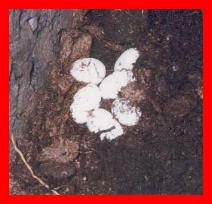
Captive bred Fire Skinks
The Fire skinks were successfully bred in the Netherlands by Richard Struijk
Fire Skink Gallery
Photographs by Mark Bond
|