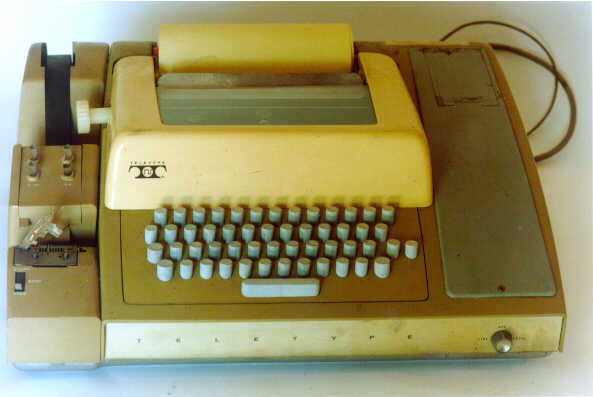
For a great deal of time, the computer industry was ruled by terminals powered by mainframe computer and later, mini computers. This was because of many limitations of technology, such as the high price of hardware, lack of software, and difficult interfaces.
One of the first events leading to the invention of the personal computer was the invention of the first computer game, called "Spacewar". This game was made to run on a PDP-10 computer, which was a rather large minicomputer that cost about $500,000 USD (or about 4.6 million Canadian dollars with inflation). This computer incorporated an easy to use operating system called TOPS-10.
This operating system made the user feel like they were running on a truly "personal" computer, as each user had the illusion of their own disk drive, and the computer was relatively easy to use, using a interface much similar to MS-DOS. This system used "files", which are named by one to six characters, then a three character extension, usually denoting which program the file belongs to. This computer could also easily send these documents to output devices. For example you could type in LPT for a line printer, or TTY for teletype. This computer ran on magnetic core, and did not feature any integrated circuits, but the simplicity of design showed the public how a computer could be used for personal purposes.
TOPS-10 was a very functional operating system, but in 1977, Gary Kidwall and Glen Ewing rewrote an operating system similar to TOPS-10, called CP/M (Control Program for Micros). This operating system was designed to work on an IMSAI 8080, a clone of the Altair computer, and was still very similar to TOPS-10, incorporating some of the same commands. The major difference in this rewritten version was that it included a piece of "common code" for the basic operation of all hardware, and only a small portion of special code was needed to operate any hardware device, and thus, large amounts of code did not have to be rewritten when a new piece of hardware was released. They named this feature the BIOS (Basic Input/Output System), and this feature remains with computers to this day.
The first personal computer used mainly by individual users was the Altair 8800. The Altair 8800 used the Intel 8080 microprocessor, and had a significantly lower price (less than $2000 in Canadian dollars with inflation) than other computers of the time. However, these computers were bought mostly by computer hobbyists, as they required assembly, meaning the soldering of hundreds of chips into place. Another bottleneck to the original Altair systems (8800) was that they did not include a monitor or keyboard, and the only input was by writing your programs in 8080 assembly code through switches on the front of the computer, and the output was through a series of red lights on the outside of the computer, indicating the results of the program.
In 1977, the Altair 8800b was released, featuring a serial connection, allowing connection to either a video display terminal, or a Teletype ASR-33, allowing users to see what they were typing, and also greatly increasing the speed in which the computer could be programmed. One of the more popular video display terminals of the time featured a screen with 25 rows and 80 characters, a standard that remains with us today. The problem with these video display terminals were that they were more expensive than the rest of the computer system combined.
The success of these Altair computer eventually lead to the standardization of ports on different computers, and thus, parts from one computer would be usable on other computers, much like they are today.
These computers helped to lead the way to the widespread use of personal computers today by making computers smaller, less expensive, and more powerful.