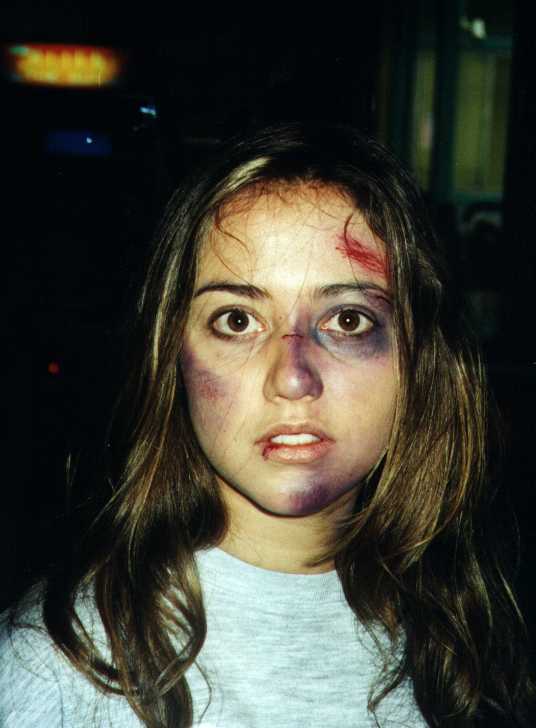
MythsIt could never happen to me.Most sexual assaults occur as a "spur of the moment" act, in a dark alley, by a stranger. Women lie about being sexually assaulted, often because they feel guilty about having sex. Women secretly want to be raped. Sexual Assaults happen only to young women. A woman who has agreed to sex previously with the same partner cannot be raped by them. It is not really assault if weapons or physical violence are not used. |
FactsAnyone is potentially a sexual assault victim: people of every age, race, social class, religion, occupation, and physical description are victims of assault.Most sexual assaults are planned and about 80% occur at home. Often teh offender is a relative, friend, or neighbor or other acquaintance of the victim. Sexual assault really does happen to people you know, by people you know. Findings from research conducted in Winnepeg indicate that 87% of survivors did not report the crime to police. A further 12% told no one at all. Women who fantasize about sexual assault usually think of it only as aggressive sex. Their fantasies do not reflect what rape really is: a violent, often brutal, terrorizing and humiliating assault. Women of all ages are survivors of sexual assault. But women between the ages of 14 to 24 are the most vulnerable to assault. Sexual assault occurs whenever a person does not want to have sex but is forced to do so. It has nothing to do with the victim's relationship to the aggressor. Most sexual assaults are committed by an acquaintance who is more likely to use tricks, verbal pressure or threats during an assault. This does not change the nature of the act. |