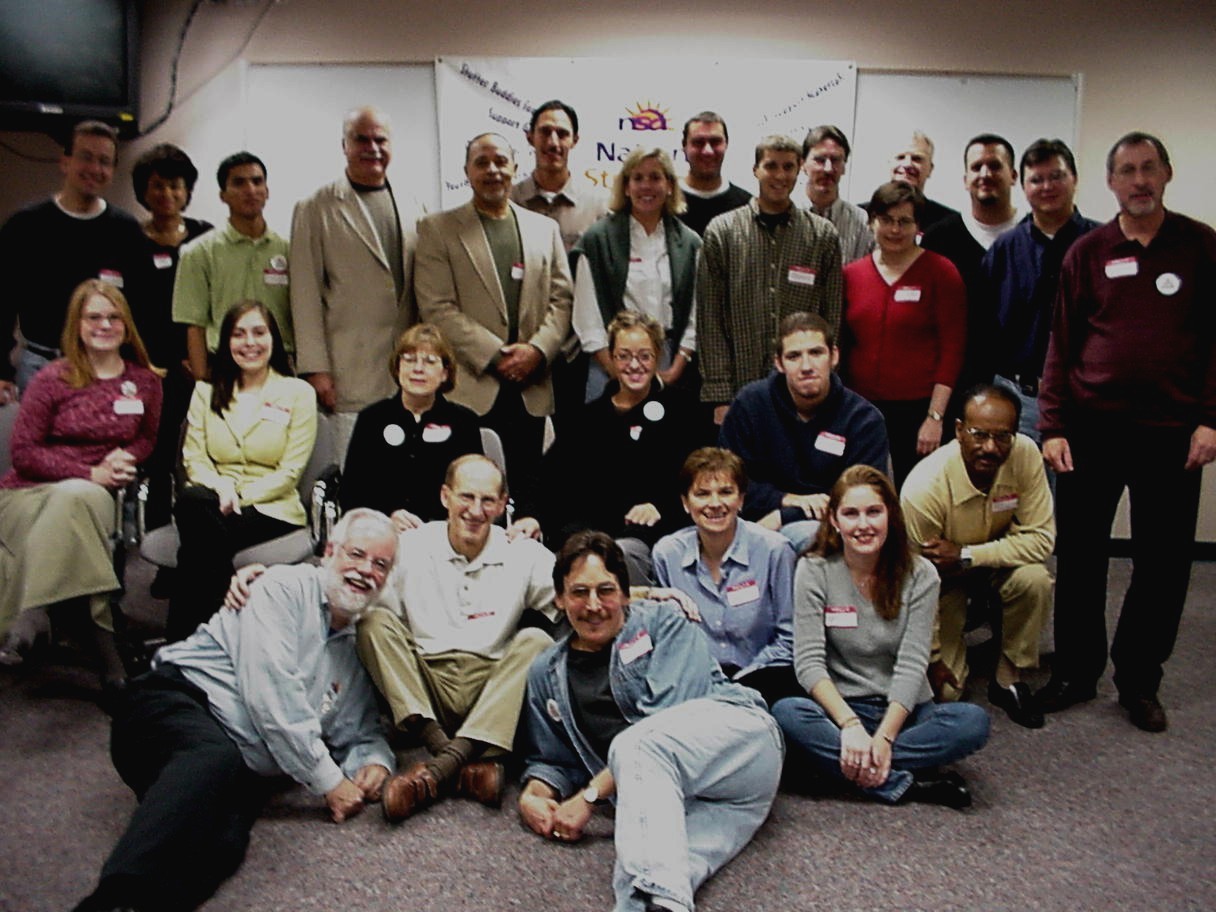
WHAT WE DO AT MEETINGS.....
NSA meetings are an excellent
place to take risks, to try out new communication behaviors, share feelings, and
be open about our speech and our lives as people who
stutter. The
Royal Oak Beaumont NSA support group is primarily a place to stutter openly.
No specific "control techniques" are advocated or recommended.
We are mainly a support group for people who stutter.
Meetings
typically begin with reading of the NSA Welcome Words. Members
can volunteer to read a portion, or all of the Welcoming Words. Again,
speaking at these meetings is entirely voluntary. Next, is a general round
of introductions. Saying our names is always one of the most
difficult things we do, so we can use this time to challenge ourselves in the
introductions and share how our month has gone or speak about anything
else we
would like to mention. At this time, we can talk about challenges
we're facing, successes we've had, and insights we've come to.
After the introductions, we either discuss a round-table topic or break out
into groups to discuss specific topics. Our round table discussions are
primarily used to get everybody to participate, by talking about a certain
topic. Break-out groups usually consist of four to six people and are used
when the attendance is particularly high. At the end of each meeting, we
give all people the chance to do an "open mic" and step out of our
comfort zones. Once again, this is strictly voluntary.
The program is led by a volunteer facilitator, usually our cochairman, Jim
Abbott, or Bernie Weiner, who selects an activity or topic for discussion.
These topics have a very wide range dealing with any subject dealing with
stuttering. Past subjects have included job interviewing, how stuttering
affects personal relationships, therapy overviews, videos, family involvement,
and a host of other interesting topics relating to the challenges we all face in
dealing with stuttering in our lives.
All participation is voluntary. We encourage each other in doing whatever our
individual targets goals are: stuttering more openly, working on
fluency-enhancing techniques, or trying out new speaking behaviors, such as
eliminating word avoidance. But at all times, just being there is enough. Some
meetings feature visits from local speech-language pathologists, students or
others who have insights on stuttering. Our primary goal at our meetings
is to encourage everyone to speak without fear, embarrassment, or shame.