"1969-1972"
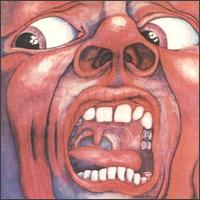
- 1969: IN THE COURT OFF THE CRIMSON KING:
Federico's review / Oleg's review / Joel's review / Ayoze's review / Richard's review
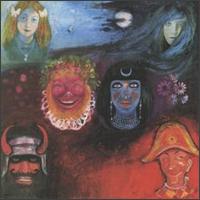
- 1970: IN THE WAKE OF POSEIDON:
Oleg's review / Joel's review / Richard's review
- 1970: LIZARD:
Richard's Review / Oleg's Review
- 1971: ISLANDS:
Oleg's Review / Joel's Review / Richard's Review
- 1972: EARTHBOUND:
Oleg's Review / Richard's Review
A lot of people call this band the symbol of Progressive Rock. It’s hard to disagree with them. KC is at least one of those symbols. The central figure of the band was always guitarist / composer and genial musician Robert Fripp. He is the one who took part in recording all KC’s albums. I don’t want to talk about Fripp’s guitar-playing features, because it can take lots of thousands megabytes of text. You can go to Elephant Talk and find there a lot of information on Fripp’s guitar technique and many other kinds of information. I’m only going to write my short opinions of KC’s albums as other commentators do. I’ve listened all KC’s albums and I only want to say one thing: all of them were produced with constant good quality.
The beginning of the real prog rock, this album shows surely all the potential of this genre and remains until today one of the best epic-prog-rock album ever recorded ; maybe ELP were the first prog band of virtuosos, but the KC, apart for the continue changes to the lineup, had some extremely skilled musicians.On this album plays :
- Robert Fripp : guitar.Often the musical director of the band.His guitar style is something brainstorming, obsessive, always ready to explore all the sonic patterns.Very good.And he' s also one of the main songwriter of the band and his leadership in this role will grow with time ( just think that "In The Wake Of Poseidon" most of the song are credited to him ).
- Ian McDonald : reeds, woodwind, vibes, keyboards, mellotron, vocals.This guy contributes to make the sound richer, often more smooth or more psychedelic ( listen to his instrumental part in "21ST Century Schizoid Man" ) ; particularly remarkable is jazzing piece called "Mirrors" thanks to his good mellotron.
- Greg Lake : a bass virtuoso and one of the most powerful and expressive singer in rock history, this should go without saying.
- Michael Giles : drums, percussions, vocals.A precise and steady drummer, very groove but the prog drums are not among my favourite.Howewer his drums perfectly backing the sound of the rest of the band and often provide to a solid counterpoint to Fripp' s maniac guitar.
- Peter Sinfield : words and illuminations.His lyrics are often meaningless and prog haters may say overblown and stupid.Howewer he has some debts with Tolkien, but he manages to create evocative landscapes ( "Moonchild" for instance ) and also his theatrical lyrics fit very well with the music ( and now I' m talking about "Epitaph" ).
Also one who isn' t a prog fan, should buy this record ; in fact KC managed to create something very special and original : for me this isn' t prog yet, but a strange mix of psychedelia and rock.I said rock, yes, maybe this is the first time the '60 rock is taken as a source of inspiration ; while most of the '60 band were infulenced by the rhythm&blues and '50 rock' n' roll, all the prog movement, a total different genre from rock -rember- takes its inspiration from classic music ( like the ELP ), jazz, folk ( think to Jethro Tull ) and the contemporary rock, without the intermediation of the rhythm&blues.This is my humble opinion and surely things are not so simple of formulaic as I said here, but this is only a guideline for your interpretation of prog rock.So, as you' ve already understood, to the proghater this album will seem surely good, mainly for its freshness and the total lack of self indulcenge that ruined some of the eventual masterpieces of the genre ( like "Brain Salad Surgery" by ELP)."21st Century Schizoid Man" is a rocking song, with a loud guitar riff and some powerful and fast rolls courtesy of Mr. Giles.Lake sings at his best, with some eletrical devices in order to make his voice more scaring ; it includes also a psychedelic/jazzing instrumental part with some tempo changes and a complicate rhythmic pattern that, for me, improves the quality of the song, expecially for the counterpoint between drums and horns ( are they horns or simply some eletrical devices? ) and for the Hendrixsque solo by Fripp.Excellent song.The following track, "I Talk To The Wind", is a slow and sweet ballad, remarkable mostly for Lake' s singing and for the smooth woodwind ; it' s quiet uniform but charming and sofisticated.For me the masterpiece here is surely the beautiful "Epitaph" : epic and theatrical prog rock at its best.I particularly like the majestic and slowly solemn way in which the song proceds ; the beginning is also fashinating : that sinth in background doing " tuu huuhu" and the powerful acoustic chords that glimmer on the entire song are simply beautiful and awesome.Giles also does his best with pompous use of crash and precise and solemn drums ; the strings and the organ parts add sacrality to the song and Lake' s singing is something spectacular : powerful, expressive and, thanks to Sinfield' S lyrics, theatrical.My favourite prog song of all time.And the included instrumentals, "March For No Reason" and "Tomorrow And Tomorrow", are remarkable for their unhappiness and desolated landscapes they described.Surely a masterpiece."Moonchild" is the weakest composition here, and maybe the first inventive lines of the lyrics and the softness of the music are very worth listening, but the song degenerates in a nodless keyboards jam tha has its moments but has also a particular fragmentariness that could result obnoxious to a proghater ( because it overlong, but for me is surely not self indulgent as a lot of people say ).The last song, "In The Court Of The Crimson King" is a superbous example of theatrically overblown and epic prog song, expecially for the superbous choruses "...in the court of the Crimson king, ah ah aaaaaaah...", but it' s not bad, mainly for the solemn organ that breaks your mind after the peaceful jam of "Moonchild" and another time the acoustic guitar part are extremely good and soft.If this is not the first prog album, this is the first that shows all the worthy sides of the genre and I like it for its freshness.All the elements that would make the prog rock a great genre are all present : technical perfection, overblown lyrics full of fantasy and mighty lanscapes, complex music with tempo changes, a mix of psychedelia and jazz, theatrical and epic songs with tons of different instruments and a shymphonic approach to the music composition.And all these elements are present without the pretentiousness and the self indulgence of some future prog album.Buy it now!
Great,fucking great debut that formed the face and standards
of prog in general. Of course, prog was invented before, but this album is an
usual etalon of prog rock standard. Lenthy songs,groovy improvisations,amazing
harmony of instruments,power and gentle feelings,”sereous” lyrics,rock and classic
smash-that’s all prog-rock as we know it and it’s The Court.Lenthy songs?All
five.Groovy improvisations?”21st Century Schizoid Man” and “Moonchild”. Amazing
harmony of instruments?”I Talk To The Wind”.Power and gentle feelings?The whole
album.”Sereous” lyrics?Well,that’s Sinfield-the master of weird psychedelic
ideas and standart fantasy and sci-fi lyricswriter to all rock poets.Rock and
classic smash?Here again-the whole album.
As you know,Mr.Fripp always been the only one leader of King Crimson.On this
album,Ian McDonald takes much bigger part than Fripp or any another memeber
of the band.Just see-four of the five songs on the albums are mainly built on
his idea,and one song was written by Ian himself(I don’t mention Peter Sinfield’s
lyrics).Ian also takes most of the instruments-saxes,Mellotron,winds...
The album opens with the most popular King Crimson song ever-“21st Century Schizoid
Man”.Amazing and driving riff,fuzzy vocals,great drumming flows rght into to
the sea of improvisation with great McDonald’s ssaxophone.I also like the part
when everyone just repeat the same musical phrase for two or three times(don’t
remember correctly).The small reprise-and here comes “I Talk To The Wind”-very
beautiful,sad and gentle ballad with great flute.That’s my favourite song on
the album-I often turn it on when I want to relax.The lyrics cool too.
“Epitaph”-the saddest song on here,that always makes me cry when I hear it(especially
the line “But I fear tomorrow I’ll be crying”).Mellotron rules on here-tthe
slightly Mellotron/drums/guitar interplay in the beggining.The lyrics are wise,about
fear of dying,but they are quite hard to get into.
The underrated “Moonchild” goes next.As you may know,it is divided into two
parts-small,2-minutes vocal part that really shows everyone how they must do
ballads and long,more than 10-minutes long jam that everyone seems to hate.As
for me,I can’t see nothing bad in this jam-it’s boring,yes,but I still like
it-very original,relaxing and absolutely greeat part,which easily can be one
of the best fragements on here.
The final 9-minutes title track composition has great catchy chours with music
borrowed from some classical organ thing by Bach(don’t remember the name of
that thing,but I absolutely sure that McDonald and Fripp got the idea from hours
listening of classical composers.The ending part is improvisation with some
little fragments reprising other songs on the album.Great song!
As far as I know,every prog fan in this world has the copy of this one...Well,if
you’re just trying to get into prog,I’ll give you my advice-pick up this one
now.
In 1968 had guitarist Robert Fripp, drummer Michael Giles and
his brother, the bassist Peter Giles, a group named after the member's surnames,
i.e. Giles, Giles & Fripp, and they released n album called The Cheerful Insanity
of giles, Giles & Fripp. I haven't got the album, but it's said that it's a
pretty childish, though weird, pop record, and that it doesn't at all sound
like King Crimsom would do only one year later. The group Giles, Giles & Fripp
broke up, and Peter Giles went away while Michael G. and Fripp got into a new
group along with Ian McDonald on mellotron, woodwinds, keyboards and reeds,
Greg lake on base and vocals and the lyricist Pete Sinfield. Together they formed
King Crimson, one of the most interesting bands of the whole history of rock.
When they began, a group called The Nice had started maing what later would
become the first prog albums - a musical genre dedicated to groups who sounded
artsy and completely groundbreaking. In the latter days have of course some
successors followed up the first generation prog bands, with groups like Kansas
and Styx at the front, and since they were very inspired by the first generation,
they also became put in the same folder as the "originals", though I prefer
to call these bands "second generation prog bands", because that is what they
really are.
Anyways, King Crimson's first output was something that no-one had imagined
before. They introduced the mellotron, with which they made soundscapes never
heard before, and they have been an important source of inspiration to latter
bands. The mellotron is some sort of an organ, though when you press a key,
a tape with a recorded orchestra on it will begin to play, so the mellotron
is sort of a small orchestra. At this time had the moog just entered the scene,
and no high-quality synthesizers were yet invented, so the mellotron became
a popular instrument among the 'artsy' bands and bands too poor to use the LSO.
King Crimson kept using the mellotron regularly through the years 1969-74, when
they broke up. At this beginning, Ian McDonald was the main songwriter and the
leader of the group, but he quit after this album was released. Robert Fripp
then took over the leadership, and till this day, he's the only remaining member
from the original 1969 lineup. As the leader of King Crimson, he has gotten
a reputation as a weirdo not wanting to be photographed, making weird music
and often changing style and band members. But the fact is that he's a really
good musician and songwriter, bar his sometimes excentric person, and he's a
son of the middle class just as any of ourselves. There have been five completely
different King Crimsons through the years, and no incarnation except the latest
has really survived more than 3 years.
One thing with the Great Crimso is that they never sold many albums. Besides
this debut, none of their albums reached really high on the charts. Many other
groups had success on the charts, but Crimson remained a quite "underground"
band through the years, and this prevented them from being too pompous. They
had no great public to lose if they suddenly changed style, only some diehards
who swallowed anything they put out, and so King Crimson had no huge public
to satisfy. They sorta made their own race, seldom looking to another band and
never making "commercial" songs like "Dust in the Wind", "Come Sail Away" or
anything by post-'74 Genesis.
I suppose this little essay might be my introduction to K.C., though it wasn't
really my purpose...
The album opens with the song which probably have raised most fans to the group.
If you ask five old KC diehards why they got into Crimson, I guarantee that
at least a couple of them will say that they once happened to walk into a record
shop where they heard this song, and they found out that this was the weirdest
song they had heard so far in their life, so they just got to buy the album.
The song is of course "21st Century Schizoid Man", a really scary track opening
with some city noises passing by to a really powerful sax/guitar riff. The atmosphere
becomes complete when Lake uses a scary voice-twister in order to sound like
a sentimental, rusty robot whos angry with everything. A guitar solo part passes
before a really weird sax/guitar/drum part comes in. All three instruments plays
the same thing, and guess if that was weird in 1969! It's pretty awesome. Then
comes the opening sax/guitar riff and some more verses before the song ends
up in a huge climax.
"I Talk to the Wind" is a calm ballad with a touch of jazz, with great flutework
in between the verses. Some classic Crimson lyrics is in this song; the "Said
the straight man / To the late man / Where have you been? I've been here and
/ I've been there and / I've been in between" especially, but the "You don't
possess me / Don't impress me / Just upset my mind" line is pretty fine, too.
I've become to like the song more and more each time I hear it, and though it's
not by far as impressing as "21st Century Schizoid Man" or "Epitaph", I like
it almost as much.
"Epitaph" opens with an overwhelming mellotron/drum interplay, moving over into
a dark, sorrowful ballad, eminently sung by Greg Lake who here makes his finest
vocal work before the time in Emerson, Lake & Palmer. He sings with calm grief,
as if he really watched the world running down without anything to do about
it. The chorus is more sorrowful than the verse, Greg really sounds as if he
was exhausted by grief. A jam passage gives us a minute to catch our breath
before the song starts all over again, slowly getting into the climax at the
end. Well, I think that almost everyone is with me when I say that this is a
masterpiece of huge measures, with many successors but among which there's no
song that's better than the original.
"Moonchild" opens as a 2-minute ballad, with a cute vocal melody and great guitarwork
in the background, but after those two minutes have passed, the song is only
an atonal, non-structured jam without any kind of melody. Worst thing is, the
jam is ten minutes long, and even if it's relaxing and all that, it's the only
low point on the album.
"In the Court of the Crimson King" is a mellotron-dominated thing, sometimes
too much, actually. But the verses are great, with the usual great vocal melody
and an acoustic guitar in the background. As the song passes, each verse has
some new additions to the accompaniment. The chorus is really substainal, with
lots of powerful mellotrons and some vocals. Sometimes does some mellotron solo
pass, and sometimes a flute solo passage. As a whole song it's a heckuva substainal
prog listen, but it's masterful and not by far as overblown as anything by Kansas.
In the song I can also detect some elements which Lake would draft and use as
some sort of trademarks for Emerson, Lake & Palmer. It's as I said - everything
comes out of King Crimson! Well, not everything of course, not by far, but you
get my drift?
Many other groups had used the mellotron before (The Moody Blues) or tried to add classical elements to pop music (The Nice, Procol Harum), but it took a genius like Robert Fripp (a really eccentric one, that is) to fully unleash the power of a new genre, prog-rock, that would sadly sink into its own self-indulgence only five years later, but was also the source of some really great music. Anyway, In The Court happened to be the only album released by the band that was a commercial success, and it's rightly considered the first important progressive recording. It's a great debut, but not flawless. On first listening, you may even wonder what the songs are all about, with the glorious exception of "21st Century Man" they all seem bland and overlong ballads featuring dated and bloated lyrics courtesy of illuminated freak Peter Sinfield. But wait, soon you will realize that "I Talk To The Wind" is rather pretty, "Epitaph" really conveys a tragic atmosphere, thanks in no small part to Lake's performance, and "Moonchild", which turns from an exotic lullaby into the first of the group's otherworldly soundscapes, is a groundbreaking experience that... nah, just joking. Can't they just see that aimless bunches of noise like this are the nadir of pretentious, undisciplined music? It could be argued that, well, "The Dream" and "The Illusion" are supposed to take you to a dreamy, foggy world where the moonchild waits "for a smile from a sun child", but ten minutes of quiet sounds played at random ain't my idea of a great song. It's not really offensive anyway. Haven't you fallen asleep yet? Great, then you'll get to hear the almost unbearably pompous title track, worth if only for its instrumental sections and clever false ending. Whatever. If King Crimson hadn't been such a technically skilled band from the very beginning, this album would be languishing in some forgotten basement today, but this isn't the case: Ian MacDonnald's saxes add a demented jazzy sound, his flute solo in "I Talk To The Wind" is full of pastoral beauty and Fripp's guitar parts, although don't have a prominent role this time, are masterfully played. Sometimes I find it hard to listen to an album like this, others it manages to fascinate me, but one thing is sure: that's one hell of a scary cover.
Maybe this album can be called "the sharpest breakthrough
in all Rock-Music History". Really it was like "a roaring thunder from clear
skies". Though some bands already had tried to make experiments with Progressive
music, they had done it shyly (Beatles, Pink Floyd, Procol Harum, Rolling Stones,
VDGG). But the 1st KC’s album was the 1st absolutely ultra progressive record
of Rock (thus I cannot agree with Mr. Marcon).
In The Court Of The Crimson King is my favorite album of King Crimson. I must
say that Robert Fripp was always the leader and the central figure of the band,
except in the debut album, where also Ian McDonald and Greg Lake could be called
as the central persons, and two of my favorite KC songs were recorded just by
McDonald (and of course with lyrics by great rock-poet Peter Sinfield, who wrote
all the lyrics for the 1st four albums of the band).
I think this album has no lacks in something, and I enjoy all moments of it.
That’s why I give the this album the highest rating.
The record begins with (maybe) the favorite composition of most KC fans. The
band plays this song on concerts nowadays too. I’ve read a lot of articles about
"21st Century Schizoid Man" and read only good about this song. "21st Century
Schizoid Man" is about dark technocratic future (maybe about nowadays?) with
its crazy machines, paranoid people and bleeding children. Industrial sounds
in the beginning and distorted singing of Lake add the darkness to music and
words. Also the song contains the excellent instrumental mid-section, that is
so well-known to us all. I even can play it being awaken in the middle of the
night. This composition is some jazzy with excellent playing of winds which
sound as heavy as metal. Though this track has a contrast to compare with four
another songs on album those are the wonderful ballads with a perfect power
of mellotron (oh! It sounds so great!!!!) and Lake’s voice. The next song "I
Talk To The Wind" is the gentlest ballad on here about human’s sadness
which cannot be heard by the wind. When I listen it I feel an apogee of spring
when thousands of nice flowers are flying away from their trees to heaven.
“Epitaph” makes me feel similar feelings but more sad and even tragic ones.
It has very gloomy lyrics about the lost fate of man living "under bright sunlight
with his nightmares and dreams". It’s my second favorite song of King Crimson.
Lake sings it like a minstrel of 15th-16th Centuries (Renaissance!). It also
has unforgettable instrumental passages, particularly I like the "dark
moment" on 6th-7th minutes of the song. Sometimes I want to cry when I listen
it. Than another one nice ballad "Moonchild" follows. After Lake’s
singing it transforms into very nice lengthy instrumental jam. Of course it’s
not simply a "jam", it has its own musical sense. I understand it as the "travel
of magic Moonchild to the Court of the Crimson King". And when Moonchild reaches
it… "In The Court Of The Crimson King" begins! To my opinion it’s the best,
the nicest composition of Robert Fripp and Company; this song is the general
Etalon of art-rock to me. It has all compounds necessary for the perfect art-rock
composition; beautiful melody, dramatic sincere vocal, complicated structure,
very "characterizing" rhythm (Giles is great drummer!), some surrealistic
lyrics, perfect performance… Oh, it gives me the highest feelings! This composition’s
picture reminds me the wonderful back-view of Da Vinchi’s Mona Lisa and also
– faraway temples on big mountains, spring trees in a huge garden and the sunlight
hidden by the clouds.
I’ve been listening this album for nine years already and I always listen it
with big pleasure. By the way, it’s the 1st art-rock album that I ever heard.
...and if you haven’t it, believe me, your musical collection has a huge lack!
Send your comments and reviews of "In The Court Of The Crimson King"
The most underrated album in King Crimson history. Yes, it's just a collection of outtakes from first album, but we know how BEAUTIFUL first album was. It also includes maybe the most funny song made by King Crimson-"Cat's Food". Very good. Now about other songs.Three parts of "Peace" can really kill somebody.The title track is outtake from "Epitaph" and a it's a great outtake! The "I Talk To The Wind"-ish ballad "Cadance And Cascade" is the best outtake here, and like "I Talk To The Wind" it moved me to tears. There is also "Pictures Of A City"-outtake from "Schizoid Man". It's all. Oh,stop! There is also an instrumental "The Devil's Triangle". It's all about this number.
I suppose you already know most about this album already, but I can't help but adnit that some day a dummy probably will walk by and maybe read some lines, so I've got to mention the fact that Ian McDonald quit after In the Court, which was quite a hard one to replace. As you know, he was the main songwriter on the previous output, plus that he's a pretty good multiinstrumentalist, knows almost every woodwind and so, plus that he was the one who mostly handled the mellotron. So what did the band do? Well, Robert Fripp took over the mellotrons, and a guy called Mel Collins was signed as court musician, he got to play some saxes and flutes. This Collins is a pretty well-known guy, has worked with lots o' bands theough the years while he's a very skilled musician. Robert Fripp was obviously so satisfied with him that he got to help on almost every KC album until the band broke up. The jazz pianist Keith Tippet joins the group as a full-time employee, but only for about a couple of years; on Islands (1972) he was only mentioned as a "featured member", and from LTIA and on he wasn't involved in a single KC project. The drummer Michael Giles makes his last performances with the group on this album, not that I miss him; soon Bill Bruford's gonna come, and he easily replaces any of the earlier KC drummers and on he wasn't involved in a single KC project. The drummer Michael Giles makes his last performances with the group on this album, not that I miss him; soon Bill Bruford's gonna come, and he easily replaces any of the earlier KC drummers.
Greg Lake, bassist and singer, left the group when about ½ of the album was completed, in order to join Emerson, Lake & Palmer. Fortunately, he had the good taste to sing on all songs except "Cadence and Cascade", on which his replacement Gordon Huskell sang. Michael Giles' brother, Peter, also helped with some basework.
So, during a one-year period, King Crimson lost two of the most important band members; Ian McDonald, who with his great songwriting talent, was thought to lead the band to success and glory, and Greg Lake, who has one of the strongest voices in the whole prog hoopla, plus that he's an excellent bassist who also handles the classical guitar eminently. Two hard blows during one year, thus, but old man Fripp decided to continue the band, and it must be said that this album was sort of a milestone in his career, while it ultimately makes clear that even he has a strong sense of writing good melodies. Of course, some of these songs are shameless copies of "21st Century Schizoid Man" and "Epitaph", but who knows; those songs were credited to the whole band, not only to McDonald, so he might have been the brain behind them. That's a thing to discuss, ain't it?
Anyways, the album opens with "Peace - A Beginning", a short little noodling featuring Lake singing a cappella. Not memorable at all, I think. Short, though.
"Pictures of a City", though, opens with a bouncing, jazzy riff, which I often confuse with the sax/guiyar riff of "21st Century Schizoid Man", while I pretend to think that the earliest song is the better, but honestly, I'm not sure; "Pictures" has a catchiness that "21st Century" lack somewhat, while that song instead is darker and moodier. I'd say that the songs are equals, still. "Pictures of a City" has the most memorable riff. The singing is also pretty great, as usual when Greg's involved, and the middle part blows you away with it's speedy guitar and cool saxes, before it fades away and is replaced by a dark base which makes the basis to build a climax upon. That section is pretty avantgarde, but it's good nevertheless. The climax, which is pretty guitar-dominated, moves over into a new verse, dark and..hey, maybe this track is actually BETTER than "21st Century Schizoid Man"! Oh please, don't flame me about this; I already know all your arguments, somplease let me believe this, OK?
"Cadence and Cascade" is a cute ballad, featuring Gordon Huskell on vocals, accompanied by an acoustic guitar and a really pretty piano. Some say that ut heads back to "I Talk to the Wind", but I'm not sure; that song was much more... er, louder and jazzier, more memorable melodies and such... Again, though, in comparison the two songs are each other's equal. "Cadens and Cascade" sure lacks the memorability and immediate catchiness which "I Talk to the Wind", but it has a charm of its own, and I don't think that Huskell's voice is MUCH worse than Lake's, at least not yet, Lizard is another thing.
"In the Wake of Poseidon" is, generally speaking, an "Epitaph" rip-off. Like its predecessor it's a beautiful ballad, but I think it lacks the darkness which leavens "Epitaph". On the other hand, though, this newer song is more harmonical and isn't really as pretentious as the earlier track. The verses has a really good melody which is able to be in your head for a day or two; simply said, it's a wee bit catchier than "Epitaph". And once again, it's a tie between the original and the copy: Both has got what the other one hasn't, with the great melody as mutual element.
"Peace - A Theme" is a small little tune featuring Fripp on acoustic guitar. Again, forgettable but short.
"Cat Food" is the first original tune on the album, which is a good thing. Lake's singing is harsh and tough, with different piano outbursts in the background. The chorus is also pretty fine... hey - I really like this jazzy King Crimson! The acoustic guitar and the base also brings their bit to the stack. They would have needed Bill Bruford on drums, though. His light, jazzy style would have fitted the song much better than Giles' rather tough drumming style. Great song anyways.
"The Devil's Triangle" is a scary piece, mostly made out of some mellotrons and a drums/base interplaying resulting in a marching rythm. It's really nasty, actually, a little bit too overlong, but heck, this kind of song HAS to be long i order to work well, and those mellotron bursts are really scary. The track is divided into three different parts, without any too obvious difference between them. The second part, "Hand of Sceiron", though, suddenly moves over into a section featuring a hammering sound (is it really Sceiron?). The song is actually a revised version of "Mars", which can be found on the archive release Epitaph. I haven't heard that one yet, but it's said that this version is better.
The album closer is "Peace - An End", and I feel that it's not necessary to introduce you to it...it's pretty like the previous two.
A brief summary? A VERY underrated album - it's one of KC's greatest, actually. I really insist that you buy it at once, if you haven't got it yet. It's a great experience.
The 2nd KC’s album to compare with previous has some lacks. All the songs as individual tracks are almost such good as the songs from In The Court, but being recorded on the album they sounds not as “united” ones. Thus the album is rather uncompleted. That’s because many songs were recorded with different line-ups, as you know, that time some musicians (Lake, Giles brothers) have left the band. Also some of the songs haven’t carried new ideas and they even repeated old ones from In The Court Of The Crimson King in some senses. For example, “Pictures Of A City” and the title track. But anyway the album is ear-pleasant. It begins with short 1st part of “Peace”, where Lake sings as echo in a big hall, and it sounds very mystically. Then aggressive “Pictures Of A City” follows; it’s the continuation of “21st Century Schizoid Man” as lyrically as mystically – it’s about technocratic world and has sharp metal sounds of guitar and winds. The next song is nice and gentle ballad named “Cadence And Cascade”. It has a wonderful melody, but I cannot understand what its lyrics mean (maybe am I too stupid?), they are very “foggy” to me. Some people guess that it’s the outtake of “I Talk To The Wind”, but I don’t think so, they are unlike to each other; “Cadence And Cascade” has absolutely another melody, arrangement and it gives me perfectly another impressions. But the next following title-track is the real outtake of maybe three songs from previous album (“I Talk To The Wind”, “Epitaph” and “In The Court Of The Crimson King”) with its mellotronic sounding, late-medieval melodies and soft singing of Mr. Lake. Then the 2nd (instrumental) part of “Peace” follows, which gives me so quiet mood before aggressive sounding “Cat Food” (oops! I’ve written some poetry J). This song became a “star-hour” of new keyboardist Keith Tippett, whose unforgettable atonal piano-playing made “Cat Food” one of the most famous songs of KC and mine 2nd favorite one on this album. But my favorite composition of the album follows after. It’s the epic instrumental “The Devil’s Triangle”, which consists on three parts. Oh, it’s so impressive! Fripp’s guitar connected with mellotron sounds like an orchestra of Marching Soldiers, and really, when I listen to the beginning this composition, I feel the smell bullets and fire. Though I must say that the 1st part of it – “A Erday Mom” – is the cover of “Mars, The Bringer Of War (the suite of classical composer Holst). But the apogee of the composition (and of the album too) follows after the pause between the 2nd part “Hand Of Scerion” and the 3rd part “Garden Of Worm”, which sounds atonally, aggressively and powerfully, with drums sounding as gigantic hammers. Before this grand noise is finished you can hear some-seconds-sounding piece of the title track of In The Court Of The Crimson King, which sounds as if from nowhere. All the suite can remind you a terrible battle, sometimes it seems as if you take part in it al, lose your soldiers-friends and kill your enemies... And as conclusion you listen the last 3rd part of “Peace”: a calm, gentle singing of Lake with acoustic guitar.
Send your comments and reviews of "In The Wake Of Poseidon"

…I was very surprised found that no-one else wrote here about this grand album! And I was even more surprised found that this album has so small ratings in other review-sites (Karn’s and Starostin’s ones for example). I’m gonna protect LIZARD! To my opinion it’s the 2nd or 3rd best album of KC and it contains very clever, musically-solid, emotional and nice material. Though, it’s maybe too complicated for many people… I know it by my own listening: I’ve dug it after 4th or 5th listening (honestly), and then I liked LIZARD more and more. 1st song CIRCUS is magically wonderful; it consists of sharp contrasts of sounding: from quiet to powerful-aggressive and-again-and-again…and it has dark-mystic atmosphere of medieval late evening with its wizards, imaginations, mad beggars, angry clowns, bats, diamonds and burning crosses. Then two jazzy compositions follow. They are based on Tippet’s keyboards and swinging rhythms. They are very similar to each other (that’s why I haven’t given the highest rating to the album). It’s hard to be sure what are they about, but I think they both are about mad house and its psychically-damaged people with their unusual modes of life, strange illusions (remember the strange “fab four” of HAPPY FAMILY; those guys from Israel think that they are The Beatles) and even crazy intrigues. The music of these songs (INDOOR GAMES and HAPPY FAMILY) is rather crazy too. Then the gentle relaxation of the album follows; LADY OF THE DANCING WATER is the quiet ballad (styled of MOONCHILD) about the Sinfield’s dream lady. I like this nice and short piece. All the 2nd side of LP were given for 23-minute suite named LIZARD which is consisted of 4 parts:
a) PRINCE RUPERT AWAKES
b) BOLERO – THE PEAKOCKS TALE
c) THE BATTLE OF GLASS TEARS
d) BIG TOP
I think that LIZARD is one of the greatest KC’s compositions ever. The 1st part
of it includes a singing of the special guest – the greatest vocalist Jon Anderson
from Yes. Though he sings rather unusual for himself here to compare with his
singing in Yes. The 1st part is full of sorrow and tragic vocal and playing
of “mellotronic guitar”. Fripp and Tippett add some atmosphere of insanity.
This song is maybe about madness again. And then the nice high-emotional instrumental
2nd part follows. It reminds me a wonderful autumn sunset in red and orange
colours (with the darkness of back-sounding “military” drums). The nice sounding
of the 2nd part is determined by parallel playing of trombone, saxophone and
flugelhorn; it’s impossible to forget them. It’s my favorite moment on the album.
But after such high feelings by magic sounds of winds we listen to dark and
angry-sounding 3rd part. When I listen it I feel the same listening THE DEVIL’S
TRIANGLE from previous album. Gordon Haskell sings absolutely unlike Anderson
(and does it well), and such singing is the most suitable for the moonfull batal
atmosphere of this song with its aggressively sounding guitars and winds. And
after this “thunderstorm of war” you listen the short 4th part soundind as speeding-up
“dance of madness”. Really mad and great album! If you like nice avantgarde
with atonal sounds and polyrhythmical structures, so this album is just for
you!
First of all,this review is the re-write of my absolutely
classical review of Lizard that was uploaded by Mr.Marcon, was on the site for
a long-long time and finally was deleted.Really wise thing-just because my review
was absolutely stupid and hardly understandable.Sometimes I ask myself-who in
the world I wanted to be in that moment?Mark Prindle?...Well,at least he writes
music.He writes listenable music too-my homemade crap isn’t certainly great
or even pretend to be a masterpiece,while Mark’s cra...oh,sorry,music was called
“great” by several guys I have pleasure to know.But I’m not responsible to buy
his music now,so I’ll just wait until I can do that.But do not expect it to
be soon-this is Earth,for Christ sake and our Mather Nature seems to be not
very kind to let live m and Mark on different continents...But,anyway,something
about that review.If you want-say to me and I will tell you what the review
what’s like just to give you the example of bad musical reviewing.Or the worst
musical reviewing- somehow human race have reachead that terrible point...But,well,at
least,I guess,some “great” reviews on All-Music Guide can challange my former
Lizard review.I hope so.
..Ah,what we have been talking about?Musical reviewing?Ah,shit,forget about
this-we are going to talk about third King Crimson album and we start with...eh,line-up.As
you know,every King Crimson album in 70’s had new line-up and Lizard is no exception.Here
we get Andy McCulloch druming all the way(and his drumming is pretty good-just
listen to that drum rolls in “Happy Family”,which are dangerous and calm at
the same time);some sax and flute work from famous Mel Collins(I don’t think
any comments about his playing are needed-the guys rules and its a proven fact);some
singing and bass playing from Gordon Haskell(yeah,that guy who sings “How Wounderful
You Are”,if you’re wondering)and,of course,one of the greatest egomaniacs of
prog-Mr.Robbie Fripp...Ah,and I forgot about Peter Sinfield who writes lyrics
again(wonder why he doesn’t wrote them to all prog bands at that time..Ah,well,I
risk to make nightmare hunt on you at the night saying that Pete could wirte
for all prog bands).Ah,there are also some guest:Robin Miller played oboe,Mark
Charig played cornet and Nick Evans played trombone and Keith Trippet played
piano and electric piano.There is also one ULTRA-SPECIAL guest I don’t really
want to tell about to you yet.
Now look at the rating,dear reader.Yeah,you are right-this is one of those albums
that sounds like the rare shit.But what makes Lizard sounds like rare shit?Let’s
judge now.
a)The songwriting is simply terrible.When Robert Fripp writes something he does
it simply terrible-with all of those pseudo-classical and jazzy things around.When
there is no Fripp there are monster-like pseud-classical/jazzy jams that does
not make any sense for me and I hardly doubt they do any sense to anyone around-imagine
stange brass- or Mellotron-driven “phrases” that was “built” around strange
noises.In short they all are terrible mess without any signs of “melody” or
“complexity”.
b)Gordon Haskell.The guy worked really BAD on Lizard.Dunno ‘bout his bass work-I
can’t hear bass under loads of Mellotron and brass,but his singing is absolutely
terrible.Absolutely.You can’t believe that it is the same guy who sung on “Cadence
And Cascade” on In The Wake Of Poseidon.Here,on Lizard,he is some dork who sings
songs with his terrible hoarse-he,in fact,killed the whole “Lady On The Dancing
Water”.I really wish anyone but Gordon sung on that piece of music...Well,at
least I KNOW that such singers as John Lawton,Klaus Meine or even David Coverdale
could sung better.
c)Peter Sinfield finally reached the bottom of his lyricswriting abilites.I
simple don’t care for lyrics too much,but would not you agree that lines like
“”Worship”-cried the clown-“I’m a TV/Making bandsmen go clockwork”” or “Burn
a bridge and burn a boat/Stake a lizard by a throat” sounds terrible?Don’t know
how good old Mr.Fripp could let Sinfield write lyrics-I really prefer Haskell’s
“How Wonderful You Are” for “Indoor Games”,”Circus” or related crap.
d)Fripp’s guitar playing is simply nothing-it can’t be really heard under the
bunch of other instruments,but when Robert comes to play some guitar he does
it in the most messy and idiotic way you can imagine.Certainly,Fripp is still
good guitarist,one of the Guitar Gods,but his guitar crap on Lizard is unforgiveable.
e)Arrangments are messed,wildly messed.Of course,sometimes mess can be good,but
Fripp did it in the worst way possible.He does it in a good and cool way sometimes(chaotic
arrangement of “Happy Family” with Gordon’s voice fulled of interesting electronic
effects),bt at all he just doesn’t make any sense with the repeating of two
notes by saxophone and piano playing(or piano fooling,if you ask me)around it
or some goofy acoustic guitar phrase repeating all over again without anything
on background or foreground of the song.Those arrangments are simply dull.
Ah,so that’s it.The first track-“Circus” with some part called “Entry Of The
Chamelions”.As for me,I will never tell you when one part begins and another
starts.But the song itself has very dull and minimalistic melody.While Gordon
trying to sing something and dull melody goes and goes on,the song lasts on
six and a half minutes-no less!And it’s pretty overlong and pretty dull.I was
bored around two minutes-give me “Love Me Do” someday and milk it for ten minutes-it
will be way more exciting and interesting than fooling around like King Crimson
did in “Chours”...Well, it IS weak music,but maybe next song give us some chance?
No way!”Indoor Games” is some hard-rock imitation with overusing of needless
instruments and totally boring melody.Gordon Haskell made himself sounds as
the last fool on this planet(but he always did his,after all). Especially when
he sings that unforgattable line “Playing indoor games,indoor games” is the
most unpretentious and strange way he ever could.
“Happy Family” is the only good song on here.Jazzy messy jam/composition with
cool electric effect on Gordon’s vocals and some funny lyrics(sung in very funny
and childish way-you must hear it to understand what I mean) about...The Beatles!As
far as I understand,”Uncle Rufus” is Ringo,”Cousin Salas” is George,”Nasty Jonah”
is John and “Brother Judas” is Paul(did Pete really think that Paul McCartney
can be compareable with Judas?...Well, consider that Paul DID earn some money
on Semtember,11 he was maybe right,but I don’t really think he was the another
Nostradamus to tell the future...He isn’t the prophet anyway).The opening “riff”
will later be used as those funny vocal choir in “Easy Money”.
The first side ends with a “gentle and touchfull ballad” called “Lady Of The
Dancing Water” and this song is bad enough to give the album as lower rating
as it can get.Fripp makes the song unlistanable crap with adding idiotic Haskell
vocals and some pseudo-beautiful and not very tastefull guitar instrumental
bridges.
The second side is occupied by the 23-minutes long epic track called simply
“Lizard” and which is divided into four parts:”Prince Rupert Awakes”,”Bolero-The
Peacock’s Tale”,”The Battle Of Glass Tears” and “Big Top”.The track is quintessentialsong
of the album and contains all of those terrible things Lizard has.It opens with
small little pop song called “Prince Rupert Awakes” with Jon Anderson from Yes(eek!)singing.It
is not catchy,it has no good melody...It is,in fact,the worst studio thing Fripp
and company ever managed to record!”Bolero-The Peacock’s Tale” is more or less
jam with some good-sounding parts,but unfortunately those parts last for a half
of a minute and no second longer-all other time is fully ocupied by all of those
degeneratic jams Fripp was so fond to.”The Battle Of Glass Tears” is the suite
in the suite-it consists of three parts:”Dawn Song”,”Last Skirmish” and “Prince
Rupert’s Lament”.”Dawn Song” has no melody or arrangement-just Gordon Haskell
sing something so quite with his usual hoarse.If you want to hear the same thing
but with a little bit of more melody-go and listen Black Sabbath’s “Solitude”.”Last
Skirmish” is yet another painful jam-nothing more.Finally,”Prince Rupert’s Lament”
is completely mess-more messed than anything on the album(“Happy Family” doesn’t
count).Oh,and the ending part called “Big Top” is just gentle and interesting
fooling-my favourite part of the suite,in fact.It becomes my VERY favourite
especially in the end when I finally understand that this album ends.
Ah,some final words,dear reader?Well...don’t buy it.Don’t buy it....Something
else?Don’t buy it.If you aren’t the hardcore fan of King Crmson or pointless
jamming or prog.But,after all,the album is still the big influence on the prog
scene-one of the first examples of RIO.
Ah,and the one final thing-who is Prince Rupert after all?
Send your comments and reviews of "Lizard"

Now we have Boz Burrel on vocals and bass so... Remember the introducing paragraph?I said there that King Crimson was a several bands.This is pseudo-classical band.And like all pseudo-classical bands it has GREAT instrumentals and AWFUL songs.Example?On this record,of course!"Sailor's Tale" and "Prelude-Song Of The Gulls" are great(I prefer much the first one because of it great Fripp solo) and awful "Formentra Lady" and "Ladies On The Road".But one SONG(not an instrumental number) is just beautiful-it's "The Letters". And...Pete Sinfield lyrics on here SUCKS!(sorry me,Pete) And about nine-minute title track.It's amazing,but it's boooooooooring.(Now you know why I hate "Mistrated")
Send your comments and reviews!
The endless row of new incarnations of King Crimson forced
Bob Fripp to dismiss the bassist and singer Gordon Huskell and replace him by
another bassist/singer with and almost identical voice, Boz Burrell. Ian Wallace
takes over the drums, and Keith Tippet is only a "featured member." Luckily
(?), this is the last incarnation before Bob dismisses the whole band and gathers
the quite legendary '73-'74 lineup, the group that released masterpieces like
LTIA and Red. But we're not there yet...
The group changed direction within the previous album, to be less rock-orientated
and more avantgarde, with lots 'o jams and with a sense of pseudo-classicism,
and here are they further developing that new direction. The mellotron, which
was sort of a trademark for King Crimson in the earlier days, are now replaced
by REAL classical instruments. This isn't a bad thing, not at all, but it doesn't
always work here. That is probably because that the songwriting level isn't
as high as before, or because that Fripp isn't really great as an arranger of
classical instruments. Some songs, especially the title track and "Prelude:
Song of the Gulls", has got really great instrumentation, though.
The album opens with "Formentera Lady", a ten-minute track which really shows
the worst side of the album. It opens with some cello noises, without any particular
melody. Some new instruments are added, with Mel Collin's flute as the loudest,
and and everything together makes a jam without any sense of melody at all.
Then is some vocals added, sure with a melody, a pretty good one, too, but it's
poorly represented. I'm sure Bob could have made a greater song out of that
vocal melody if he had tried. Then the track changes into a melody-lacking jam
with a repetive bass sounding the same in five minutes, first with some vocals,
but those are soon to be replaced by an improvised sax and some bright sound
which I cannot really identify. Might be vocals. At the end of the track comes
some violins in, and it makes me wonder if this track is the one which caused
Bob to requit a regular violinist, David Cross, during the next incarnation.
Well, the track is a really poor album-opener, and it has probably pissed off
many a listener through the years, listeners who might have gotten deeper into
the album if they wasn't forced to listen through that track each time they
put on the record.
The second song is called "Sailor's Tale", and despite its name, it's an instrumental.
It kicks ass, though, with jazzy, neverstopping drums and different instruments
playing solo from time to time. The highest point is reached when the Bob hands
out a groovy guitar solo while Burrell plays a bluesy bass line. The passage
moves over into a speedy mellotron-dominated passage where the group really
sounds like a whole unit, ending up in a mess.
The second side is far better than the first, here is the smooth avantgarde
replaced by rather intelligent art-rock. And please don't take offense when
reading my previous line; avantgarde isn't "incompetent" at all, but you know,
one thing with avantgarde is that a song is made as long as possible out of
but one doubtful hook. "Formentera Lady" is a typical avantgarde song, it's
really hookless, though it's really long, and too often that is what avantgarde
is most about, get my drift? Anyways, the second side is really well-worked,
while the first side sounded as if Bob just scrathed down some tunes and handed
it out to the other musicians while he said "This is what wil make our next
album 40 minutes long." On the second side is the long jams replaced by hooks
and as a whole, it's more easy-listened than the first side. And where Pete
Sinfield wrote the usual crappy lyrics, he now writes unusually intelligent,
earthbound lyrics, as in "The Letters", a ballad about two ladies battling over
the same man. Some really dark and ugly (though here the ugliness is only for
the best!) saxes makes the song rock from time to time. A generic (you know,
Crimsonly generic) climax makes us believe that the song is over, when Boz suddenly
comes back with some unusually eminently sung vocals, with an unusual portion
of feeling. The four minutes the song is on is quite hard to reflect upon; they
just passes, "passes like clouds," and you don't really know what the song was
about after all. A very good tune anyways.
"Ladies of the Road" is about roadies and their relationship to the band members,
and the track rocks really hard, it's pretty like as if the song is the predecessor
of the headbanging "Easy Money" from LTIA. The bass is groovy, and the guitar
is greatly played, sometimes sounding like they would do on Red three years
later. A great sax solo is also there, and the drumming is steady and stable.
Shortly said: The ultimate hard rock tune.
"Prelude: Song of the Gulls" is a purely classical thingie, sounding to come
directly from "The Four Seasons" by Vivaldi or "Morgenstemning" by Grieg. I
usually pronounce that song the be the greatest song on here, but it's true
that it's a shameless rip-off by the great masters' work, and so I've decided
to choose the upcoming "Islands" as my favourite on here.
"Islands" then, is sort of the most beautiful ballad I've ever heard, as long
as it's on. When I'm not listening to it, it kinda "dissolves in the sun", as
Boz sings; It's a timid thing; it avoids being caught in your mind, great and
glorious when it shows, though it hides in the deepest cracks in the rock when
you stop listen at it, and it takes some listenings to remember enough of it
to remember the song, unlike, say, "Epitaph", which immediately grabs you. The
song opens with a calm, beautiful vocal melody, accompanied by the second mellotron
on this album, and Tippet's piano playing is also worth to be mentioned. The
song moves on, and like George says, you just have to close your eyes, relax,
and float to an island of your own. As you listen, some horns are added, and
those horns are to soon take over the song, making a really gorgeous horn solo.
As the horn's sound increases, the mellotron also does, and so we have a glittering
climax before the song stops and becomes an outtake from the orchestra's rehearshals.
The song is probably one of King Crimson's most complete ballads; it has everything:
A gorgeous vocal melody, great accompaniment, a great solo, plus it's relaxing,
cute, and it really causes you to dream; to use your own fantasy. I'd say that
it's one of King Crimson's most underrated songs ever. Not that it's hated,
but it surely deserves worship just as much as "Epitaph" does.
As mentioned, Robert fripp dismisses the band soon after this album had come
out. It might be a shame, because Fripp made ultimately clear that he really
could write great songs, and with a wee bit more work, this album could have
been another 15. The opener drags down the rating several points, and some songs
aren't really as good as they could be, but here's some of the absolutely greatest
song of 1971.
On the other hand, it's also a bless that Fripp gathered a new band, since two
of the next three studio albums are really great, a 14 and a 15 is really good
ratings, but I'd actually like more of the "Prelude: Song of the Gulls" and
"Islands" stuOn the other hand, it's also a bless that Fripp gathered a new
band, since two of the next three studio albums are really great, a 14 and a
15 is really good ratings, but I'd actually like more of the "Prelude: Song
of the Gulls" and "Islands" stuff. From 1973 and on, KC mostly made hard rock,
and only "Starless" and "Fallen Angel" are worthy succesors to "Islands".
Worth to mention is the Boz Burrell later appeared as bassist in Bad Company,
a group which is darn far from King Crimson in style.
…almost as good as previous, though not so complicated and,
I can say, it’s the continuation of the previous album in some senses. Also,
it seems to me, ISLANDS has some influences of Beatles ’67-’68 as the previous
one this album is conceptual but A SAILOR’S TALE (not a bad song!) is out of
place here.
The album begins with minor sounds of cello-playing of FORMENTERA LADY. This
song is rather sad and gloomy; after the 3rd minute it transforms into very
interesting slow-tempered psychedelic jazzy improvisation (oh, it’s not simply
a stupid jam as some commentators wrote, but it has a strong melody and definite
musical structure, believe me) with symbolic sound (it reminds me the compositions
of Brahms, Gerschwinn and Schnitke). Cello and violin sound magically. Then
(without pause) the next composition A SAILOR’S TALE follows, it’s very interesting
song but this hard-jazzy one is so unsuitable for symphonically-sounding ISLANDS-album!
Thus A SAILOR’S TALE seems to me as “a white raven” here. Also, I must say,
KC never could play pure jazz-rock well (and the live-album EARTHBOUND shows
it).
But the nicest songs here are on the 2nd side of LP. To my opinion, LETTERS
is one of the best examples of Sinfield’s poetry. It’s about two women and their
battle for their husband and lover, and when I think about the wife of this
man, I even want to help her in her unhappy way! It’s very impressive and nice
ballad with rather heavy winds in the mid-section. Then LADIES ON THE ROAD follows,
another excellent song, but its chorus has absolutely similar chords as on Beatles’s
CRY BABY CRY. Anyway, excellent track! …and then listener get a real surprise!
This surprise is the 4-minuted PRELUDE: SONG OF THE GULLS recorded by Fripp
and a string orchestra. Oh, it’s so great! This is the best confirmation that
Fripp is a grate composer able to create as solid rock-numbers as such wonderful
symphonies! Not worse than Haydn or Vivaldi! And then the last song, the title
track sounds (as you can sign it’s named ISLANDS). It’s also Renesance-influented
composition with nice dramatic singing of Boz Barrel and wonderful orchestral
arrangement. Very nice symphonic ballad! Maybe this album even the nicest one
of all KC’s albums. By the way this album was recorded with new bassist and
vocalist Boz Barrell and new drummer Ian Wallace, but these changes of line-up
didn’t made an important influences to the band’s sound; as Haskell, Barrell
sometimes tries to sing as Lake, but drums playing is very limited here.
ISLANDS always gives me a big bunch of positive impressions during listening,
and I think that you’ll be enjoyed of it too. Also I want to say that I don’t
agree with some commentators who said that ISLANDS is unsuccessful experiment
with pseudoclassical music. It’s not pseudoclassical, it’s just basically pure
polyphonic art-rock and PRELUDE: SONG OF THE GULLS is the case of pure classical
suite. …And this experiment is not unsuccessful.
Send your comments and reviews of "Islands"

Very good live album.It starts with ass-kickin' version of "21st Century Schizoid Man".You can call it "Benefit of Mr.Boz Burrel".Yes,yes!His vocals on here are just amazing!They are BETTER than Greg Lake's vocals,no doubt.And Mr.Fripp gives us some amazing soloes. Then goes jzz improvs and pseudo-classical passages."Sailor's Tale" is just great,"Groon" is boring,but kick ass."Peoria" is really dumb,but really great.The weakest spot on the album is "Earthbound".All jazz improvs with fantastic playing and impov-vocals.Simply great! And the recording level of Earthbound...Sounding like someone sitting in the back rows with his tape recorder in his back pocket.Tape recorder is recording it,but it's simply old and has crakes...But all in all it's just great!
Send your comments and reviews of "Earthbound"
After the four very strong albums King Crimson were recorded
their live-concert. After the 1st listening my friend (who is the fan of King
Crimson) has called this record PORNOGRAPHY, and it’s hard to disagree with
him. I must say that King Crimson never could play pure jazz-rock, as they did
on this live-album consisted of five compositions.
You can find two of them on studio-albums – 21 CENTURY SCHIZOID MAN and A SAILOR’S
TALE. But here they sound naively and repetitively, so it’s hard that it’s played
by the great King Crimson! And the quality of the album recording is simply
terrible!
Of course Mr. Fripp and Co. oftenly created excellent compositions influented
by jazz, but they have only small jazzy influences. Fripp is not McLaughlin,
Santana or Miles Davis, he is the greatest progressive-rock guitarist but not
the fusion guitarist and Mel Collins, Ian Wallace and Boz Barrell are not jazz-men
too. And in fact we’ve had rather stupid and boring album…
Three other compositions are sincerely weak, they are only ordinary unexpressive
repetitively-improvisated jazzy compositions with monotonous rhythms and dull
stupid singing of Boz Barrell. One of these compositions (GROON) were played
by King Crimson since 1969 on lives.
It’s very far from those King Crimson those we listened on previous studio-albums.
I don’t think that you will find something interesting on EARTHBOUND.
Send your comments and reviews of "Earthbound"!