|
THE INSTITUT |
|
|
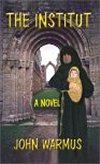
In light of recent controversy and scandal in the Catholic church hierarchy, John Warmus' The Institut leads readers to ponder the depth of individual devotion and hierarchical secrecy. Set in Europe (France, Poland, and the Vatican) during the height of WWII, Vatican cover-ups and sadly antisemitic political affiliations are presented for moral digestion and discussion. The Institut starts out much like a regular murder mystery, but the reader soon discovers that there's more to this story than meets the eye. As the story opens, it is France just before the beginning of WWII. Two young girls, one age fifteen and the other twelve, have committed suicide. Neither could have been viewed as troubled teens--they came from stable homes and had no social or academic problems. Finding the suicides of two unrelated girls suspicious, Inspector DeFont questions the deaths, particularly when the dead girls' clothing is found piled neatly folded and in the same order with their shoes on top. There seem to be attendant problems at the parochial rectory in town as well. Father David Proust is having horrendous nightmares in which he sees himself having sex with young women, children, actually, who submit to his advances, then kill themselves as he watches. When Father Proust sees the girls' pictures in the newspaper, he begins to believe that he is possessed. His friends, local doctor Martine and the doctor who cares for the clergy, Father Curvise, examine him thoroughly, but when they find nothing physically wrong, they must agree that he is mad. Father Curvise finally admits the possibility that Father Proust could indeed be possessed. Eventually word of Father Proust's malady finds its way up the hierarchical ladder of the Vatican. One night David Proust "disappears." In fact, it seems that anyone who asks too many questions about Proust seems to disappear, beginning with Curvise. Intent on solving the case, Inspector DeFont with Doctor Martine travel to Poland in search of answers to the disappearance of their friends. We follow DeFont and Martine to the Institut to find many answers, but perhaps not those we seek. This book is extremely difficult to review without a spoiler. I can say that I believed there would be more action and suspense, but the book tends to range toward the philosophical and theological. Because of the cloistered setting, there were very few reminders that a vicious war was raging across Europe. While the setting inside the Institut itself was essential to the story, the world beyond was given little attention. Time passed outside, leaving the Institut unaffected. Those who entered the Institut seemed to become similar to each other as they remained together, although few characters are deeply developed. To say more about why characters don't seem to grow would be to give too much away. This book does not rely on characters or setting to carry it along, however. The ideas in this story are paramount to any other aspect and lead the reader to engage in a bizarre, unanticipated plot. I have to admit I had great difficulty maintaining a high level of interest throughout this story. Perhaps if I were more interested in Catholic doctrine I would have been able to stay more focused. Warmus writes well, but excitement often dissipated in the face of discourse. I recommend The Institut to readers of a more philosophical bent. Of the plot, I can only say it is not typical of anything you might imagine that contains similar elements. Unusual and thoughtful, it is a book that some will not have the patience for and others will savor. |
|