|
PRODIGAL LOGIC |
|
|
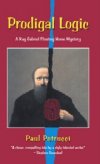
Ray Gabriel, narrator of PRODIGAL LOGIC, has very firm opinions on the subject of what makes sense and what doesn't. Ray is certain about the things of which he is certain � so certain, in fact, that it doesn�t take long for the reader to become suspicious. It�s hard to miss the fact that Ray only becomes involved in a suspicious death because he�d happened to wander into a Catholic cathedral to do some thinking, and thus was on hand when the trouble started. It�s also interesting that he was thinking about was a program for artificial intelligence, and that he�d just had the �eureka moment� of realizing that pure logic could never replicate human thought. What his program needs is a belief system. No sooner has he realized this than sudden death distracts him from his research. PRODIGAL LOGIC is a charming first mystery, and Ray Gabriel is an attractive sleuth. He protests entirely too much about his love of logic, all the while becoming involved with a mysterious woman who reminds him of his ex-wife, helping investigate a bizarre death at the cathedral, looking for traces of cult activity in Seattle, and trying to insert the logic of Sherlock Holmes into his artificial intelligence program (known as Sherlock-In-A-Box.) There are two major sleuths in this story: Ray doing the legwork, and Sherlock who is supposed to put all the pieces together. Although Ray claims that �a fact is a fact� and says he believes only in rational thought, when Sherlock reaches logical conclusions that Ray can�t accept he is not above tinkering with the program. The fact that he doesn't seem to see a contradiction in this is characteristic of his personality. It certainly makes him a more interesting guy to read about than he thinks he is. The supporting cast is good fun, too � Ray finds himself hanging around with an expert in church architecture, befriending a likable priest, and sharing Sherlock with a zealous old priest who wants to teach it to program appropriate penances. There is a flaky psychic, a weird poet, a really unusual support group, and assorted minor characters and hangers-on who, for the most part, act and talk like real people. Considering the complexity of the plot, which involves puzzles, church desecrations, and a very old crime, it�s surprising how seldom Petrucci pushed my �Yeah-right� button. I was especially taken with the little moments, notably the interactions between characters. There is an art to writing clever dialogue that sounds like real people are uttering it, and Petrucci has that art. He is also extremely good at presenting a picture of a preoccupied character who is capable of forgetting all about his plans with his girlfriend when presented with an interesting problem, and who seems concerned about the feelings of the people around him even while he�s being rather dense about his own. PRODIGAL LOGIC isn�t perfect, and I admit I am still unclear on exactly how one of the murders was committed. Likewise, I will have to read the novel again to really understand the rationale behind some of Ray�s sleuthing, but I know I'll enjoy it as much the second time around. For a novel that incorporates computer science, math, psychology, and religion, PRODIGAL LOGIC is surprisingly easy to follow, even though I have no deep knowledge about any of those subjects. This isn�t a mystery for experts in esoteric matters, it�s a mystery for ordinary readers who like their protagonists human and uncertain, their mysteries a little unusual, and who enjoy a "kick in the butt" at the end. I am definitely looking forward more books by this author. |
|